Accessories & Equipment
Cycling transforms from a simple activity into a genuine passion the moment you understand that the right accessories and equipment fundamentally change your riding experience. Whether you’re commuting through busy city streets, embarking on weekend adventures, or simply running errands around the neighborhood, the difference between frustration and enjoyment often comes down to selecting and properly using the equipment that supports your specific needs.
The world of bicycle accessories can feel overwhelming at first glance. From security systems that protect your investment to ergonomic components that prevent discomfort, from visibility equipment that keeps you safe in traffic to weather protection that extends your riding season—each category addresses real challenges that cyclists face daily. This comprehensive resource introduces the essential categories of cycling accessories and equipment, helping you understand what matters most and why, so you can make informed decisions that align with your riding style and priorities.
Security Systems: Protecting Your Investment
Bicycle theft remains one of the most discouraging experiences for any cyclist, but understanding security systems empowers you to dramatically reduce your risk. The security ecosystem consists of multiple layers, from the physical locks you choose to the techniques you employ and the locations you select for parking.
Understanding Lock Types and Security Ratings
The lock market offers three primary categories, each with distinct strengths. U-locks provide the highest resistance to leverage attacks—the most common theft method—thanks to their rigid construction and minimal internal space for prying tools. Chain locks offer flexibility for securing your bicycle to larger or oddly-shaped objects, though their security depends heavily on link thickness and hardening quality. Folding locks balance portability with reasonable protection, using hardened steel plates connected by rivets.
Security ratings from independent testing organizations provide objective comparisons. These ratings typically measure resistance time against common attack methods: cutting, prying, picking, and pulling. A lock rated at level 8 or above on a 15-point scale generally requires specialized tools and several minutes of sustained attack—enough to deter most opportunistic thieves who prefer quick, unnoticed actions.
Effective Locking Techniques for Different Scenarios
Even the highest-rated lock becomes ineffective without proper technique. The fundamental principle involves securing both your frame and rear wheel to an immovable object, minimizing the space within your lock’s shackle. This leaves no room for thieves to insert leverage tools like car jacks or pry bars.
Different environments demand adapted strategies. At interchange stations where foot traffic is high but surveillance varies, position your bicycle in well-lit areas within camera view, and consider using two different lock types simultaneously—this forces thieves to carry multiple tool sets. At the office or regular destinations, establishing a consistent routine in secure, monitored locations reduces risk significantly. For overnight parking or extended periods, removing easily-detached accessories like lights, computers, and quick-release wheels adds another protective layer.
Visibility and Being Seen on the Road
Visibility equipment addresses a fundamental truth: most cycling accidents occur because drivers simply didn’t see the cyclist. Unlike vehicles with large profiles and integrated lighting, bicycles present small visual targets that easily disappear in complex traffic environments, during twilight conditions, or in adverse weather.
Effective visibility requires a multi-point approach combining active and passive elements. Active lighting—battery-powered front and rear lights—creates conspicuous points of brightness that draw attention even in daylight. Modern LED technology has revolutionized this category, offering lights that run for hours on single charges while producing hundreds of lumens. Front lights should illuminate your path while making you visible to oncoming traffic, while rear lights focus exclusively on conspicuity with flash patterns that catch peripheral attention.
Passive visibility through reflective materials works differently, bouncing vehicle headlights back toward drivers. Strategic placement matters enormously: ankle and pedal reflectors create distinctive moving patterns that human brains recognize as cyclists, while reflective strips on bags, helmets, and clothing extend your visible profile. Some cyclists report that wearing reflective vests or bands transforms driver behavior, with vehicles providing noticeably wider passing distances.
Testing visibility from a driver’s perspective reveals insights that surprise many cyclists. What feels bright while riding may appear dim from 50 meters away in a car. Having a friend observe you from various distances, angles, and lighting conditions helps identify weak points in your visibility setup and builds confidence that you’re genuinely seen.
Comfort and Ergonomic Optimization
Discomfort represents the primary reason people abandon cycling, yet most comfort issues stem from equipment choices and adjustments rather than inherent limitations. Understanding ergonomics transforms cycling from a tolerable activity into one you genuinely look forward to.
Contact Points: Handlebars, Saddles, and Pedals
Your body connects to your bicycle through three critical interfaces, and optimizing each dramatically affects your overall experience. Handlebar selection influences your riding posture, weight distribution, and hand comfort. Flat bars provide upright positioning ideal for visibility and casual riding, drop bars offer multiple hand positions for long distances and aerodynamics, while riser bars create comfortable geometry for mountain biking and urban environments. Width matters too—handlebars should roughly match your shoulder width for optimal control and breathing.
Saddle comfort seems mysterious until you understand that the right saddle supports your sit bones rather than soft tissue. Wider saddles suit upright positions where sit bones bear most weight, while narrower designs accommodate the forward rotation of aggressive riding positions. Many cyclists find that firmer saddles with appropriate width actually provide superior comfort compared to heavily padded options that create pressure points through compression.
Pedal choice affects efficiency and comfort more than many realize. Platform pedals offer convenience and work with any footwear, clipless pedals (which actually clip your shoes to the pedals) improve power transfer and pedaling smoothness, while toe clips and straps provide a middle ground. For riders experiencing foot numbness or hot spots, examining pedal size and shoe stiffness often reveals solutions.
Managing Vibration and Road Roughness
Road vibration accumulates in your hands, arms, and body over time, causing fatigue and discomfort that discourages longer rides. Multiple equipment strategies help absorb these impacts before they reach your body. Tire pressure represents the most accessible adjustment—lowering pressure within safe limits allows tires to absorb small bumps rather than transmitting them through the frame. Wider tires run comfortably at lower pressures while maintaining efficiency.
Seatpost design offers another intervention point. Traditional rigid seatposts transmit every bump directly to your body, while suspension seatposts use springs or elastomers to absorb impacts. Even non-suspended posts vary in vibration damping based on material and design—some carbon fiber and aluminum posts with deliberate flex patterns noticeably reduce harshness compared to stiff alternatives.
Handlebar tape thickness, grip material, and even glove construction contribute to the overall vibration management system. Gel-padded gloves reduce high-frequency buzz, while thicker handlebar tape addresses larger impacts. The goal isn’t eliminating all road feedback—you need some connection to surface conditions—but rather filtering the fatigue-inducing frequencies that serve no useful purpose.
Weather Protection and Riding Apparel
Weather determines whether cycling remains practical year-round or becomes a fair-weather-only activity. The right equipment extends your comfortable riding season significantly, transforming conditions that once seemed prohibitive into minor inconveniences.
Understanding wind chill revolutionizes cold-weather cycling. The 25 km/h speeds typical of casual cycling create substantial cooling effects—air temperature of 5°C feels like -5°C to exposed skin at cycling speeds. Layering addresses this through a proven three-layer system: a base layer managing moisture away from skin, an insulating mid-layer trapping warm air, and an outer shell blocking wind and precipitation. This system allows adding or removing layers as conditions and exertion levels change throughout a ride.
Extremity protection often makes the difference between enjoyable and miserable cold-weather riding. Hands lose dexterity rapidly in cold, compromising control and safety. Glove materials range from lightweight windproof shells for cool conditions to heavily insulated lobster-claw designs for winter. Many experienced cyclists keep multiple glove options and adjust based on temperature and ride intensity. Similarly, shoe covers or winter-specific cycling boots prevent the toe numbness that can develop within minutes of cold-weather riding.
Rain protection involves accepting that staying completely dry during active cycling proves nearly impossible—you’ll generate moisture from exertion even in waterproof gear. The practical goal becomes staying warm and functional rather than bone-dry. Water-resistant jackets with strategic ventilation manage this balance, keeping rain off while allowing moisture vapor to escape. Fenders prevent road spray from soaking you from below—often the primary source of wetness in light rain.
Speed-adapted equipment addresses the reality that electric bicycles and performance riding create enhanced wind exposure. What works at 15 km/h becomes inadequate at 30 km/h, requiring more substantial protection even in moderate conditions.
Essential Components and Technical Choices
Component selection profoundly influences your bicycle’s behavior, efficiency, and maintenance requirements. Understanding the key variables empowers better decisions aligned with your priorities.
Tires and Tread Patterns
Tires represent your sole connection to the road surface, mediating traction, comfort, efficiency, and puncture protection simultaneously. Tread patterns suit different conditions: slick or minimal tread maximizes efficiency and grip on pavement (contrary to intuition, smooth rubber contacts more pavement than textured rubber on hard surfaces), while progressively aggressive patterns provide mud clearance and soft-surface bite for off-road conditions.
Tire width involves meaningful trade-offs. Wider tires run comfortably at lower pressures, absorb surface irregularities better, and provide larger contact patches for improved traction and cornering security. Narrower tires reduce weight and potentially improve acceleration, though modern testing reveals that aerodynamic and comfort advantages often favor moderately wide tires even for performance applications. Mud clearance in your frame and fenders limits practical width choices.
Braking Systems and Rotors
Braking technology has evolved dramatically, with disc brakes increasingly standard across cycling categories. Rotor size—typically ranging from 140mm to 203mm diameter—determines stopping power and heat management. Larger rotors provide greater leverage and dissipate heat more effectively, crucial for loaded touring, mountain biking, or heavier electric bicycles. Smaller rotors reduce weight and suit lighter bicycles with less demanding stopping requirements.
The choice between mechanical cable-actuated and hydraulic disc brakes involves trade-offs between simplicity and performance. Hydraulic systems deliver superior modulation and power with less finger effort, while mechanical systems offer easier field maintenance and adjustment. For casual riders prioritizing reliability, mechanical systems’ simpler troubleshooting often outweighs the performance advantages of hydraulics.
Control Interfaces and Efficiency
How you interact with your bicycle’s controls affects both safety and enjoyment. Brake lever reach, shifter positioning, and control accessibility all influence your ability to respond quickly and ride confidently. Modern integrated brake/shift levers streamline cockpit ergonomics, while separated systems offer simpler maintenance and replacement.
Component efficiency encompasses the energy transfer from your pedaling effort to forward motion. Well-maintained drivetrains—chains, cassettes, and chainrings—minimize friction losses that can consume several percentage points of your power output. While incremental, these differences accumulate meaningfully over distance, particularly for longer rides or riders with limited energy reserves.
Cargo and Passenger Solutions
Carrying capacity transforms bicycles from recreational tools into practical transportation, but loading systems require careful selection and installation to ensure safety and reliability. Rack systems distribute weight over the rear or front wheel, maintaining bicycle handling characteristics far better than backpack-carried loads that raise your center of gravity and cause back strain.
Rack failure typically stems from three causes: improper installation creating stress points, overloading beyond rated capacity, or frame incompatibility. Quality racks specify weight limits—commonly 25-50 kg for rear racks—and require secure mounting to designated frame bosses or dedicated adapters. Regular inspection of mounting bolts and rack integrity prevents failures that could affect handling or damage wheels.
Securing child passengers demands specialized equipment meeting safety standards. Rear-mounted child seats suit younger children up to approximately 22 kg, positioning them behind you where you can communicate easily. Front-mounted seats allow constant visual contact and conversation, though they affect steering more noticeably. Bicycle trailers offer the highest protection in the event of falls, plus weather shielding and capacity for multiple children or cargo, though their width and length require awareness in traffic.
Sound signaling devices—bells and horns—provide essential communication tools in shared spaces. Effective warning devices produce sharp, distinctive sounds that carry over ambient noise without startling. Testing volume from a pedestrian’s perspective ensures your signal serves its purpose: alerting others to your presence courteously but unmistakably.
Building your cycling equipment knowledge happens gradually, but understanding these core categories provides the foundation for making decisions that enhance your specific riding experience. Each equipment choice addresses real needs—security concerns, comfort limitations, weather challenges, or practical transportation requirements. As you identify which factors matter most for your cycling, you’ll naturally develop expertise in those areas, discovering nuances and preferences that transform good equipment into exactly the right equipment for you.
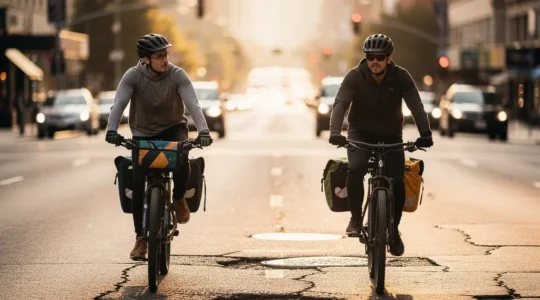
Full Suspension vs Hardtail: Do You Need It for Commuting?
Most urban riders don’t need full suspension frames; properly tuned hardtails with suspension seatposts or short-travel forks often deliver superior city performance at lower maintenance…
Read more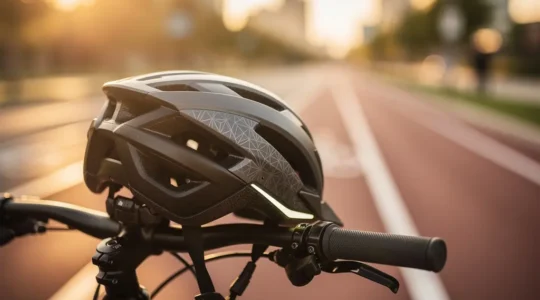
NTA 8776 Helmets: Why Standard Bike Helmets Aren’t Enough for E-Bikes
Contrary to popular belief, a fast e-bike isn’t just a bicycle with a motor; it’s a lightweight vehicle that generates forces your old gear was…
Read more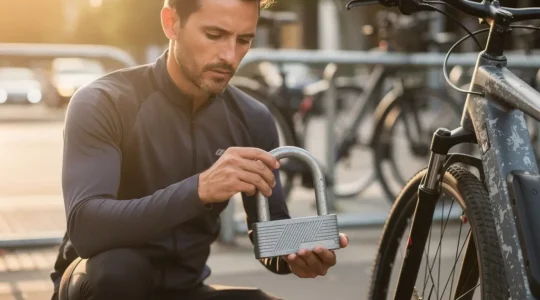
Angle Grinder Resistant Locks: Are They Worth the Weight and Cost?
Your high-value e-bike is a target, and standard locks are an open invitation. The only effective defence is a security ecosystem designed to make stealing…
Read more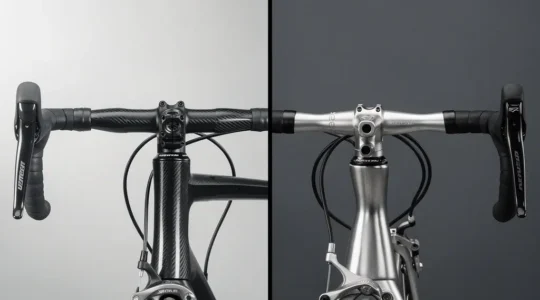
Integrated Handlebars vs Standard Stems: Is the Clean Look Worth It?
The seductive “clean look” of integrated cockpits comes with a steep, often hidden, “serviceability tax” in frustration, time, and money. Integrated systems turn simple adjustments…
Read more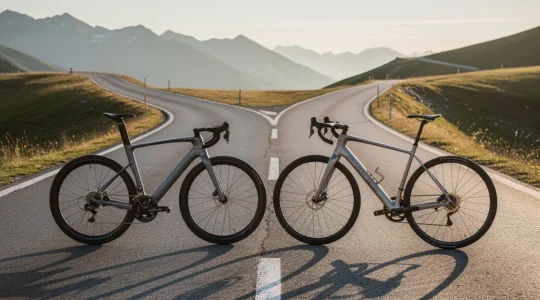
Integrated Handlebars vs. Standard Stems: Is the Clean Look Worth the Hidden Cost?
Despite the marketing hype around aerodynamics and clean aesthetics, choosing an integrated handlebar system is less about performance and more about accepting a long-term, expensive…
Read more