Buying Guides
Purchasing a bicycle represents far more than a simple transaction. Whether you’re considering your first commuter bike, upgrading to an electric model, or investing in specialized equipment, the decisions you make today will shape your riding experience for years to come. The cycling market has evolved dramatically, offering unprecedented choice across price points, technologies, and riding styles—but this abundance can overwhelm even experienced cyclists.
Smart purchasing requires balancing immediate needs against future flexibility, understanding technical specifications without getting lost in jargon, and recognizing genuine value beyond the sticker price. This knowledge empowers you to avoid costly mistakes, negotiate confidently, and ultimately ride equipment that truly enhances your lifestyle. The following sections break down the essential knowledge areas every bicycle buyer should master, from defining your actual riding requirements to protecting your investment through proper service and maintenance planning.
Understanding Your Riding Requirements
The foundation of any successful bicycle purchase lies in honestly assessing how you’ll actually use the equipment. Many riders fall into the trap of buying for aspirational riding scenarios rather than their daily reality, leading to expensive machines gathering dust or inappropriate equipment causing frustration.
Start by documenting your typical riding patterns over several weeks. Track the actual distances you cover, the terrain you encounter, and the conditions you ride in most frequently. A rider who imagines weekend century rides but actually makes daily 3-mile urban commutes needs fundamentally different equipment than their fantasy suggests. Consider whether your rides serve multiple purposes—commuting, fitness, recreation, cargo transport—as mixed-use requirements often benefit from versatile platforms rather than highly specialized machines.
For riders with limited mobility or specific physical considerations, modern bicycle technology has democratized access significantly. Electric assist systems, step-through geometries, and adjustable components can transform cycling from impossible to practical. However, these requirements should be defined clearly before shopping, as retrofitting accessibility features often proves more expensive and less effective than purchasing purpose-built equipment.
Think beyond your current situation to anticipate reasonable future needs. While you shouldn’t buy for unlikely scenarios, considering predictable life changes—relocations to hillier areas, family expansion requiring cargo capacity, or aging-related mobility changes—can justify slightly more versatile or adaptable equipment that maintains utility as your circumstances evolve.
Essential Technical Knowledge for Every Cyclist
Walking into a bike shop or browsing online retailers without fundamental technical knowledge puts you at a significant disadvantage. You don’t need engineering expertise, but understanding core concepts allows you to evaluate claims, compare options meaningfully, and communicate your needs effectively.
Frame Materials and Geometry Fundamentals
Frame material profoundly influences ride quality, durability, weight, and price. Aluminum frames dominate the affordable segment, offering excellent stiffness-to-weight ratios and corrosion resistance, though they can transmit road vibration more harshly than other materials. Steel frames provide legendary durability and comfortable compliance, making them favorites for touring and commuting, but they require proper maintenance to prevent rust. Carbon fiber delivers the lightest weight and most tunable ride characteristics at premium prices, though it can fail catastrophically if damaged and proves difficult to repair.
Geometry determines how a bicycle handles and fits your body. Aggressive racing geometries place riders in aerodynamic positions ideal for speed but uncomfortable for casual riding. Relaxed geometries with upright positions suit commuting and recreational use, reducing strain on backs, necks, and wrists. The measurements that matter most—reach, stack height, and wheelbase—should match your flexibility, riding style, and intended use, not abstract categories like “performance” or “comfort.”
Drive Systems: Mechanical, Electric, and Hybrid Options
For electric bicycles, the fundamental mechanical choice between hub motors and mid-drive systems carries significant implications. Hub motors mount in the wheel, offering simplicity, low maintenance, and quiet operation, but they compromise handling through unsprung weight and provide poor hill-climbing performance. Mid-drive motors integrate with the bicycle’s gearing, delivering superior climbing ability and more natural handling, though they increase chain wear and require more sophisticated maintenance.
Motor sensor types—cadence versus torque—determine how electric assist feels. Cadence sensors activate assist when they detect pedaling, offering simple on/off characteristics that some riders find abrupt. Torque sensors measure pedaling force and provide proportional assist, creating seamless, intuitive experiences that feel more natural but cost substantially more.
Battery placement affects weight distribution and handling characteristics significantly. Downtube mounting offers optimal balance and protection, while rear-rack mounting maximizes cargo space but can make bikes feel rear-heavy. Integrated batteries create cleaner aesthetics but may limit replacement options years later when that specific battery becomes unavailable.
Critical Specifications: Weight, Sizing, and Load Capacity
Total weight matters less than most buyers assume for general riding, but weight distribution dramatically affects handling. A heavier bicycle with low, centered weight handles better than a lighter one with poor distribution. For cyclists who must carry bikes up stairs or load them on vehicles regularly, absolute weight becomes more relevant, making lightweight options worth their premium.
Sizing charts provide starting points, but they cannot account for individual proportions, flexibility, or preferences. A rider might fall into “medium” on one manufacturer’s chart but need “large” from another brand due to geometry differences. Professional fitting or at minimum test riding remains essential, particularly for bikes in the premium segment where you’re paying partly for comfort optimization.
Load limits receive insufficient attention from casual buyers but prove critical for utility cycling. Many lightweight performance bikes specify maximum rider weights around 220 pounds and prohibit cargo, while dedicated commuter and cargo bikes support 400+ pounds including rider, cargo, and accessories. Exceeding these limits voids warranties and risks catastrophic failure.
Making Smart Purchase Decisions
Understanding what to buy represents only half the equation—knowing when, where, and how to buy often determines whether you receive fair value or overpay for inappropriate equipment.
Strategic Timing and Market Navigation
Bicycle pricing follows predictable seasonal patterns. New model-year inventory typically arrives in late summer through fall, creating clearance opportunities on outgoing models that often differ minimally from their replacements. Winter represents the slowest season for most retailers, making them more negotiable on price and willing to move inventory. However, popular sizes and colors in discounted models sell quickly, requiring decisiveness when you find appropriate equipment at reduced prices.
Avoid the false economy of inappropriate sale bikes. A mediocre bicycle at 40% off still represents poor value if it doesn’t match your needs or requires expensive upgrades to become usable. Similarly, the absolute cheapest option in any category often proves more expensive long-term through poor durability, difficult maintenance, and incompatibility with standard replacement parts.
The market contains numerous scams and misleading practices. Be skeptical of unknown brands making extraordinary performance claims at impossibly low prices—if a $600 electric bike claims 80-mile range and 50mph capability, it’s lying about at least one specification, possibly both. Direct-to-consumer brands can offer legitimate value by eliminating retail markup, but they require more research to verify quality and customer service reliability.
Testing and Verification Before Committing
Never purchase a bicycle without riding it, even if that means waiting or traveling to a location with test inventory. A 15-minute test ride reveals comfort issues, handling characteristics, and whether the equipment matches your expectations in ways that specifications sheets cannot capture. Pay attention to how the bike feels after 10 minutes, not just the initial impression—mild discomfort often intensifies dramatically over longer rides.
For electric bikes, test riding must include hill climbing performance if your area contains hills. Motor power ratings mean little compared to real-world climbing ability with your body weight. Similarly, test the assist levels across their full range—you should find at least one setting that feels natural and appropriate for your typical riding, not just the maximum boost mode.
Verify component quality against the manufacturer’s claims. Enthusiast forums and independent reviews often reveal whether bikes ship with the specified parts or if brands quietly substitute cheaper alternatives. Check that welds appear clean and consistent, that wheels spin true without wobbles, and that brakes engage smoothly with adequate power. These basic quality checks catch many issues before purchase rather than discovering them after you’ve committed.
Avoiding Common Pitfalls and Pressure Tactics
Retailers sometimes employ tactics designed to cloud judgment. Artificial scarcity claims—”this is our last one” or “the sale ends today”—pressure rushed decisions. Legitimate sales exist, but if you feel pressured rather than informed, that’s a warning sign about the retailer’s priorities.
Financing promotions deserve careful scrutiny. Interest-free periods work well if you’re disciplined about repayment, but deferred interest plans charge retroactive interest on remaining balances, potentially adding hundreds to your cost. A bicycle you can afford to purchase outright generally represents a better decision than stretching your budget through financing.
Extended warranties and service packages vary enormously in value. Some offer genuine peace of mind through comprehensive coverage and easy claims processes, while others contain so many exclusions and requirements that claims become nearly impossible. Read the actual terms, not the sales pitch, and consider whether your credit card already provides purchase protection that duplicates the offered warranty.
Protecting Your Investment Long-Term
The purchase price represents only the beginning of ownership costs. Smart buyers evaluate total cost of ownership, including maintenance requirements, depreciation patterns, and warranty quality.
Understanding Warranty Coverage and Dealer Support
Warranty terms vary dramatically across brands and price points. Premium manufacturers often provide lifetime frame warranties covering manufacturing defects, while budget brands may offer just one year of limited coverage. More important than duration, however, is the claims process reality. Some brands handle claims efficiently and fairly, while others create bureaucratic obstacles that effectively deny legitimate claims.
Dealer logs and service records prove invaluable for warranty validation. Many warranties require professional assembly and regular professional maintenance, with documentation to prove compliance. Saving money through self-assembly or independent mechanics might void coverage worth more than you save. Understand these requirements before purchase, as they represent ongoing ownership costs.
Component warranties typically run shorter than frame warranties, often just one or two years. For electric bikes, battery warranties deserve special attention—these expensive components degrade inevitably, and warranty terms determine whether you’ll receive replacement or be told the 30% capacity loss falls within “normal” parameters. Look for warranties specifying minimum capacity retention percentages over defined periods rather than vague coverage against “defects.”
Depreciation, Resale Value, and Future Utility
Bicycles depreciate rapidly initially, typically losing 20-30% of retail value immediately upon purchase and another 10-20% in the first year. After this initial drop, quality bikes from respected brands depreciate more slowly, often retaining 40-50% of original value after three to five years if well maintained. Budget bikes often become nearly worthless after moderate use, as their low initial prices leave little room for depreciation while wear reduces their appeal.
Certain features maintain value better than others. Standard specifications using common components support easier maintenance and better resale appeal than proprietary systems requiring brand-specific parts. Timeless designs in neutral colors outperform trendy aesthetics that quickly date bikes. Electric bikes face additional depreciation concerns around battery condition and technology obsolescence—motor systems become outdated as newer, lighter, more powerful options emerge.
Consider whether equipment optimizes for your current needs so narrowly that predictable life changes make it obsolete. A bike with rigid cargo capacity limits becomes problematic when family needs grow. Extremely lightweight road bikes sacrifice utility for performance in ways that may not suit your needs five years later. Balancing optimization against versatility requires honest assessment of how your circumstances might evolve.
Maintenance Requirements and Long-Term Durability
Low-maintenance durability provides value beyond the purchase price. Belt drive systems cost more initially than chains but require virtually no maintenance and last dramatically longer, potentially saving money over the bike’s life. Internal gear hubs shield mechanisms from weather and contamination, requiring minimal service compared to external derailleurs, though they cost more and offer fewer gear range options.
Component quality determines service intervals and replacement costs. Budget brake systems require frequent adjustment and pad replacement, while premium systems maintain performance longer and offer superior stopping power. Cheap tires wear quickly and flat frequently, making moderately priced, reputable tires economical despite higher initial cost. Calculate realistic annual maintenance budgets based on component quality and your riding intensity—a $50 annual difference compounds significantly over a decade.
Tool kit requirements vary by bicycle complexity. Basic bikes require minimal tools that most riders can learn to use competently, while complex systems with electronic shifting, hydraulic brakes, and integrated electric components often demand professional service. Factor professional service costs into your ownership budget, or commit to developing mechanical skills if you choose complex equipment.
Choosing Where and How to Buy
The retailer you choose often matters as much as the bicycle itself, determining your long-term service experience, warranty support, and overall satisfaction.
Professional bicycle retailers provide expertise, service support, and advocacy that pure box-shifters cannot match. Yes, you might pay 10-20% more than online discounters, but this premium buys proper assembly, initial fitting, service relationships, and warranty support navigation. For complex purchases like electric bikes or high-end equipment, this expertise prevents costly mistakes and frustrating experiences. A knowledgeable shop employee can identify that your assumed size should actually be different, that the model you’re considering won’t suit your terrain, or that a different brand offers better value for your specific needs.
The brand ecosystem you enter determines parts availability, service network access, and community resources. Major brands provide extensive dealer networks and reliable parts availability years later, while obscure brands may disappear entirely, leaving you with an unmaintainable orphan. Research whether brands maintain consistent geometry and standards across model years, allowing upgrades and replacements, or if they constantly reinvent specifications that make even recent bikes obsolete.
Building dealer relationships pays dividends throughout ownership. Shops that know you and your equipment provide better, faster service, often prioritizing your repairs during busy seasons. They might offer complimentary minor adjustments, parts discounts for loyal customers, or valuable advice about upgrades and maintenance timing. This relationship value dwarfs small price differences at purchase.
Beyond Traditional Ownership Models
Purchasing may not represent the optimal solution for every rider. Alternative models suit certain use cases better than ownership, particularly in urban environments or for occasional riders.
Shared mobility solutions through bike-share systems eliminate maintenance responsibilities, storage challenges, and theft risk while providing access to bicycles for occasional use. For riders making infrequent trips or those wanting to test cycling before committing to purchase, these systems offer excellent value. However, per-ride costs accumulate quickly for regular users, and you sacrifice personal optimization, accessories, and the ability to modify equipment to your preferences.
Evaluating platforms requires comparing coverage, bike quality, and pricing structures. Some systems charge per-minute, others offer daily passes or monthly subscriptions, with costs varying enormously based on usage patterns. Calculate your realistic usage across typical months to identify which pricing structure provides best value, rather than comparing headline rates that may not reflect actual costs.
For apartment dwellers or those without home storage, secure storage solutions can make bicycle ownership practical where it otherwise wouldn’t be. Some cities provide bicycle parking facilities with weather protection and security systems. Workplace bike rooms, building bicycle storage, and even specialized bicycle parking companies offer alternatives to keeping bikes in small apartments or exposed to weather and theft outside. Factor storage costs and convenience into your ownership decision—a bicycle you hesitate to use because retrieving it involves significant hassle delivers little value regardless of its quality.
Fleet options serve families or households with multiple riders. Some retailers offer package discounts for multiple bicycle purchases, while shared-ownership models for cargo bikes and specialty equipment allow occasional access without full ownership costs. For expensive, specialized equipment like high-end cargo bikes that might see only occasional use, these alternatives deserve consideration against traditional purchase.
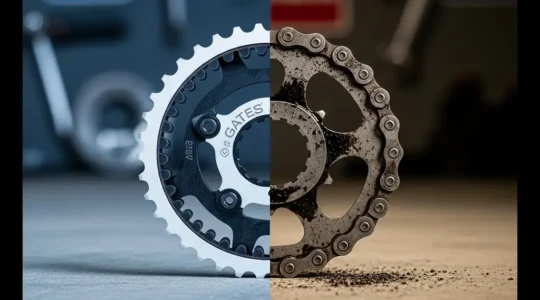
Gates Carbon Belt vs Chain: Is the Premium Worth It?
A belt drive’s “maintenance-free” reputation is earned, not given; its superior durability hinges on a perfectly integrated and configured system. While efficiency is nearly identical…
Read more
Rent vs Buy: Is a $150 Monthly Subscription Better Than Owning?
The decision to rent or buy a bike isn’t a simple financial calculation; it’s a trade-off between predictable fees and the hidden “taxes” on your…
Read more
Step-Through Frames: Why Modern Accessibility Transforms Cycling for Riders Over 60
Modern step-through frames eliminate the historical trade-off between accessibility and stability through hydroformed aluminum and battery-integrated structural reinforcement. Step-over heights of 11–13 inches reduce hip…
Read more
The Hidden Value of Buying from a Certified Bosch/Shimano Service Center
Contrary to belief, the higher price at a bike shop isn’t for the bike itself—it’s for exclusive access to a closed service ecosystem that online…
Read more
Step-Through or High-Step: Which Frame Geometry Fits Your Life?
The right bike frame isn’t about gender or simple ease of use; it’s a critical engineering trade-off between structural rigidity for performance and an accessible…
Read more
Direct-to-Consumer vs Local Shop: Where Should You Buy Your E-Bike?
The sticker price of an e-bike is a misleading indicator of its true cost; the smarter investment is determined by its Total Cost of Ownership…
Read more
Mid-Drive vs Hub Motor: Which Is Best for Hilly Commutes?
For sustained, steep hill climbing, a mid-drive motor is the superior engineering choice due to its ability to leverage the bike’s gearing for optimal motor…
Read more