Maintenance & Repair
Your bicycle is a mechanical symphony where dozens of components work in harmony with every pedal stroke. When properly maintained, a quality bike can deliver decades of reliable performance. Yet many riders only think about maintenance when something goes wrong—a approach that leads to costly repairs, safety risks, and premature component failure. The difference between a bike that lasts three years and one that remains dependable for fifteen often comes down to consistent, informed care.
Whether you ride a simple single-speed commuter or a sophisticated e-bike with electronic shifting, understanding maintenance fundamentals empowers you to make smarter decisions about when to act, what to prioritize, and where to invest your time or money. This comprehensive resource explores the core systems that keep your bicycle running smoothly, the preventive strategies that extend component life, and the critical inspections that keep you safe on every ride.
Why Regular Bike Maintenance Matters
Think of bicycle maintenance like dental care: small, consistent efforts prevent major problems. A chain that’s cleaned and lubricated every few hundred kilometers might last 5,000 kilometers, while a neglected one could wear out—and damage your expensive cassette and chainrings—in just 2,000 kilometers. This cascading effect is central to preventive maintenance philosophy.
The financial argument alone is compelling. Replacing a worn chain costs a fraction of replacing the entire drivetrain. Similarly, addressing a minor brake fluid leak early prevents rotor contamination that ruins expensive pads. Beyond economics, regular maintenance dramatically improves safety. A bolt that’s gradually loosening, a tire developing sidewall cracks, or brake pads worn to the backing plate—these issues rarely announce themselves until they create dangerous situations.
Modern research into wear curves reveals that most components don’t degrade linearly. Instead, they maintain stable performance for much of their lifespan before deteriorating rapidly near the end. Understanding these patterns helps you time replacements perfectly—extracting maximum value without risking sudden failure. For riders managing multiple bikes or fleet operators overseeing dozens, data-driven maintenance planning transforms guesswork into predictable, optimized schedules.
Understanding Your Bike’s Core Systems
Every bicycle, regardless of price or complexity, relies on several interdependent systems. Mastering their basic functions helps you diagnose issues quickly and communicate effectively with mechanics.
The Drivetrain: Your Power Transfer System
The drivetrain converts your leg power into forward motion through the chain, cassette, chainrings, and derailleurs. This system endures tremendous forces—a strong rider can generate over 1,000 watts during sprints. Contamination from road grit acts like grinding paste between metal surfaces, accelerating wear exponentially. Regular cleaning and appropriate lubrication are non-negotiable for drivetrain longevity. Pay attention to chain tension requirements, as both excessive slack and over-tightening cause premature failure.
Braking Systems: Controlled Deceleration
Modern bikes use either rim brakes or disc brakes (mechanical or hydraulic). Each system has distinct maintenance needs. Hydraulic disc brakes offer superior stopping power but require fluid type compatibility, contamination prevention, and occasional bleeding. Mechanical systems need cable tension optimization and regular pad inspection. Regardless of type, maintaining stopping power isn’t optional—it’s the most critical safety function on your bike.
Wheels and Tires: Your Contact With the Ground
Wheels must remain true (straight), properly tensioned, and free from spoke damage. Tires carry sidewall markings indicating pressure ranges, size specifications, and manufacturing dates. Optimizing contact points between tire and rim prevents pinch flats, while regular pressure checks ensure proper handling. Inspect tires for embedded debris, cuts, and wear indicators—most quality tires have tread wear markers built into the rubber.
Suspension (If Equipped): Absorbing Impact
Front forks and rear shocks use compressed air, coil springs, or both to absorb trail impacts. Setting up sag—the amount your suspension compresses under your body weight—is fundamental to proper performance. Suspension requires regular seal replacement, careful cleaning to prevent grit intrusion, and occasional oil changes. Neglecting suspension maintenance leads to leaking seals, sticky pistons, and eventually catastrophic failure.
Preventive Care: The Foundation of Longevity
Reactive maintenance—fixing things only when they break—costs more and creates unnecessary risk. Preventive care flips this approach, addressing wear before it becomes failure.
Establishing a Maintenance Schedule
Your riding frequency, conditions, and bike type determine optimal intervals. A useful framework divides maintenance into categories:
- After every ride: Quick visual inspection, wipe down if muddy or wet
- Weekly or every 100-200 km: Clean and lubricate drivetrain, check tire pressure, inspect brake pads
- Monthly or every 500 km: Deep clean, check bolt torque on critical fasteners, inspect cables and housing
- Seasonally or every 2,000 km: Comprehensive inspection, replace consumables approaching wear limits, professional service for complex systems
Riders who track maintenance via data—logging chain wear measurements, brake pad thickness, and tire tread depth—can optimize replacement cycles precisely. This approach prevents both premature replacement (wasting component life) and delayed replacement (risking damage to other parts).
The Power of Proper Lubrication
Lubricating effectively requires understanding that more isn’t better—excess lubricant attracts contamination. Apply lubricant to chain rollers, wipe away excess, and allow it to penetrate before riding. Wet lubes resist washout in rainy conditions but attract more dirt. Dry lubes stay cleaner but require more frequent application. The enemy isn’t friction alone—it’s the grinding action of dirt suspended in old, contaminated lubricant.
Preventing Rather Than Repairing
Many common failures are entirely preventable. Installing sensors and cables correctly during initial setup prevents future headaches. Routing shift cables with gradual bends rather than sharp angles prevents drag and premature fraying. Optimizing charge cycles and storage voltage for e-bike batteries dramatically extends their lifespan. Learning to prevent motor strain errors, deep discharge damage, and cable insulation breakdown costs nothing but saves hundreds in replacement parts.
Safety-Critical Inspections and When to Perform Them
Certain components demand special attention because their failure creates immediate danger. Focusing on safety-critical checks should be every rider’s priority.
Pre-Ride Safety Checklist
Before any ride, perform the “M-check”—a systematic inspection pattern that covers:
- Front wheel: spin and check for wobbles, squeeze spokes to verify tension, inspect tire for cuts or embedded objects
- Headset and stem: apply front brake and rock bike forward—any clunking indicates loose headset bearings
- Check bolt torque on stem, handlebars, and seatpost (most critical fasteners have specified torque values—typically 4-8 Nm for carbon)
- Squeeze brake levers to verify firm engagement and adequate pad contact
- Lift and drop bike from a few centimeters—listen for rattles indicating loose components
- Rear wheel and drivetrain: same checks as front wheel, plus verify chain isn’t excessively worn
This 90-second routine catches the majority of mechanical issues before they strand you miles from home or cause crashes.
Recognizing When Components Reach Critical Wear
Comparing consumable wear patterns helps you predict lifespan. Brake pads typically include wear indicators—grooves or lines that disappear when pads need replacement. Chains should be replaced when they’ve “stretched” (actually worn) by 0.5-0.75%—a measurement requiring a specialized tool or ruler. Tire tread depth varies by model, but most road tires become unsafe when the center tread is worn flat, while mountain bike tires lose traction well before appearing bald.
Preventing Catastrophic Failures
Preventing wheel failure starts with proper tension and regular truing. A wheel that’s slightly out of true becomes progressively worse as uneven spoke tension causes additional spokes to loosen. Preventing mechanical strandings often comes down to addressing small issues—a slightly loose crank bolt, a frayed shift cable, a slow tire leak—before they escalate during a ride.
Professional Service vs. DIY Maintenance
The boundary between home maintenance and professional service depends on your skills, tools, and risk tolerance. Certain tasks are universally DIY-friendly, while others genuinely require specialized knowledge and equipment.
What Most Riders Can Handle
With basic tools and online tutorials, most cyclists can manage:
- Cleaning and lubricating the drivetrain
- Replacing brake pads (mechanical and simple hydraulic systems)
- Adjusting cable-actuated brakes and derailleurs
- Installing new tires and tubes
- Checking and adjusting bolt torque with a torque wrench
- Basic wheel truing (minor adjustments)
These skills build confidence and save money. The initial tool investment—perhaps $100-200 for essentials like a chain tool, tire levers, hex keys, torque wrench, and chain checker—pays for itself within a few maintenance cycles.
When to Organize Professional Care Logistically
Some tasks require specialized tools, training, or precision that makes professional service the smart choice. Hydraulic brake bleeding, suspension servicing, wheel building, frame alignment checking, and electronic system diagnostics fall into this category. Comparing service packages offered by local shops often reveals that comprehensive annual tune-ups cost less than buying the specialized tools needed for a single advanced task.
Timing the heavy work strategically maximizes value. Scheduling major service during off-season avoids both peak-season shop backlogs and the disappointment of having your bike unavailable during prime riding weather. Many shops offer winter service discounts precisely because demand drops.
Building a Relationship With a Trusted Mechanic
Even confident home mechanics benefit from professional relationships. A good mechanic serves as educator, diagnostician for mysterious issues, and safety backstop for your own work. They can identify custom components requiring special attention, help source legacy parts for older bikes, and provide insights on compatibility when you’re considering upgrades.
Advanced Considerations for Modern Bikes
Today’s bicycles increasingly incorporate technology that demands new maintenance approaches. E-bikes, electronic shifting, integrated cockpits, and wireless components create both opportunities and challenges.
E-Bike Specific Maintenance
Electric bikes add motors, batteries, wiring, and sensors to traditional bicycle systems. Preventing motor strain errors requires understanding how your specific system operates—most mid-drive motors hate being lugged at very low cadence under high torque. Optimizing charge cycles means avoiding both deep discharge (storing batteries dead) and constant 100% charging (high-voltage stress). Most lithium batteries prefer storage at 40-60% charge in moderate temperatures. Installing sensors correctly and maintaining clean, corrosion-free electrical connections prevents intermittent faults that are maddeningly difficult to diagnose.
Interpreting error codes specific to your system often requires manufacturer documentation or diagnostic tools. Many e-bike systems log fault histories, helping mechanics identify patterns rather than guessing at solutions.
Suspension Setup and Servicing
Quality suspension transforms rough trails into rideable terrain, but only when properly maintained. Setting up sag correctly—typically 20-30% of total travel depending on use—ensures your suspension operates in the optimal range. Beyond setup, suspension seals require regular replacement (typically annually for aggressive riders), and internal oil/air can services extend fork and shock life dramatically. Cleaning safely without forcing water past seals and ensuring mechanical precision during reassembly separates competent home mechanics from those who create expensive problems.
Future-Proofing and Long-Term Maintainability
When purchasing a new bike, ensuring long-term maintainability and repair should influence your decision. Some questions to consider: Are replacement parts readily available? Does the bike use proprietary components or industry-standard parts? Will you be able to source legacy parts in a decade? Bikes using common standards—threads, cable pull ratios, axle dimensions—remain serviceable far longer than those with manufacturer-specific parts that may be discontinued.
Understanding compatibility extends component lifespan. That cassette designed for 11-speed systems won’t work reliably with a 12-speed chain. Comparing lighting outputs requires knowing whether your hub dynamo provides 3 watts or 6 watts. These details matter when planning upgrades or replacements.
Building Your Maintenance Confidence
Mastering bicycle maintenance is a journey, not a destination. Start with simple tasks—cleaning, lubricating, checking pressures—and gradually expand your skills as confidence grows. Every successful repair or adjustment reinforces your mechanical understanding and saves money that can be invested in better rides or components.
The most reliable bikes aren’t necessarily the most expensive—they’re the ones whose owners understand their needs and address them consistently. By implementing preventive schedules, focusing on safety-critical systems, and knowing when to seek professional help, you’ll transform your relationship with your bike from reactive frustration to proactive partnership. Your bicycle becomes not just a possession, but a well-maintained tool that reliably delivers the freedom, fitness, and joy that brought you to cycling in the first place.
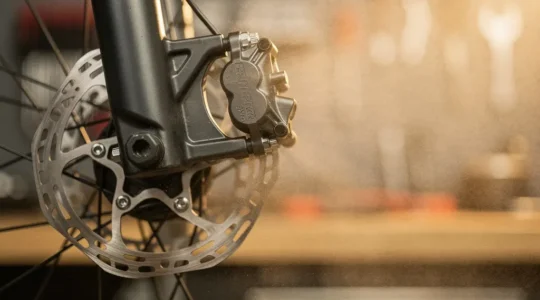
Caliper Alignment: Stopping that Annoying Rubbing Noise
That persistent ching-ching isn’t just loose bolts—it’s a symptom of hydraulic system intolerance where microscopic misalignments create a tolerance stack-up. Mount standards dictate your adjustment…
Read more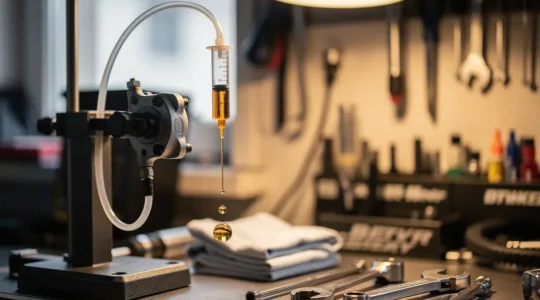
Hydraulic Bleeding 101: Signs You Have Air in the Line
Spongy brake levers rarely indicate a simple air bubble; they signal systemic neglect across chemical, mechanical, and thermal domains. Chemical incompatibility between DOT fluid and…
Read more
Service Intervals: Why E-Bikes Need More Frequent Shop Visits
If you treat your e-bike like a car with a simple annual check-up, you’re setting it up for premature failure. An e-bike’s components are constantly…
Read more
The “M-Check”: A 2-Minute Safety Routine Before Every Ride
In Summary: Galvanic corrosion between aluminum stems and stainless steel bolts can accelerate material degradation by sixfold compared to compatible assemblies Tire sidewalls suffer UV…
Read more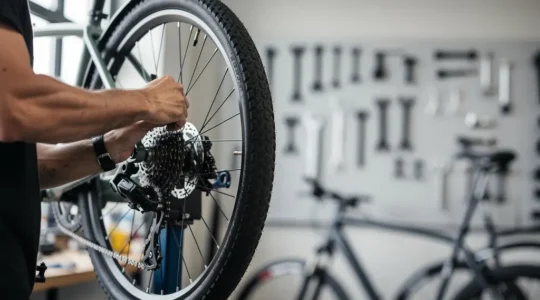
The $500 Savings: Why Pre-Season Maintenance Pays Off
Every workshop manager sees the same story. An e-bike owner comes in with a “small issue”—a skipping chain or a grinding noise—and leaves with a…
Read more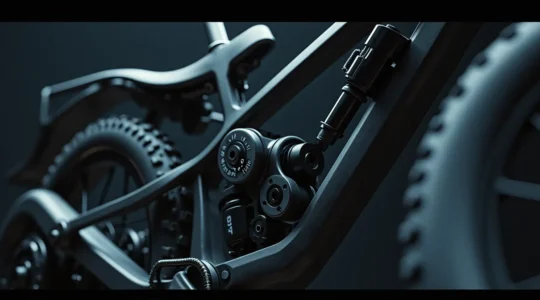
Proprietary vs. Standard Parts: Your Guide to the E-Bike Right to Repair
To prevent your e-bike from becoming a worthless “brick,” you must evaluate its entire repair ecosystem, not just its features at the point of sale….
Read more