Mobility & Transportation
Bicycles are rapidly transforming from recreational vehicles into serious transportation infrastructure. As cities grapple with congestion, pollution, and the inefficiencies of car-dependent planning, cycling—particularly electric-assisted cycling—has emerged as a practical, scalable solution for daily mobility. Whether you’re considering replacing short car trips, connecting to transit stations, or navigating urban centers entirely by bike, understanding how bicycles fit within the broader transportation ecosystem is essential.
This comprehensive resource explores the fundamental aspects of bicycle-based mobility, from the technical and legal distinctions between e-bike types to the practical challenges of integrating cycling with public transit, mastering urban traffic patterns, and optimizing your setup for reliable daily transportation. The goal isn’t just to ride—it’s to move efficiently, safely, and confidently through urban spaces while understanding how your bicycle connects with other transport modes.
Understanding E-Bikes as Urban Transportation Tools
Electric bikes have revolutionized urban cycling by addressing the two primary barriers that prevented broader adoption: physical exertion and speed limitations. However, not all e-bikes function identically, and these differences carry significant legal and practical implications for urban riders.
Throttle Versus Pedal-Assist Systems
The most fundamental distinction in e-bike design separates throttle-controlled and pedal-assist systems. Throttle systems allow riders to engage motor power without pedaling, functioning similarly to a motorcycle or scooter. Pedal-assist (or pedelec) systems only provide motor support when the rider actively pedals, amplifying human effort rather than replacing it.
This technical difference creates a legal divide in most jurisdictions. Pedal-assist bikes typically receive more permissive classification, allowing access to bike lanes, multi-use paths, and areas where motorized vehicles are restricted. Throttle-equipped bikes often face tighter restrictions, sometimes requiring registration, insurance, or prohibition from certain infrastructure. For fitness purposes, pedal-assist systems maintain cardiovascular benefits while reducing barriers like hills and headwinds, whereas throttle systems can eliminate physical effort entirely.
Classification Systems for Urban Contexts
Most regulatory frameworks categorize e-bikes into three primary classes based on maximum assisted speed and throttle presence. Class 1 bikes provide pedal-assist up to 20 mph with no throttle. Class 2 bikes include throttle capability but maintain the 20 mph limit. Class 3 bikes offer pedal-assist up to 28 mph without throttle.
Your urban environment heavily influences which class makes practical sense. Dense city centers with frequent stops, heavy pedestrian traffic, and short block distances rarely benefit from Class 3 speeds—the higher velocity becomes unusable when you’re stopping every two blocks. Conversely, longer commutes through less congested areas or routes connecting suburban areas to transit hubs can fully utilize Class 3 capabilities, dramatically reducing travel time compared to conventional bicycles.
Bridging Bicycles and Public Transit Systems
The most transformative aspect of bicycle transportation isn’t replacing all trips, but rather solving the persistent “last-mile problem” that plagues public transit. Buses and trains excel at moving large numbers of people along fixed corridors, but they can’t reach every doorstep. Bicycles bridge this gap with unmatched efficiency.
Multimodal Integration Strategies
Successful bike-transit integration requires understanding both the physical logistics and the operational restrictions transit agencies impose. Most systems allow folding bikes at all times, while full-size bicycles face restrictions during peak hours or require dedicated spaces on trains and buses. Researching your specific transit operator’s policies prevents unexpected access denials during critical commutes.
The transition between cycling and transit modes demands practice. Timing your arrival to coincide with train schedules, quickly securing your bike in designated areas, and navigating station infrastructure efficiently all become second nature with repetition. Many experienced multimodal commuters maintain buffer time of 3-5 minutes for the transition itself—the physical act of dismounting, walking to platforms, and boarding.
Solving the Hub-to-Destination Gap
Transit stations rarely align perfectly with final destinations. A bike eliminates the choice between long walks or waiting for connecting buses. A five-minute pedal from the station expands your effective transit access area from roughly half a mile (comfortable walking distance) to two or three miles, exponentially increasing the number of destinations reachable via transit.
E-bikes particularly excel here because arrival sweaty and fatigued becomes irrelevant. The assist handles the effort while you provide guidance, making the station-to-office ride as presentable as driving, but faster in congested areas and without parking hassles.
Mastering Urban Cycling Safety and Traffic Navigation
Urban cycling safety isn’t primarily about equipment—it’s about understanding traffic dynamics, positioning yourself predictably, and reading the behavior patterns of drivers, pedestrians, and other cyclists. The infrastructure is shared, and your safety depends on skillful navigation rather than separated facilities alone.
Traffic Flow and Lane Positioning
The most counterintuitive safety principle for new urban cyclists is that taking the lane is often safer than hugging the curb. When traveling at or near traffic speed (common with e-bikes), occupying the center of narrow lanes prevents dangerous passing attempts and makes you maximally visible. This feels uncomfortable initially but dramatically reduces the risk of being sideswiped or cut off.
Reading traffic flow means anticipating congestion patterns, identifying aggressive drivers early, and positioning yourself where you have escape routes. Traffic lights create predictable waves—understanding their timing helps you avoid getting trapped in surge traffic or repeatedly stopping and starting.
Preventing Common Urban Hazards
The “dooring” scenario—when a parked car’s door opens into your path—remains one of the most frequent urban cycling accidents. The solution is strict adherence to the door zone buffer: maintain at least three to four feet of clearance from parked cars, even if this requires taking more of the traffic lane. Scan parked vehicles for occupants, movement, and recently arrived cars.
Pedestrian conflicts typically occur at intersections and mid-block crossings. Reducing speed in high-pedestrian areas, making eye contact before proceeding, and using predictable lines (not weaving) prevents most incidents. Remember that pedestrians often don’t hear bicycles approaching—your responsibility includes announcing your presence when appropriate, not just assuming clear paths.
Managing Stress and Reducing Danger
Road rage incidents between cyclists and drivers stem from misunderstanding and perceived violations of road space rights. Riding predictably, signaling intentions clearly, and occasionally acknowledging courteous driver behavior with a wave reduces tension. Avoid engaging with aggressive drivers—no argument is worth your safety. If a situation escalates, remove yourself by pulling over or taking an alternate route.
The mental dimension of urban cycling safety involves maintaining alertness without paranoia. Experienced riders develop a “soft focus” awareness that monitors multiple threat vectors simultaneously without fixating on any single element. This comes with time and mileage, not from anxiety or obsessive data tracking of near-misses.
Practical Logistics for Daily Bicycle Transportation
Transitioning from occasional recreational riding to bicycle-dependent transportation requires addressing practical considerations that don’t matter for weekend leisure rides but become critical for daily reliability.
Managing E-Bike Weight and Handling
E-bikes typically weigh 50-70 pounds due to motor and battery systems—roughly double a conventional bike’s weight. This mass barely matters while riding (the motor compensates), but creates challenges for storage, lifting onto racks, carrying up stairs, or maneuvering in tight spaces. The pedal-assist feature becomes crucial here: “walk mode” functions on many e-bikes provide powered assistance at walking speed, essentially allowing the bike to help carry itself up ramps or across platforms.
Handling dynamics change with this weight, particularly regarding momentum and braking distances. An e-bike carries more kinetic energy at any given speed, requiring earlier braking and more conscious speed management approaching intersections. Conversely, the weight provides stability in wind and improves traction, making e-bikes feel planted and confident in conditions that would buffet lighter bikes.
Replacing Car Trips and Family Logistics
The most significant transportation impact comes from replacing short car trips—errands, school runs, commutes under five miles—where cars are least efficient and cycling most competitive. Cargo bikes and e-cargo bikes have transformed family logistics, with carrying capacities exceeding 200 pounds for children, groceries, or equipment.
The calculation isn’t all-or-nothing. Many households find that replacing 60-70% of car trips with cycling allows downsizing from two vehicles to one, generating massive savings while maintaining motorized backup for weather extremes or unusual needs. The key is matching bike configuration to actual use patterns: regular cargo needs justify a dedicated cargo bike, while occasional hauling might work with a conventional bike plus panniers or trailer.
Equipment Adaptation for Versatility
Urban transportation cycling crosses diverse surfaces—smooth pavement, cracked streets, gravel paths, wet leaves, metal grates. Tire selection represents the primary equipment adaptation: wider tires (35-45mm) with moderate tread provide sufficient comfort and grip across this variety without the rolling resistance penalty of mountain bike treads. Some riders maintain seasonal wheel sets, swapping to more aggressive treads during winter months.
Lighting systems move from optional to critical for transportation cycling. Commutes happen regardless of daylight, and visibility determines whether drivers see you in time to react. Redundant lighting (multiple front and rear lights) prevents the single-point failure that leaves you invisible. Dynamo hub systems eliminate battery management entirely, generating power from wheel rotation.
Optimizing Efficiency and Transportation Performance
Efficient bicycle transportation isn’t about maximum speed—it’s about consistent, predictable travel times and minimal wasted effort. Understanding the factors that influence effective speed helps optimize route choices and departure timing.
Comparing Transportation Efficiency Metrics
Average speed tells a more useful story than maximum speed for urban transportation. A route with a 25 mph top speed but ten traffic lights might average 12 mph, while a protected bike path at a steady 15 mph wins on overall trip time. When comparing transportation modes, door-to-door time including parking, walking from parking, and waiting reveals cycling’s advantage for urban trips under five miles.
Energy efficiency metrics also favor cycling dramatically. Even accounting for the calories consumed, human-powered transportation achieves the equivalent of thousands of miles per gallon in fossil fuel terms. E-bikes use roughly 20-30 watt-hours per mile, meaning a full charge costing pennies provides 30-50 miles of range—transportation costs measured in dollars per month rather than per week.
Route Selection and Timing Strategies
Dense urban environments offer route diversity that cars can’t exploit due to one-way streets, bike-specific infrastructure, and the ability to use narrower paths. Experienced bicycle commuters often maintain several route options: the fastest fair-weather route, an all-weather route avoiding hazardous surfaces, and a low-stress route prioritizing separation from traffic.
Departure timing optimization considers both traffic patterns and physical comfort. Leaving ten minutes earlier might avoid rush-hour density entirely, while seasonal timing can mean riding during daylight versus darkness. The flexibility to adjust departure windows by small margins creates disproportionate improvements in ride quality and safety.
Availability and Reliability Factors
Bicycle transportation’s greatest strength is its immunity to most delays that plague other modes. Traffic jams don’t affect separated infrastructure. Parking is almost always available and free. Mechanical reliability for quality bikes exceeds automobiles—fewer systems to fail, simpler maintenance, and the ability to complete most trips even with minor issues like a slow leak.
The primary availability constraint is weather tolerance, which varies individually and improves dramatically with proper clothing systems. Many riders discover that appropriate rain gear and fenders make wet weather a non-issue, while extreme heat or cold define personal limits. E-bikes extend weather tolerance by reducing exertion-generated heat in summer and allowing heavier clothing in winter without overheating from effort.
Bicycle-based urban mobility represents a practical, scalable, and increasingly accessible transportation solution that addresses many shortcomings of car-dependent planning while integrating naturally with public transit systems. Success requires understanding the technical, legal, and practical dimensions outlined above—not to become an expert before starting, but to build confidence through knowledge. Whether you’re replacing occasional car trips or committing to car-free living, the fundamentals of positioning, integration, safety, and optimization create the foundation for reliable, efficient, and enjoyable urban cycling transportation.
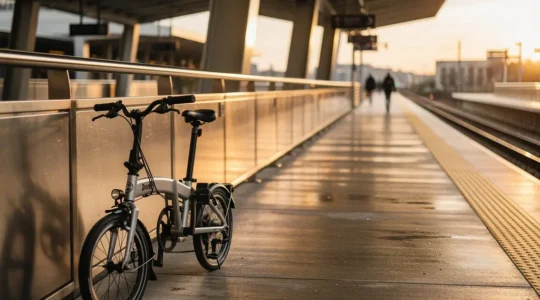
Station Parking: The Weak Link in Intermodal Commuting
The viability of your commute hangs on the security of the transition, not the speed of the ride. Public racks function as security theater; only…
Read more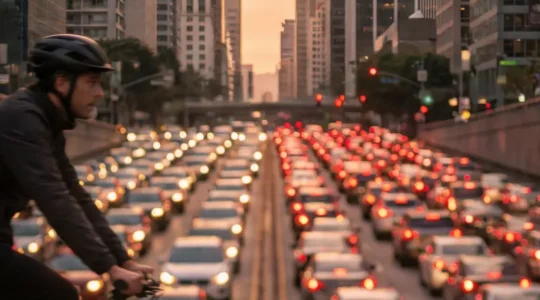
Beat the Gridlock: Data Shows E-Bikes Are 40% Faster Than Cars in Rush Hour
For the frustrated urban commuter, switching to an e-bike isn’t just a minor improvement; it’s a systemic overhaul that can cut travel time by up…
Read more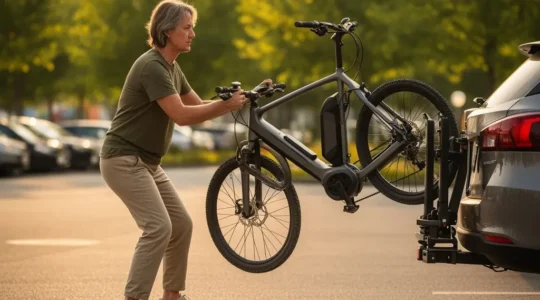
Living with a 60lb E-Bike: Transport and Storage Solutions
Living with a 60-pound e-bike in a third-floor walk-up is not a test of strength, but a spatial logistics challenge requiring mechanical advantage and load…
Read more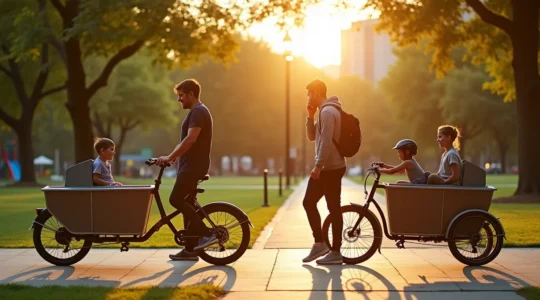
Long-Tail or Front-Loader: Which Cargo Bike Fits Your Family?
Choosing a cargo bike to replace your car goes far beyond the spec sheet; it’s about understanding the hidden physics of handling a heavy, precious…
Read more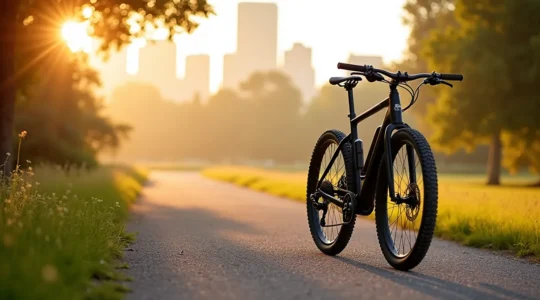
Gravel E-Bikes for Commuting: Are They the Ultimate Hybrid Solution?
A gravel e-bike is the ultimate mixed-surface commuter, but only if you actively manage its inherent trade-offs. True versatility comes from specific tuning—like tire pressure…
Read more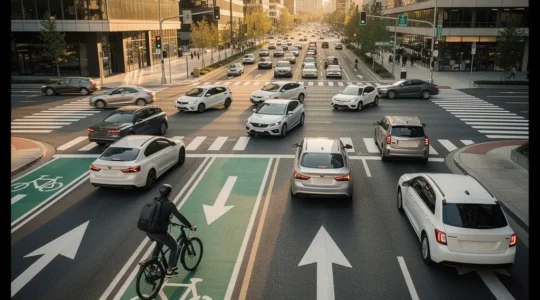
Survival Guide: Navigating Complex Intersections on an E-Bike
In summary: Stop being a passive victim of traffic; learn to proactively control your space and predict driver behavior. The safest route is often not…
Read more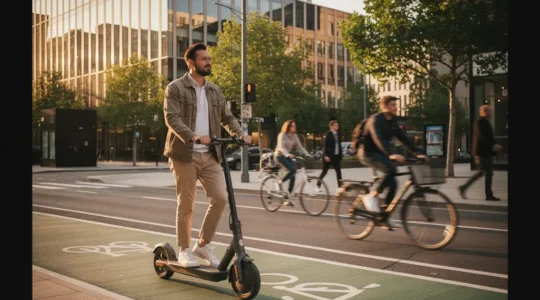
Best E-Mobility Solutions for the Last 2 Miles of Your Commute
That 20-minute walk from the transit hub to your office isn’t just an inconvenience; it’s a significant drain on your daily productivity and focus. This…
Read more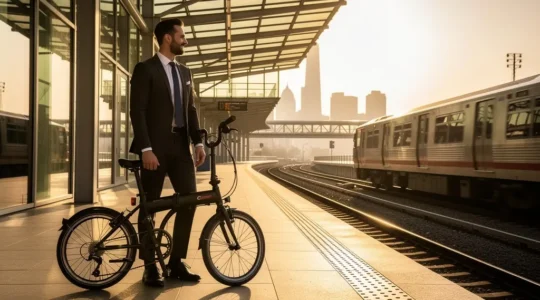
How to Combine Trains and Folding E-Bikes: A Logistical Guide to a Seamless Commute
The key to a successful train-and-e-bike commute isn’t the bike itself, but mastering the operational logistics of the transition points. Folding bikes often bypass rush-hour…
Read more
Pedal-Assist vs. Throttle: Which E-Bike Class Suits a 10-Mile Commute?
Choosing an e-bike isn’t about pedal-assist versus throttle; it’s about matching the bike’s legal and mechanical “DNA” to the reality of your daily commute. Pedal-assist…
Read more