
The greatest mistake athletes make is turning recovery sessions into unintentional workouts, sabotaging their gains.
- An e-bike isn’t a crutch; it’s a precision tool to enforce a strict, low-wattage “recovery ceiling” that is physiologically impossible to breach.
- True recovery is a systemic process. An e-bike ride promotes whole-body lymphatic drainage and hormonal balance, outperforming localized tools like massage guns.
Recommendation: Stop riding by “feel.” Use your e-bike’s motor and a power meter to execute a prescribed, metric-driven recovery protocol that guarantees adaptation, not accumulation of fatigue.
As a performance-focused athlete, you understand the necessity of pushing your limits. The long runs, the threshold intervals, the punishing race days—they are the bedrock of improvement. Yet, the real adaptation, the magic that turns stress into strength, happens during recovery. And this is where most disciplined athletes fail. The common advice is to “take it easy” or go for a “light spin.” But for someone wired to perform, “easy” is a dangerously subjective term, often leading to “junk miles” that add stress rather than alleviate it.
You’ve probably heard that active recovery is better than sitting on the couch. This is true. Gentle movement stimulates blood flow and helps clear metabolic byproducts. But the traditional methods are flawed. A walk might be too low-intensity, while a standard bike ride tempts you to push the pace on the first hill, spiking your heart rate and cortisol levels, effectively negating the recovery purpose. This is the paradox of the dedicated athlete: the same drive that fuels peak performance often sabotages effective rest.
But what if there was a tool that could enforce recovery discipline? What if you could guarantee a session that flushes your system without adding a single point of negative stress? The solution is not about finding more willpower; it’s about using technology to create a system that makes failure impossible. This is the strategic role of the e-bike in a serious training plan. It’s not about making the ride easier; it’s about using the motor as a governor—a tool to prescribe and lock in the perfect physiological state for accelerated repair. Forget what you think you know about e-bikes. We are about to reframe them as the most precise recovery device in your arsenal.
This article provides the strategic framework for integrating e-bike rides into your training. We will explore the science behind why it works, the specific metrics you must control, and the critical mistakes to avoid. Follow this guide to transform your rest days from a guessing game into a calculated advantage.
Summary: Using an E-Bike for a Data-Driven Recovery
- Why Zero-Impact Spinning Accelerates Muscle Repair
- How to Cap Your Watts to Ensure True Recovery
- Massage Guns vs Recovery Rides: Which Is More Effective?
- The Danger of Turning a Recovery Ride into a Threshold Workout
- Post-Race Flushing: When to Ride After a Hard Event
- Why Your E-Bike Display Overestimates Calories Burned by 40%
- Recovery Days: Scheduling Breaks to Save Legs and Battery
- Using E-Bike Metrics to Manage Recovery Rides for Cyclists
Why Zero-Impact Spinning Accelerates Muscle Repair
After a strenuous workout or race, your muscles are inundated with metabolic byproducts like lactate and hydrogen ions, leading to that familiar feeling of soreness and fatigue known as DOMS (Delayed Onset Muscle Soreness). The goal of active recovery is to expedite the clearance of these substances. Passive recovery (i.e., resting) relies on the body’s baseline circulatory function, which is a slow process. Active recovery, however, fundamentally changes the game. By engaging in very light, non-strenuous movement, you activate a “muscle pump” mechanism.

This gentle, repetitive muscle contraction significantly increases blood flow and, more importantly, stimulates the lymphatic system—the body’s waste-disposal network. Unlike the circulatory system, the lymphatic system has no central pump and relies on bodily movement to function. A study on MMA athletes demonstrated that physical methods promoting lymphatic drainage significantly accelerated muscle regeneration and lactate clearance. An e-bike-assisted ride is the perfect modality for this; it allows for continuous, zero-impact spinning at a high cadence, maximizing this pumping effect without imposing any new muscular stress. The motor handles the resistance, while your legs simply facilitate the systemic flush.
The science is clear: active recovery facilitates blood lactate removal more rapidly than passive recovery. The e-bike’s role is to ensure this activity remains purely restorative. It allows you to maintain the ideal cadence and duration for lymphatic stimulation without the risk of elevating your heart rate or power output into a zone that creates more fatigue. It’s not just movement; it’s prescribed, stress-free circulatory and lymphatic enhancement.
How to Cap Your Watts to Ensure True Recovery
The single biggest failure in active recovery is intensity. Athletes are conditioned to push, and “easy” often creeps into a moderate effort that builds more fatigue. Data from Strava reveals that a staggering 70-80% of self-directed recovery rides are performed at an intensity that is too high, negating the restorative benefits. The solution is not more discipline, but a better system. The e-bike, when paired with a power meter, becomes this system by allowing you to enforce a “wattage ceiling.”
A wattage ceiling is a strict upper limit on the power your body is allowed to produce. The e-bike’s motor provides the necessary force to keep the pedals turning, enabling you to maintain a high, fluid cadence (85-95 RPM) while your own contribution remains minimal. For a true recovery ride, your human power output should be kept below 0.5 watts per kilogram of body weight. For a 70kg (154lb) marathon runner, this means contributing less than 35-40 watts—an output so low it’s difficult to maintain on a regular bike without assistance.
Using the e-bike, you can set the assist level high enough that any effort beyond this ceiling feels like “ghost pedaling.” The motor does the work, and you are simply there to facilitate movement. This removes all guesswork and temptation. You are not “riding easy”; you are executing a precise prescription with a non-negotiable power cap. This is the strategic application that separates professional recovery from amateur guesswork.
Action Plan: Power-Based E-Bike Recovery Protocol
- Set Your Zones: Define your recovery zone as 50-60% of your maximum heart rate or under 60% of your Functional Threshold Power (FTP). This is non-negotiable Zone 1.
- Enforce the Ceiling: Use a high pedal-assist mode on your e-bike. The goal is to keep your personal power contribution consistently below 75 watts, and ideally under 0.5 W/kg.
- Configure Power Alerts: Set up an alert on your cycling computer (e.g., Garmin, Wahoo) to beep if your human-generated power exceeds your wattage ceiling (e.g., 0.4 W/kg for runners).
- Maintain High Cadence: Focus on spinning the pedals between 85-95 RPM. The motor provides the resistance; your job is to keep your legs moving fluidly to promote blood flow.
- Automate Assistance: If your e-bike system allows, configure the assistance to increase automatically if it detects you are exceeding the power threshold, forcing you back into the recovery zone.
Massage Guns vs Recovery Rides: Which Is More Effective?
In the modern athlete’s toolkit, two recovery modalities stand out: the percussive massage gun and the active recovery ride. While both have their place, they serve fundamentally different purposes, and understanding this distinction is key to optimizing your recovery stack. A massage gun provides a local, targeted intervention. It’s excellent for breaking up tissue adhesions, releasing specific trigger points, and reducing muscle tone in an isolated area like a tight calf or quad.
An e-bike recovery ride, by contrast, offers a systemic, whole-body benefit. By elevating your heart rate just enough to stimulate circulation and engaging the lymphatic system throughout the body, it works on a global scale. It’s not just about one muscle; it’s about flushing the entire system of metabolic waste, reducing inflammation, and promoting a positive hormonal response conducive to repair. A massage gun is like a sniper, while an e-bike ride is like a city-wide sanitation crew.
The most effective protocol often involves combining both. The optimal sequence is to perform the e-bike recovery ride first to initiate the systemic flush, followed by a targeted session with a massage gun to address any remaining localized tightness. This “systemic-to-local” approach ensures you get the best of both worlds. The table below outlines the key differences to guide your strategy.
| Recovery Method | Scope | Primary Benefit | Time Required |
|---|---|---|---|
| Massage Guns | Local/Isolated | Tissue adhesions, muscle tone | 15-20 minutes |
| E-Bike Recovery Ride | Systemic/Whole-body | Blood flow, lymphatic drainage, hormonal response | 30-40 minutes |
| Combined Protocol | Complete | E-bike ride first (30 min) then targeted percussion (10 min) | 40-50 minutes |
The Danger of Turning a Recovery Ride into a Threshold Workout
The line between a restorative session and a “gray zone” workout that creates more fatigue is incredibly thin. For a high-achieving athlete, the urge to push—even slightly—is a constant battle. A small surge on a hill or a brief sprint to catch a traffic light can be enough to shift your body from a parasympathetic (rest and digest) state to a sympathetic (fight or flight) state, triggering a stress response that undermines the entire purpose of the ride.
When you exceed your Zone 1 power or heart rate ceiling, your body releases stress hormones like cortisol. While essential for performance during a workout, elevated cortisol during a recovery period is destructive. It hampers protein synthesis (muscle repair), disrupts sleep, and can suppress the immune system. Research indicates it can take a full 24-48 hours to normalize cortisol levels after just 10-15 minutes of intensity above the recovery zone. You effectively erase the benefits and dig a deeper recovery hole.
This is where both the e-bike and a strict mental framework are indispensable. The e-bike’s motor acts as your governor, preventing unintentional power spikes. But your mindset must also shift. As coach Nik Cook advises in the Strava Recovery Guidelines, the intensity must be ruthlessly low:
Both heart rate and power have to be strict Zone 1, you should imagine your cranks are made of glass and grannies on shopping bikes should be leaving you for dead.
– Nik Cook, Strava Recovery Guidelines
This is not an exaggeration. If you finish a recovery ride feeling anything more than completely refreshed, you have failed the objective. The goal is zero additional stress. An e-bike makes this goal mechanically achievable, but only if you embrace the philosophy of absolute, uncompromising ease.
Post-Race Flushing: When to Ride After a Hard Event
The hours immediately following a major event like a marathon are a critical window for recovery. Your body is in a state of acute stress, with high levels of inflammation and muscle damage. A properly executed “flush ride” during this period can dramatically accelerate the start of the repair process. The key is timing and intensity, which should be tailored to the nature of the event you just completed.
The optimal window for a post-event flush ride is generally within 2-6 hours after finishing. This allows enough time for initial rehydration and refueling but is soon enough to capitalize on the body’s heightened metabolic state. However, a crucial caveat exists: if your event finishes late in the evening (e.g., after 6 PM), prioritizing sleep is far more beneficial than forcing a late-night ride. A full night’s sleep is the single most powerful recovery tool you have.
The protocol should also vary based on the type of effort. The intense, high-power demands of a short event differ from the prolonged muscular endurance of a marathon. Professional cycling teams have perfected this, often using 15-20 minute e-bike spins in the evening after a hard stage to kickstart recovery. The protocol for a runner after a marathon or a cyclist after a Gran Fondo should be similar: a gentle spin focused on metabolic clearance.
- After a Long Road Race or Marathon: A 30-45 minute gentle spin on the e-bike is ideal. The focus is on sustained, low-intensity movement to clear metabolic waste from the legs.
- After a Criterium or Sprint-Heavy Event: A shorter 20-minute ride with a focus on high, fluid cadence helps clear neuromuscular fatigue.
- After a Time Trial or Max-Effort Run: Central nervous system fatigue is dominant here. Keep the ride very short, 15-20 minutes at the lowest possible intensity, just to keep the legs moving.
Why Your E-Bike Display Overestimates Calories Burned by 40%
For data-driven athletes, metrics are everything. However, not all metrics are created equal, and some can be dangerously misleading. One of the most common and flawed data points shown on consumer e-bike displays is “calories burned.” These displays often use a simplistic algorithm based on distance, speed, and assist level, failing to account for the most important variable: your actual human power contribution.
During a true recovery ride, where your personal power output is deliberately capped at a minimal level (e.g., under 50 watts), your metabolic rate is only slightly elevated above baseline. The e-bike’s motor is doing the vast majority of the work to overcome wind resistance and gravity. Yet, the display, sensing a speed of 15 mph, might estimate a calorie burn similar to that of a conventional bike ride at the same speed. This leads to a massive overestimation, often by 40% or more.
The real metabolic cost is far lower. Studies and lab data show that the actual calorie burn for a 70kg athlete during a Zone 1 recovery ride is only 150-250 kcal/hour, whereas the e-bike’s display might cheerfully report 400, 500, or even 600 kcal. This discrepancy is critical. Relying on the e-bike’s calorie number could lead to errors in your nutritional strategy, causing you to overeat or misjudge your daily energy balance. For recovery, ignore the calorie metric on the display entirely. The only numbers that matter are human watts, heart rate, and cadence—the true measures of your physiological state.
Recovery Days: Scheduling Breaks to Save Legs and Battery
Effective recovery isn’t a random act; it’s a planned, integrated part of a sophisticated training architecture. Just as you schedule your long runs and interval sessions, your e-bike recovery rides must be deliberately placed within your training calendar to maximize adaptation. This concept, known as periodization, applies just as much to rest as it does to work. The nature of your recovery rides should also adapt to your current training phase.
Your e-bike is a tool with its own needs, namely a charged battery. Integrating this into your weekly plan prevents the frustrating scenario of being ready for a recovery ride only to find your bike is out of power. Align your charging schedule with your training blocks. A great practice is to designate recovery days as mandatory charging days, ensuring you always have maximum assistance available to enforce that crucial low-wattage ceiling.
Your recovery protocol should be dynamic based on your training load:
- Base Phase: During periods of high volume but lower intensity, recovery rides can be longer, around 60-90 minutes, focusing on sustained low-wattage spinning (maintaining at least 85 RPM) to build aerobic efficiency without stress.
- Competition Phase: When intensity is high and recovery windows are short, rides should be shorter and more focused. A 25-40 minute spin is often sufficient. In cases of very heavy load, such as during a multi-day event or intense training camp, two short sessions per day can maximize recovery turnover.
- Pre-scheduling: Don’t leave it to chance. Add your recovery rides to your training calendar with specified durations and target assist levels to treat them with the same importance as your key workouts.
Key Takeaways
- Recovery is not passive; it’s an active, prescribed process. The e-bike is a tool to enforce the prescription.
- The goal is zero additional stress. Monitor human power output (watts) and heart rate, not speed or distance.
- A recovery ride is a systemic flush, complementing targeted tools like massage guns by working on the whole body.
Using E-Bike Metrics to Manage Recovery Rides for Cyclists
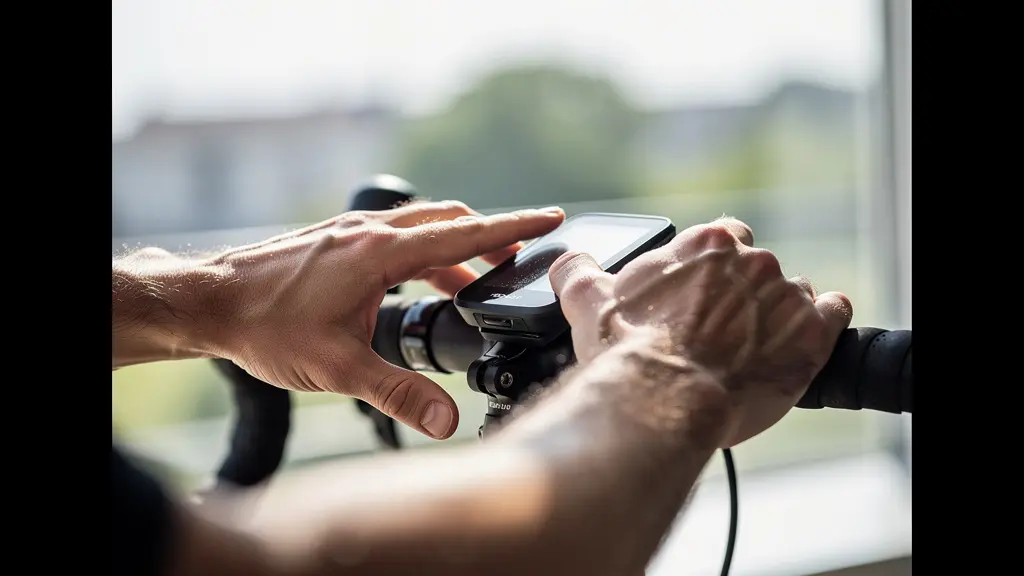
To move from subjective “easy” rides to objective, prescribed recovery, you must speak the language of data. For a performance athlete, a ride that cannot be measured is a ride that cannot be managed. An e-bike recovery session is defined by a specific set of metrics that confirm you are in a restorative state, not an accumulative one. Your bike computer’s dashboard should be configured to display these vital signs, making them the sole focus of your attention.
The ultimate measure of a ride’s restorative value is its impact on your overall training load. In modern training platforms, this is often quantified by a Training Stress Score (TSS). For a session to be genuinely classified as recovery, the Training Stress Score (TSS) should remain under 25-30. Any higher, and you are beginning to add fatigue to the system. This TSS value is your ultimate pass/fail grade for the session.
To ensure you hit this target, your dashboard should be stripped of distracting data like speed and distance. Instead, focus on this essential recovery checklist:
- Human Watts: This is your number one metric. Keep it below your prescribed ceiling (e.g., <0.5 W/kg). This must measure your output, not the total system output including the motor.
- Heart Rate: Your physiological reality check. It must stay firmly in Zone 1 (typically 50-60% of Max HR).
- Cadence: The mechanism for the muscle pump. Aim for a smooth, consistent 85-95 RPM.
- RPE (Rate of Perceived Exertion): Your subjective check-in. It should never exceed a 3 out of 10.
- Heart Rate Decoupling: Post-ride, check this. A value of less than 5% indicates your cardiovascular system was not stressed and the intensity was appropriate.
By focusing exclusively on these metrics, you transform the ride from a casual spin into a calculated, therapeutic intervention that guarantees you are accelerating recovery, not hindering it.
Now that you have the complete protocol, the next step is to integrate it. Begin by scheduling your first metric-driven recovery ride in your training plan and configure your bike computer to display the correct data fields. Execute with precision, and you will unlock a new level of adaptation and performance.