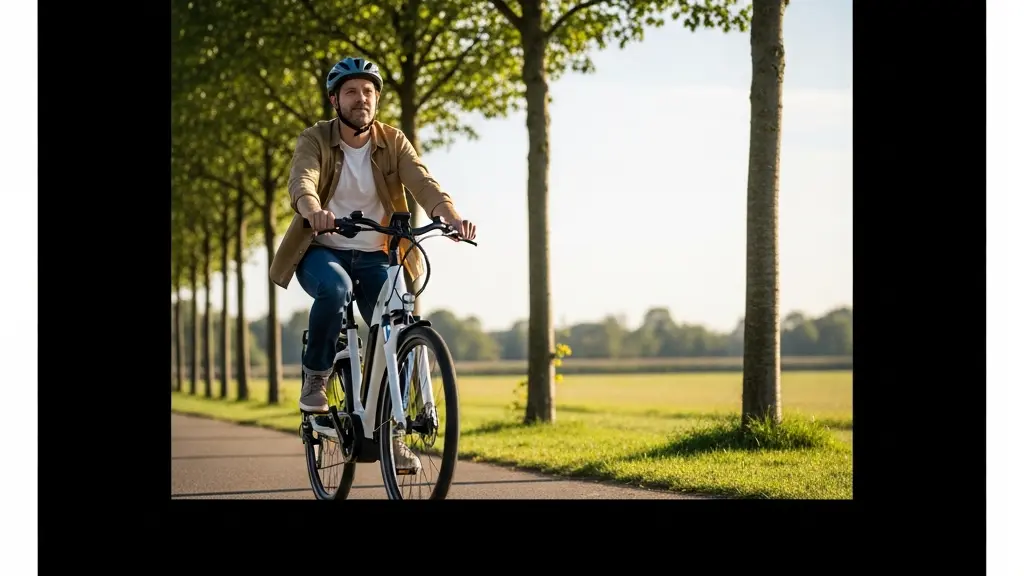
E-biking in Zone 2 offers superior blood pressure reduction compared to high-intensity intervals for sedentary beginners, primarily through unmatched exercise adherence and metabolic sustainability.
- Moderate aerobic exercise reduces systolic BP by approximately 4.5 mmHg, matching HIIT results without the cardiovascular risks for deconditioned patients.
- Electric assistance naturally maintains heart rates at 60% of maximum, creating physiological guardrails that prevent dangerous cardiac spikes.
- The “no sweat” nature of e-biking eliminates psychological barriers, enabling the weekly frequency required for meaningful hypertensive outcomes.
Recommendation: Start with 20-minute daily commutes at assist levels that allow conversational breathing, prioritizing consistency over speed.
Your cardiologist has delivered the warning: your sedentary office lifestyle is no longer compatible with healthy arterial pressure. The prescription is exercise, yet the prospect of high-intensity interval training or pounding the pavement fills you with dread—and legitimate concern for your untrained heart. Popular fitness culture champions the mantra of “no pain, no gain,” pushing the narrative that only maximum exertion yields cardiovascular rewards. But preventive cardiology reveals a counter-intuitive truth: for blood pressure management, sustainable moderate effort consistently outperforms sporadic intensity, particularly when you are rebuilding fitness from a deconditioned state.
This physiological reality makes the electric bicycle not a cheating device, but a precision medical tool. By functioning as cardiac safety guardrails, e-bike assist technology enables you to maintain your heart rate in Zone 2—the specific metabolic band where arterial remodeling and endothelial function improve most safely. Rather than forcing you to choose between inactivity and dangerous overexertion, assisted cycling offers a physiologically honest pathway to meet activity guidelines without the barrier of sweat, fatigue, or fear.
The following guide examines the evidence for e-biking as a hypertensive intervention, from the comparative effectiveness of moderate versus intense exercise to the practical protocols for safe riding in challenging conditions. You will discover why the frequency made possible by “no sweat” commuting matters more than any single workout’s intensity.
For those who prefer visual learning, the following presentation explains the critical distinction between training zones and why moderate intensity forms the foundation of cardiac health:
Understanding these physiological principles prepares you to evaluate how electric assistance specifically benefits cardiac patients. The sections below detail the mechanisms of Zone 2 training, the comparative advantages over walking, safety protocols for heat management, optimal timing strategies, and the metabolic importance of rider effort versus motor power.
Table of Contents: Optimizing Cardiovascular Health Through Electric Cycling
- Why Keeping Your Heart Rate in Zone 2 is Better Than Sprinting
- How Electric Assist Keeps Heart Rates Consistent for Cardiac Patients
- Cycling vs Walking: Which Improves Cardiovascular Health Faster?
- The Risk of Dehydration Increasing Heart Rate on Hot Days
- Morning vs Evening: When is the Best Time to Ride for Heart Health?
- Why Rider Wattage Matters More Than Motor Wattage for Health
- Why You Might Burn More Total Calories on an E-Bike (Frequency Effect)
- Why “No Sweat” Commuting Is the Key to Long-Term Consistency
Why Keeping Your Heart Rate in Zone 2 is Better Than Sprinting
High-intensity interval training (HIIT) dominates fitness headlines with promises of maximum results in minimum time. Yet for sedentary individuals with hypertension, the physiological stress of sprinting can trigger dangerous blood pressure spikes and cardiac strain without delivering superior long-term outcomes. The evidence suggests that moderate aerobic exercise—specifically maintaining Zone 2 heart rate (60-70% of maximum)—produces comparable arterial benefits while significantly reducing acute risks.
A 2023 network meta-analysis of 270 randomized trials found that aerobic exercise training reduced resting systolic blood pressure by 4.49 mm Hg and diastolic by 2.53 mm Hg. Remarkably, HIIT protocols achieved nearly identical reductions at 4.08 mm Hg and 2.50 mm Hg respectively. For a deconditioned office worker, this means the moderate, conversational-pace effort achievable on an e-bike delivers the same vascular benefits as grueling sprint sessions, without the musculoskeletal damage or psychological aversion that causes dropout.
The mechanism lies in metabolic sustainability. Zone 2 training primarily utilizes mitochondrial fat oxidation, improving endothelial function and arterial compliance without the sympathetic nervous system overload generated by maximal efforts. When you sprint, your body enters anaerobic metabolism, producing lactate and cortisol spikes that can paradoxically elevate blood pressure for hours post-exercise—a phenomenon less pronounced during steady-state moderate activity. For cardiac patients, the priority is not瞬时 performance but cumulative vascular load; Zone 2 allows you to accumulate 150 minutes of weekly exercise without the inflammatory stress that compromises adherence.
Crucially, Zone 2 efforts are achievable while maintaining nasal breathing—a simple biofeedback mechanism ensuring you remain below the anaerobic threshold. This physiological honesty prevents the “grey zone” trap where recreational athletes train too hard to recover properly, yet not hard enough to trigger high-intensity adaptations. For blood pressure management, consistency in this moderate band trumps the variability of all-out efforts.
How Electric Assist Keeps Heart Rates Consistent for Cardiac Patients
The primary barrier to Zone 2 adherence is environmental: hills, headwinds, and stop-start urban traffic force heart rate fluctuations that push untrained riders into anaerobic zones or require frequent rest periods. Electric assist technology functions as a cardiac pacemaker for your workout, automatically modulating resistance to maintain steady cardiovascular load regardless of terrain.
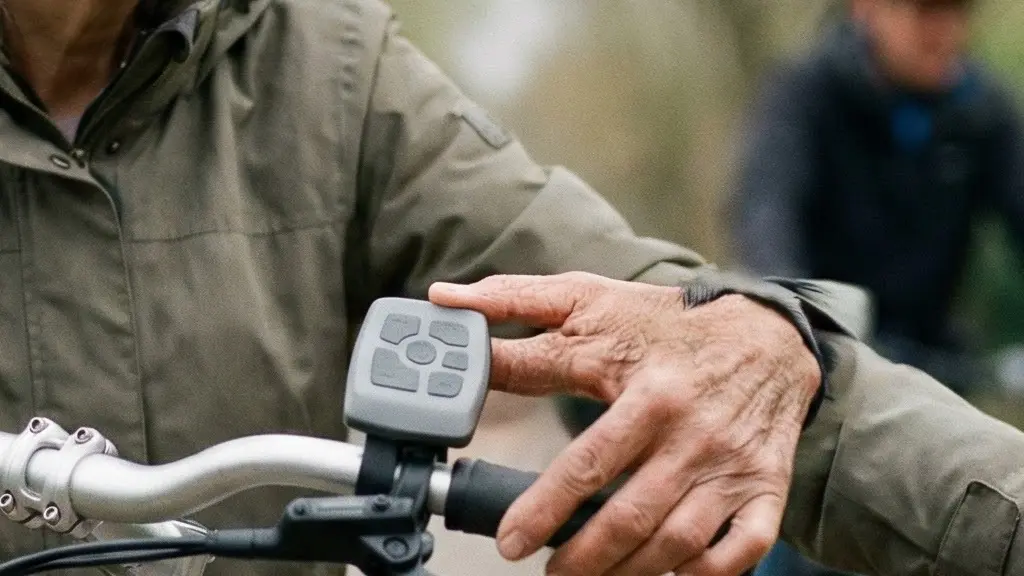
As shown in the image above, the assist controller allows riders to fine-tune their physiological effort in real-time. A 2025 real-world e-bike commuting study reported that regular users maintained a mean heart rate of 60% of their maximum during commutes, operating at 5.9 metabolic equivalents (METs)—precisely the Zone 2 sweet spot for hypertensive patients. Without assistance, the same riders would spike to 85-90% of maximum on inclines, risking arrhythmia or dangerous blood pressure surges.
This cardiac safety guardrail effect proves particularly valuable for patients on antihypertensive medications. Beta-blockers and calcium channel antagonists blunt heart rate response, making perceived exertion unreliable. The motor’s proportional assistance prevents you from unknowingly overloading your cardiovascular system when fatigue or medication masks physiological distress. Rather than replacing your effort, the technology normalizes it, ensuring every ride remains within the therapeutic window prescribed by your physician.
For cardiac rehabilitation, this consistency enables progressive overload without shock. You can extend duration from 10 to 40 minutes over weeks while the motor maintains the same relative intensity, allowing your capillary density and stroke volume to adapt safely.
Cycling vs Walking: Which Improves Cardiovascular Health Faster?
Walking represents the default prescription for sedentary patients, yet its effectiveness is geographically constrained. In hilly terrain or hot climates, walking rapidly escalates from low-intensity (3 METs) to vigorous exertion (6+ METs), pushing hypertensive patients beyond safe thresholds. Cycling eliminates these variables, but traditional bikes present barriers of fatigue and sweat; the e-bike bridges this gap by allowing you to maintain steady Zone 2 output regardless of topography.

The comparative advantage lies in exercise dose. A sedentary office worker might manage 3,000 steps (approximately 30 minutes) during a lunch break walk before heat or joint pain forces cessation. The same individual, on an e-bike, can complete 45-60 minutes of continuous Zone 2 riding without orthopedic stress or thermal overload. This increased volume—multiplied across five weekly sessions—creates the shear stress on arterial walls necessary for nitric oxide release and vascular remodeling.
Furthermore, cycling’s non-weight-bearing nature reduces the impact on degenerating joints common in overweight hypertensive patients. While walking remains valuable for bone density, the e-bike provides a metabolic entry point for those whose body mass index makes ambulatory exercise painful. The assisted pedaling motion specifically targets the large muscle groups of the legs, creating the peripheral vascular resistance changes that drive blood pressure reduction more efficiently than upper-body walking mechanics.
Ultimately, the best exercise is the one you perform consistently. If walking terrain forces you to stop frequently or avoid hills, the e-bike offers a more controllable physiological stimulus.
The Risk of Dehydration Increasing Heart Rate on Hot Days
Heat stress creates a compounding danger for hypertensive cyclists. Dehydration reduces plasma volume, forcing the heart to beat faster to maintain cardiac output and blood pressure. For patients taking diuretics or beta-blockers—medications that already alter fluid balance and heart rate response—this physiological stress can precipitate heat exhaustion or cardiac events before subjective thirst registers.

A 2025 American Heart Association heat-safety update notes that more than 1,200 people in the U.S. die annually from extreme heat, with cardiovascular disease significantly increasing vulnerability. Antihypertensive medications can mask the warning signs of overheating; beta-blockers suppress the tachycardia that normally alerts you to distress, while diuretics accelerate dehydration. The image above illustrates the constant fluid loss occurring even during moderate exertion.
Environmental heat also causes peripheral vasodilation. To dissipate temperature, blood vessels near the skin dilate, dropping blood pressure and forcing the heart to compensate with increased rate. For someone with autonomic dysfunction or arterial stiffness, this compensatory mechanism may fail, leading to syncope or acute coronary syndrome. Pre-hydration becomes critical: consuming 500ml of water two hours before riding, then 150ml every 15 minutes during activity.
Safety Protocol for Hot-Weather Riding: Essential Steps
- Assess medication risks: if you take antihypertensives (especially beta blockers, diuretics, ACE inhibitors/ARBs), treat hot days as higher-risk and consult your clinician before summer riding.
- Pre-hydrate strategically: drink 500ml of water two hours before your ride and set timer reminders for 150ml intake every 15 minutes during activity.
- Modulate intensity early: engage maximum electric assist for the first 10 minutes in heat to prevent early cardiovascular strain, then adjust to target effort once fully warmed up.
- Optimize route and timing: avoid 10am-4pm heat peaks, prioritize tree-shaded paths, and minimize traffic stops that trap you in radiant heat without airflow cooling.
- Monitor masked symptoms: watch for unusual fatigue, dizziness, nausea, or confusion that medications may hide; stop immediately, seek shade, and call for help if symptoms persist.
Remember that sweat evaporation—not sweat itself—cools you. High humidity prevents this cooling mechanism, making 25°C with 90% humidity more dangerous than 32°C with dry air.
Morning vs Evening: When is the Best Time to Ride for Heart Health?
Circadian biology suggests morning hours carry heightened cardiovascular risk. The “morning surge” in blood pressure—an abrupt rise in cortisol and catecholamines upon waking—increases heart attack and stroke incidence between 6am and noon. This has led to speculation that evening exercise might offer safer timing for hypertensive patients by avoiding this sympathetic storm.
However, a 2025 randomized crossover trial using 24-hour ambulatory BP monitoring found that morning exercise (20 ± 8 mmHg surge) and evening exercise (22 ± 10 mmHg surge) showed no significant difference in blood pressure variability compared to controls (P = 0.40). The body adapts to exercise timing; the acute morning surge does not appear to be exacerbated by moderate Zone 2 activity in trained individuals.
More important than chronobiology is consistency architecture. Morning riders benefit from lower traffic pollution and cooler temperatures in summer months, while evening riders may enjoy reduced UV exposure and post-work stress relief. For medication timing—particularly once-daily antihypertensives taken in the morning—evening exercise might coincide with peak drug efficacy, potentially causing excessive blood pressure drops (orthostatic hypotension) when combined with vasodilation from cycling.
The practical recommendation prioritizes adherence: choose the time you will actually ride consistently. A 7am commute that happens daily provides superior cardiovascular outcomes to sporadic evening workouts.
Why Rider Wattage Matters More Than Motor Wattage for Health
Concerns that electric motors “do the work for you” misinterpret exercise physiology. Health outcomes depend on relative physiological effort—your power output relative to your fitness level—not absolute wattage. A 250-watt motor assisting a deconditioned rider producing 100 watts creates a 25% effort-to-assist ratio that keeps heart rate in Zone 2; the same motor assisting a trained athlete might require 200 watts of human input to achieve the same heart rate.
To show why rider output still matters on an e-bike, one real-world commuting study reported that regular users averaged 1.36 watts per kilogram of body weight (SD 0.34). For an 80kg individual, this equals approximately 109 watts of continuous power generation—sufficient to trigger mitochondrial biogenesis and capillary growth in leg muscles. The motor does not eliminate this work; it normalizes it against variables like wind and grade.
The critical metric is chronic training load—the accumulation of effort over weeks. A rider generating 1.3 W/kg for 45 minutes, five days weekly, accumulates greater metabolic stimulus than someone generating 2.0 W/kg for 10 minutes before exhaustion forces cessation. The e-bike enables the former by preventing anaerobic spikes that shorten sessions. Your cardiovascular system responds to the volume of moderate-intensity work, not the peak wattage displayed on a motor controller.
Focus on maintaining a cadence above 60 revolutions per minute; this pedaling frequency optimizes venous return and cardiac preload without requiring excessive force that spikes blood pressure.
Why You Might Burn More Total Calories on an E-Bike (Frequency Effect)
The caloric equation for weight management and cardiovascular health favors frequency over intensity. While a vigorous hour-long spin class might burn 600 kilocalories, the resulting muscle damage and fatigue often necessitates 48-72 hours of recovery. In contrast, e-biking enables daily 200-kilocalorie sessions without exhaustion, yielding 1,000 weekly kilocalories versus 600 from the sporadic intense workout.
One simple indicator that e-bikes can increase ride frequency is that e-bikes achieved the highest shared-micromobility utilization rate in North America in 2023 at 3.9 trips per bike per day. This usage pattern reflects the adherence architecture of low-friction transportation: when exercise integrates seamlessly into commuting without requiring showers, special clothing, or recovery periods, it becomes a default behavior rather than a planned ordeal.
Metabolically, frequent moderate sessions maintain insulin sensitivity and lipid oxidation pathways in a constantly activated state. Sporadic intense sessions create a “yo-yo” metabolic environment where the body compensates for energy deficit with increased hunger and reduced non-exercise activity thermogenesis. The e-bike’s “no sweat” advantage means you can ride to work, attend meetings without showering, and ride home—accumulating 40 minutes of Zone 2 time twice daily without perceiving it as “exercise” requiring willpower.
For blood pressure specifically, the daily shear stress on arteries from repeated moderate rides appears more effective for endothelial function than weekly spikes from intense efforts.
Key Takeaways
- Zone 2 heart rate training (60% HRmax) reduces blood pressure as effectively as high-intensity intervals while minimizing cardiac risk for beginners.
- Electric assist acts as a physiological regulator, preventing dangerous heart rate spikes and enabling consistent daily effort through variable terrain.
- Exercise adherence—riding frequently without exhaustion or sweat—drives cardiovascular outcomes more than any single workout’s intensity.
Why “No Sweat” Commuting Is the Key to Long-Term Consistency
The psychological barrier to exercise adherence is not laziness but anticipated suffering. When physical activity associates with dripping sweat, burning lungs, and subsequent fatigue, the brain’s reward circuits fail to reinforce the behavior. To underline why low-friction routines matter for blood-pressure improvements, the American Heart Association notes that only about one in five adults and teens get enough exercise to maintain good health. The primary dropout points occur when exercise disrupts daily routines—specifically, when it requires showering, clothing changes, or recovery time.
The e-bike eliminates these friction points through metabolic stealth. By keeping effort below the sweat threshold (approximately 50-60% of VO2 max), you can commute in business casual attire, arrive presentable, and integrate 150 weekly minutes of cardiovascular exercise without dedicating specific “workout time.” This integration transforms exercise from a scheduled chore into an environmental default—a concept behavioral scientists call “habitus.”
For hypertensive office workers, this consistency is therapeutic. Blood pressure reduction requires weeks of accumulated vascular shear stress to improve arterial compliance. Sporadic intense workouts separated by sedentary weeks fail to maintain the endothelial adaptations necessary for sustained hypotensive effects. The “no sweat” e-bike commute, performed five days weekly, creates the regular stimulus required while preserving glycogen stores and mental energy for professional performance.
Consult your physician to establish your personal Zone 2 heart rate zones, then select an e-bike assist level that keeps your breathing conversational throughout the ride. Begin with 20-minute sessions and progress by 10% weekly duration. The path to lower blood pressure does not require suffering—only the consistent, moderate rhythm that electric assistance makes possible for every body, every day.