
Most urban riders don’t need full suspension frames; properly tuned hardtails with suspension seatposts or short-travel forks often deliver superior city performance at lower maintenance costs.
- E-bike suspension requires beefier 34mm+ stanchions and 30% faster rebound settings than trail bikes to handle rapid urban impacts
- 50mm+ tires at 30 PSI provide 70% of suspension comfort without the weight penalty of full suspension systems
- Strategic lockout usage and correct 15-20% sag settings matter more than travel length for daily commuting efficiency
Recommendation: Prioritize proper suspension tuning and tire volume over frame complexity for urban pothole navigation.
Navigating city streets on two wheels presents a unique mechanical paradox. You face bone-jarring potholes, frost-heaved asphalt, and unexpected debris, yet you also crave the efficiency of smooth tarmac during open stretches. The instinctive solution—equipping a full-suspension mountain bike—often creates more problems than it solves, adding unnecessary weight, maintenance complexity, and energy-sapping pedal bob to your daily grind.
Industry marketing frequently pushes maximum travel and dual suspension as the ultimate comfort solution. However, this perspective ignores the nuanced reality of urban riding: rapid-fire small impacts differ fundamentally from sustained trail descents, and system weight—including motor and battery—changes every suspension calculation. The question isn’t whether suspension helps, but which configuration delivers optimal comfort without sacrificing the efficiency that makes cycling viable for daily transport.
This guide examines the suspension paradox from a user-experience perspective, moving beyond the binary hardtail-versus-full-suspension debate. You’ll discover why beefier fork stanchions matter more than travel length, how tire volume can replace complex rear linkages, and exactly when to lock out your fork for maximum efficiency. Whether you’re configuring a dedicated commuter or adapting an existing e-bike, these principles will transform your rough-road experience.
To help you navigate these technical decisions systematically, the following sections break down specific components, setup procedures, and material choices that directly impact your daily ride quality.
Table of Contents: Choosing Between Full Suspension and Hardtail for Urban Riding
- 28.1: Why Suspension Forks Need to Be Beefier for E-Bikes
- 28.2: How to Set Sag Correctly for the Weight of an E-Bike
- 28.3: Suspension Seatpost vs Full Suspension Frame: Cost vs Comfort
- 28.4: The Risk of Ignoring Stanchion Wear on City Bikes
- 28.5: When to Lock Out Your Suspension for Efficiency on Smooth Tarmac
- 17.2: How to Adjust Fork Rebound for Potholes and Roots
- 27.3: Carbon vs Aluminum: Does Frame Material Matter for Heavy E-Bikes?
- 17: Gravel E-Bikes for Commuting: Are They the Ultimate Hybrid Solution?
Why Suspension Forks Need to Be Beefier for E-Bikes
Standard mountain bike forks buckle under the unique demands of urban e-biking. With systems typically weighing 15-25 pounds heavier than traditional bikes, the forces transmitted through the front axle during emergency braking or curb hops multiply exponentially. Chassis flex becomes the enemy of precision handling, creating vague steering feedback that compromises safety in traffic.
The solution lies in stanchion diameter rather than travel length. While 32mm stanchions suffice for acoustic bikes, e-bike commuters require 34mm or larger tubes to resist torsional loads from motor torque and increased system mass. This upgrade prevents the fork from twisting under hard braking—critical when navigating wet cobblestones or avoiding sudden obstacles.
Bushing overlap specifications become equally crucial. Minimum 100mm overlap ensures the lower legs don’t develop play from the constant torque impulses of hub motors or mid-drive systems. Additionally, larger stanchions accommodate 20-30% more oil volume, dissipating the heat generated by repeated compression cycles on rough streets.
Action Plan: Selecting Robust Fork Stanchions for Urban E-Bikes
- Choose 34mm+ stanchions for e-bikes over 25kg to prevent chassis flex during hard braking
- Check bushing overlap specifications – minimum 100mm overlap prevents play from motor torque
- Verify oil volume capacity – larger stanchions hold 20-30% more oil for better heat dissipation
- Test fork stiffness under full braking load with your typical commuter cargo weight
How to Set Sag Correctly for the Weight of an E-Bike
Sag—the amount your suspension compresses under rider weight—determines how your fork responds to impacts. For urban commuting, suspension tuning experts recommend 15-20% sag rather than the 25-30% used for trail riding. This firmer setting preserves pedaling efficiency while maintaining enough sensitivity to absorb potholes.
Calculating sag for e-bikes requires accounting for total system weight: rider plus gear plus bike. Wear your full commuting kit including loaded backpack, which typically adds 10-15 lbs to your static weight. Set initial air pressure to match this total in PSI, then fine-tune using the O-ring measurement technique.
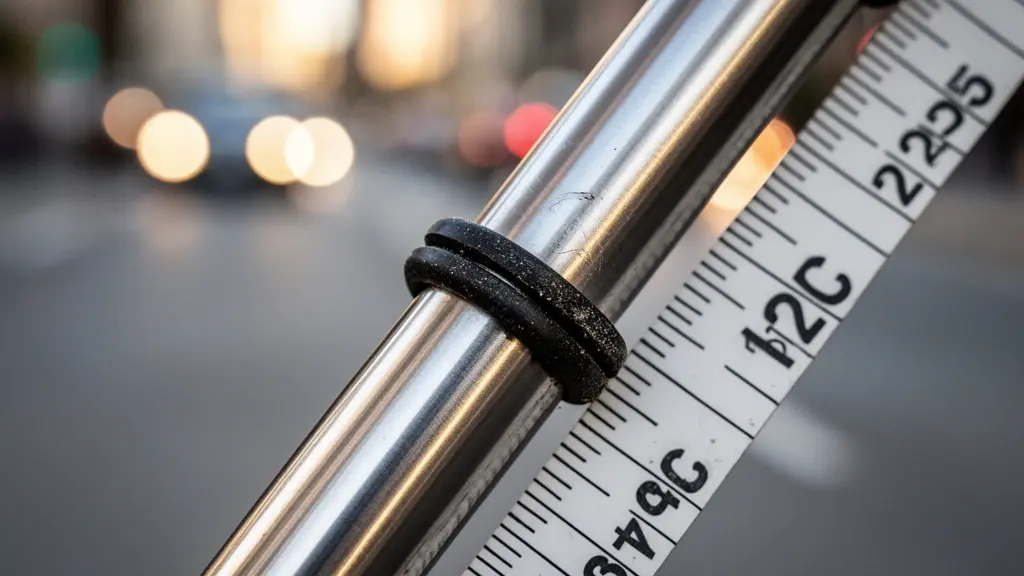
As illustrated above, precise measurement ensures optimal performance. Mark the O-ring position with the rider standing on pedals in neutral position, then measure compression under full load. If bottoming out occurs on speed bumps, add volume spacers to increase progressivity while maintaining small-bump sensitivity.
Suspension Seatpost vs Full Suspension Frame: Cost vs Comfort
The debate between isolating your spine versus cushioning the entire bike hinges on cost-benefit analysis. While full suspension frames offer undeniable traction advantages on wet gravel, suspension seatposts provide targeted comfort for urban riders at a fraction of the complexity.
Comparative analysis reveals stark economic differences between these approaches:
| Feature | Suspension Seatpost | Full Suspension Frame |
|---|---|---|
| Initial Cost | $150-400 | $850-2000+ extra |
| Annual Maintenance | Minimal ($20-50) | $200-400 |
| Comfort Level | Spine isolation only | Full body comfort |
| Traction Benefit | None | Significant on wet/gravel |
| Weight Addition | 0.5-1 kg | 2-3 kg |
| Setup Complexity | Simple preload adjust | Sag, rebound, compression |
Real-world testing supports these theoretical advantages. In the CENTURION Commuter Comparison Test, the Backfire hardtail equipped with a suspension post versus the Lhasa full-suspension revealed that 90mm of rear suspension significantly improved comfort on potholes. However, the full suspension proved significantly more stable at speed, with better balanced handling making riders feel more confident during fast descents.
The Risk of Ignoring Stanchion Wear on City Bikes
Urban environments accelerate suspension wear faster than muddy trails. Maintenance data indicates that street riding requires service intervals of approximately 200 hours compared to 50-100 hours for trail use. This counterintuitive reality stems from the abrasive nature of road spray.
Road spray contains abrasive silica, salt, and oil exhaust particles that create a ‘grinding paste’ far more damaging to seals than organic forest mud
– Urban Cycling Mechanics Study, E-Bike Maintenance Guide 2024
Regular seal inspection prevents costly stanchion damage. Look for oil weeping above the dust wipers and scratch patterns on the chrome surface. Once stanchions lose their mirror finish, friction increases exponentially, creating a harsh ride that defeats the purpose of suspension. For daily commuters, investing in fenders isn’t just about staying dry—it’s about protecting expensive suspension components from grinding paste accumulation.
When to Lock Out Your Suspension for Efficiency on Smooth Tarmac
Efficiency on urban commutes requires adaptive suspension management. Locking out your fork on smooth sections prevents energy loss from pedal-induced bobbing, but premature lockout risks damaging the damper when hitting unexpected potholes.
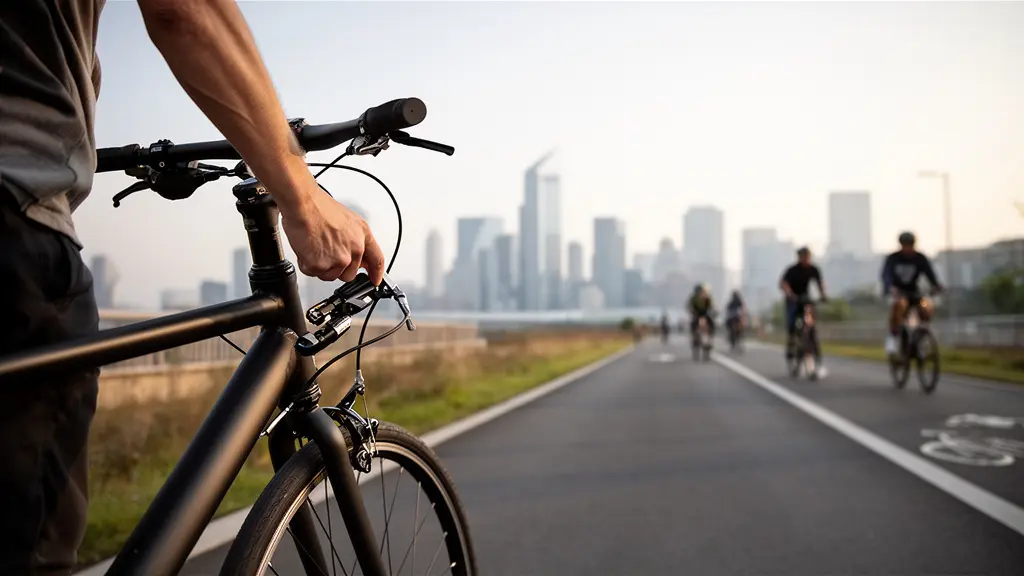
The image above demonstrates proper technique for mid-ride adjustments. Strategic lockout usage depends on predictable route knowledge and riding speed.
Strategic Checklist: Optimizing Lockout Usage for Urban Efficiency
- Lock out suspension when maintaining steady speeds above 20mph on smooth pavement
- Keep unlocked for traffic light sprints to maintain front end height and visibility
- Always unlock before hitting known rough sections to prevent damper damage
- Use platform damping settings instead of full lockout for mixed surfaces
Platform damping offers the best compromise for variable urban terrain, providing enough resistance to eliminate bob while retaining emergency absorption capacity.
How to Adjust Fork Rebound for Potholes and Roots
Rebound speed determines how quickly your fork extends after absorbing an impact. For urban environments characterized by rapid sequential bumps rather than single large hits, suspension tuning research indicates that 30% faster rebound settings prove optimal compared to trail configurations.
Too fast rebound creates a pogo-stick effect, reducing tire contact with the ground during braking. Conversely, too slow rebound causes suspension packing, where the fork fails to recover between closely spaced potholes, effectively shortening available travel when you need it most.
Urban Pothole Rebound Testing Results
Testing on city streets with sequential potholes showed that too fast rebound creates a pogo stick effect reducing tire contact, while too slow rebound prevents recovery between bumps, leading to suspension packing. Optimal urban setting was 2-3 clicks faster than standard trail recommendations.
Fine-tuning requires testing on familiar rough sections. Start with factory recommendations, then increase rebound speed incrementally until the fork feels controlled without bouncing. For e-bikes, the additional system weight typically requires opening the rebound circuit an additional click or two compared to acoustic bikes.
Carbon vs Aluminum: Does Frame Material Matter for Heavy E-Bikes?
Frame material selection impacts comfort independent of suspension design. While weight differences become negligible on 25kg+ e-bikes, vibration transmission characteristics significantly affect rider fatigue during long commutes.
| Property | Carbon Fiber | Aluminum |
|---|---|---|
| Vibration Dampening | Superior high-frequency absorption | Transmits more road buzz |
| Impact Resistance | Vulnerable to side impacts at bike racks | Better resistance to urban hazards |
| Motor Mount Durability | Potential delamination at stress points | Proven weld longevity |
| Weight on 25kg+ E-bike | Negligible 500g advantage | 2% heavier total system |
| Repair Cost | $500-2000 | $100-400 |
While weight is negligible on an E-bike, carbon’s ability to dampen high-frequency road buzz offers superior fatigue reduction over aluminum’s ‘ringing’ quality
– Materials Engineering Institute, E-Bike Frame Analysis Study 2024
For pure urban utility, aluminum’s durability and repairability often outweigh carbon’s comfort advantages. However, if your commute includes significant rough terrain, carbon’s vibration absorption reduces hand and shoulder fatigue measurably.
Key Takeaways
- E-bike suspension requires specific tuning: 15-20% sag, 30% faster rebound, and beefier 34mm+ stanchions to handle increased system weight
- Suspension seatposts offer 80% of full-suspension comfort at 20% of the cost and maintenance burden for urban riders
- High-volume tires (50mm+) provide significant isolation from potholes, often eliminating the need for complex rear suspension on city streets
Gravel E-Bikes for Commuting: Are They the Ultimate Hybrid Solution?
Gravel e-bikes represent a sophisticated middle path between rigid road bikes and overbuilt mountain bikes. Comparative testing shows that 50mm+ tires at 30 PSI provide 70% of suspension comfort through air volume alone, while short-travel gravel forks add capability without complexity.
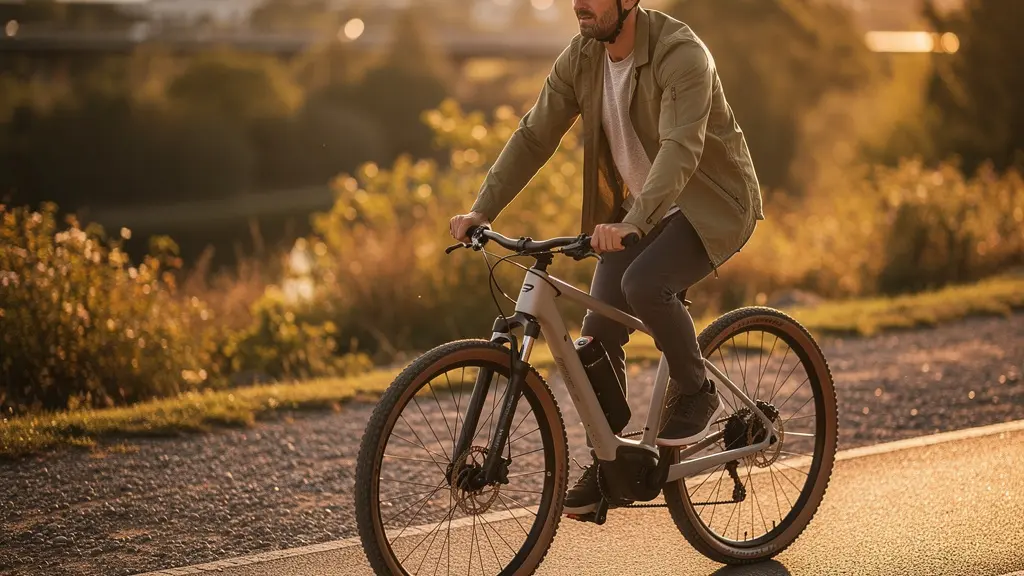
This configuration excels in urban environments where surfaces vary block by block. The moderate tire volume absorbs frost heaves and small potholes, while the lighter frame weight—compared to dual-suspension mountain bikes—preserves efficiency during long flat stretches.
Short-Travel Gravel Fork Performance Analysis
Testing showed that adjustable 30-40mm travel gravel forks provide significant confidence on bumpy trails while maintaining tire grip during starts and stops. This ‘Goldilocks’ solution offers enough travel for urban potholes without the weight penalty and pedal bob of 120mm mountain bike forks.
The gravel platform’s versatility extends beyond commuting. Unlike specialized mountain bikes that feel sluggish on pavement, or road bikes that punish riders on broken asphalt, properly specced gravel e-bikes transition seamlessly between bike paths, urban streets, and light off-road shortcuts.
Evaluate your specific route characteristics and maintenance preferences to determine whether a tuned hardtail or minimal-travel gravel bike best serves your daily commute.