
E-bikes do not eliminate aerobic training; they function as metabolic governors that optimize oxygen uptake by maintaining sustained moderate intensity rather than sporadic severe exertion.
- Motor assistance shifts effort from severe/heavy domains (above gas exchange threshold) to moderate aerobic corridors (51–73% VO2 max), enabling longer time-in-zone
- Riders achieve 44–48% of commute time in vigorous intensity despite assist, producing the 10–20% VO2 max improvements typically reserved for conventional cycling protocols
- Progressive reduction of assist levels over 12 weeks allows deconditioned beginners to accumulate 3-hour weekly sessions at 110 bpm average, reversing age-related respiratory decline
Recommendation: Focus on ventilatory threshold markers and respiratory exchange ratios rather than speed or perceived effort to validate your aerobic stimulus.
The prevailing assumption that pedal assistance nullifies physiological adaptation stems from a fundamental misunderstanding of metabolic zone training. Many assume that without the gasping, burning sensation of unassisted hill climbs, the cardiovascular system remains unstimulated. This reflects the platitude that fitness requires suffering, that oxygen uptake improvements demand relentless glycolytic effort. Yet emerging exercise physiology reveals a more nuanced mechanism.
Conventional cycling often pushes untrained riders into the severe intensity domain (>100% VO2 max), triggering rapid fatigue and limiting total training volume. E-bikes, conversely, act as metabolic governors, preventing the carbohydrate crossover that truncates sessions while maintaining sufficient stimulus within the aerobic corridor. By modulating assistance strategically, riders accumulate greater total oxygen turnover—the true driver of mitochondrial biogenesis—without the premature failure associated with high-intensity interval approaches.
This analysis examines the specific mechanisms by which electric assistance enhances respiratory capacity, from the ventilatory threshold recalibration occurring during Tour mode riding to the progressive overload protocols that transition users from Turbo to Eco settings. We will dismantle the myth of “cheating” through evidence-based exploration of gas exchange dynamics, fat oxidation rates, and the longitudinal adaptations observed in both senior populations and sedentary beginners.
To understand how these mechanisms translate into measurable lung capacity gains, the following sections deconstruct the physiological reality of assisted riding, the strategic use of power modes, and the specific metrics that dictate training efficacy. Each cluster addresses a distinct facet of aerobic development, from the paradox of breathlessness on steep climbs to the environmental constraints of urban training environments.
Table of Contents: Strategic Aerobic Development With Electric Assist
- Why You Still Get Out of Breath on Steep Climbs (Even with Assist)
- How to Use “Tour” Mode to Stay in the Aerobic Corridor
- Aerobic Benefits for Seniors: Reversing Respiratory Decline
- The Risk of Deep Breathing in Heavy Traffic Zones
- From Turbo to Eco: A 12-Week Plan to Reduce Assist
- Heart Rate vs Power: Which Metric Dictates Your Effort?
- How Moderate Effort Burns More Fat Than High Intensity (Sometimes)
- Endurance Training: How E-Bikes Enable 3-Hour Rides for Beginners
Why You Still Get Out of Breath on Steep Climbs (Even with Assist)
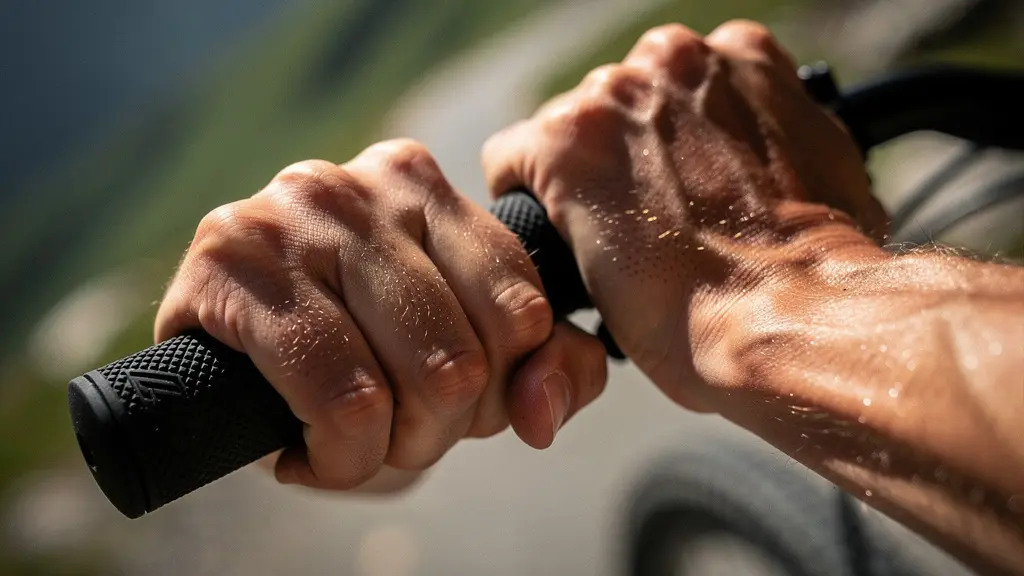
The sensation of respiratory distress during assisted ascents confounds many new riders who expect motor support to eliminate physiological strain. On gradients exceeding 8%, even 250W of electric assistance cannot fully compensate for the gravitational load multiplied by body mass. Riders frequently observe white-knuckle grip tension and elevated heart rates during these segments, indicating that the cardiovascular system remains significantly challenged despite mechanical aid.
Research demonstrates that e-bike riders experience approximately 36% lower exertion than the gas exchange threshold, shifting exercise from the heavy domain to the moderate domain. Rather than operating above the critical power threshold where fatigue accumulates exponentially, riders maintain intensity just below the ventilatory threshold II. This positioning is optimal for mitochondrial adaptation because it allows sustained oxygen consumption without the exponential lactate accumulation that forces session termination.
The breathlessness experienced represents not a failure of the assist system, but rather the successful maintenance of aerobic intensity. While conventional cyclists might spike into the severe domain (>100% VO2 max) on identical gradients, e-bike users remain in the 80–90% maximum heart rate zone—sufficient to drive central cardiovascular adaptations including increased stroke volume and capillary density. The motor essentially prevents the glycolytic crossover that truncates training stimulus in deconditioned populations.
How to Use “Tour” Mode to Stay in the Aerobic Corridor
Tour mode—typically providing 100–150% of rider input—creates a metabolic sweet spot that exercise physiologists term the “aerobic corridor,” situated between the first ventilatory threshold (VT1) and the gas exchange threshold (GET). In this zone, fatty acid oxidation predominates while sufficient oxygen uptake occurs to stimulate peripheral vascular adaptations. Systematic reviews indicate that e-cycling elicits 51–73% of VO2 max during e-cycling versus 58–74% during conventional cycling—a difference that proves negligible for aerobic base development.
Recent field measurements of regular commuters reveal Mean VO2 of 20.8 mL/kg/min (5.9 METs) during e-bike commuting, with 44–48% of ride time classified as vigorous physical activity. Uphill segments specifically reached 7.0–7.5 METs, while flat terrain maintained 5.5–5.9 METs. This distribution validates the talk-test recalibration approach: if you can speak in complete sentences but cannot sing, you are operating within the aerobic corridor regardless of assist level.
The strategic value of Tour mode lies in its prevention of intensity drift. Without assistance, riders often unconsciously reduce power output on flat sections to conserve energy for anticipated climbs, dropping below the 50% VO2 min threshold required for adaptation. Tour mode maintains minimum power floors, ensuring that time-in-zone accumulates consistently throughout the ride rather than oscillating between excessive intensity and insufficient stimulus.
Aerobic Benefits for Seniors: Reversing Respiratory Decline
Aging typically precipitates a 10% decline in VO2 max per decade after age 30, driven by reduced maximal heart rate, decreased stroke volume, and deteriorating pulmonary diffusion capacity. However, longitudinal data demonstrates that e-bike interventions produce approximately 10% increase in aerobic performance (3.5 ml O2 min⁻¹ kg⁻¹), with a corresponding 13% decrease in all-cause mortality risk among older populations.
A 2024 intervention study examining adults aged 57.1 years (average BMI 27.7) revealed that just one week of e-bike riding—minimum 30 minutes daily for three or more days—produced measurable cardiometabolic improvements. Participants demonstrated 6–9 minute daily increases in moderate-to-vigorous physical activity, 77-minute reductions in sedentary time, improved continuous glucose regulation, and reduced central arterial stiffness. These adaptations occurred despite participants having no prior cycling experience.
We know that physical activity reduces the risk for multiple diseases including cardiovascular disease, cancer, and diabetes—and the intensity of physical activity during e-cycling is sufficient to provide these health effects.
– Amund Riiser, National Geographic
For seniors, e-bikes eliminate the intimidation barrier associated with conventional cycling, where initial attempts often result in distressing hyperventilation that discourages adherence. By guaranteeing that riders can complete 30–45 minute sessions without premature exhaustion, e-bikes enable the consistent training frequency required for respiratory muscle adaptation and alveolar recruitment.
The Risk of Deep Breathing in Heavy Traffic Zones
The relationship between ventilation volume and environmental exposure creates a paradox for urban cyclists. While 44–48% of e-bike commute time occurs at vigorous intensity (≥6 METs), this elevated metabolic demand requires increased respiratory frequency—typically 40–60 liters per minute versus 10–15 liters at rest. In heavy traffic corridors, this heightened ventilation rate dramatically increases the dose of particulate matter (PM2.5) and nitrogen dioxide inhaled.

The physiological cost of pollution exposure may partially offset the cardiovascular benefits of vigorous riding. When minute ventilation exceeds 30 liters per minute in high-traffic environments, the inflammatory response to pollutants can impair endothelial function and reduce lung function over time. This creates a strategic imperative: riders must balance the aerobic benefits of moderate intensity against the respiratory risks of deep breathing in polluted zones.
Practical solutions involve temporal and spatial modulation. Riders should utilize maximum assistance (Turbo mode) when traversing high-traffic corridors to minimize ventilation rate, reserving lower assistance levels for greenways and parks where air quality permits deeper breathing. This contextual intensity modulation preserves total training volume while minimizing pollutant dose—a consideration rarely addressed in conventional cycling training protocols.
From Turbo to Eco: A 12-Week Plan to Reduce Assist
Progressive overload—the gradual increase of physiological stress—remains the fundamental principle of aerobic adaptation. For e-bike users, overload manifests not through increased speed or distance, but through systematic reduction of motor assistance. Beginners can expect 10–20% VO2 max improvement over 4 to 12 months with relatively minimal training (e.g., three times per week), provided intensity progresses appropriately.
Field studies demonstrate that e-bike riders initially achieve approximately 50% of VO2 max on hilly routes versus 60% on conventional bikes, with 92–99% of riding time still classified as moderate-to-vigorous physical activity. This establishes the progressive assist-reduction model: riders begin at intensities that are already health-improving (~50% VO2 max) and systematically reduce assist to converge toward conventional cycling intensities (~55–60% VO2 max).
Your 12-Week Progression Checklist: Optimizing Assist Levels
- Baseline Assessment: Record current VO2 max or resting heart rate, and establish target zones at 50–60% of heart rate reserve for initial weeks
- Mode Allocation: Assign Turbo mode exclusively for climbs exceeding 8% gradient, Tour mode for rolling terrain, and Eco mode for flat segments and descents
- Weekly Monitoring: Track accumulated time above 5.9 METs using perceived exertion scales or power meters, ensuring 40% or more of total ride time falls within moderate-to-vigorous zones
- Ventilatory Calibration: Perform standardized talk-tests monthly on identical climbs to verify maintenance of aerobic corridor intensity without excessive ventilatory drift
- Graduation Protocol: Reduce global assist level only when current settings allow comfortable conversation throughout entire 45-minute sessions for three consecutive rides
Heart Rate vs Power: Which Metric Dictates Your Effort?
The decoupling of physiological stress from mechanical work presents unique monitoring challenges for e-bike training. Heart rate monitoring, while accessible, suffers from significant limitations in assisted riding contexts. Cardiac drift—where heart rate progressively increases during sustained exercise despite constant power output—typically manifests after 45 minutes, causing progressive overestimation of metabolic intensity. Furthermore, heat, dehydration, and caffeine intake confound HR data, making it an unreliable proxy for oxygen uptake.
Power output (watts) provides objective measurement of mechanical work, but presents a 60–90 second lag in VO2 kinetics response as demonstrated in a 2023 study published in the Journal of Applied Physiology. More critically, power meters measure only rider contribution, not total system output (rider plus motor), potentially misleading users about actual metabolic cost during high-assist segments.
| Metric | Strength for E-Bike Training | Limitation for E-Bike Training | Best Use Case |
|---|---|---|---|
| Heart Rate (HR) | Widely accessible via wearables; reflects overall cardiovascular stress | Cardiac drift after 45+ min causes progressive overestimation; affected by heat, dehydration, caffeine; decoupled from actual power when motor assists | Short rides (<45 min); general fitness monitoring |
| Power Output (Watts) | Objective, instantaneous measure of mechanical work; not affected by environmental conditions | Only measures rider contribution, not total system output (rider + motor); 60–90 second lag before ventilatory system catches up to power changes | Structured interval training; progressive overload tracking |
| Respiratory Exchange Ratio (RER) | Directly reflects metabolic fuel source (fat vs. carbohydrate); RER 1.0 = true ventilatory threshold II regardless of motor assistance | Requires lab-grade metabolic cart for accurate measurement; not available on consumer devices | Identifying true metabolic intensity zones; research settings |
For practical e-bike training, the Respiratory Exchange Ratio (RER) represents the gold standard, directly indicating metabolic fuel source crossover. However, given the impracticality of portable metabolic carts, riders should combine power data for immediate feedback with heart rate for trend analysis, while utilizing the talk test for real-time aerobic corridor verification.
How Moderate Effort Burns More Fat Than High Intensity (Sometimes)
The metabolic substrate utilization during e-bike riding challenges the “no pain, no gain” paradigm of high-intensity training. While maximal efforts burn calories rapidly, they predominantly utilize glycolytic pathways, depleting muscle glycogen and limiting total session duration. Conversely, moderate intensity—precisely the domain where e-bikes operate—maintains respiratory quotients (RQ) within the fat-oxidation range of 0.70–0.85.
A 2023 crossover study examining e-bike riding with and without cargo loads demonstrated that unassisted riding elicited approximately 4.9 METs, keeping riders consistently in the fat-burning zone. Even with added 30kg cargo, intensity remained in moderate-to-vigorous range without crossing into purely glycolytic metabolism (RQ >1.0). This illustrates the metabolic governor effect: the e-bike’s assist prevents the carbohydrate crossover that occurs during unassisted hard efforts, allowing sustained lipolysis while still providing sufficient stimulus for aerobic adaptation.
For VO2 max development specifically, this metabolic positioning proves superior for beginners because it enables the accumulation of oxygen turnover volume—the total liters of oxygen processed during a session. While high-intensity intervals produce rapid spikes in oxygen consumption, they limit total duration. Moderate e-bike sessions extending 90–180 minutes accumulate greater total oxygen turnover, driving more substantial mitochondrial biogenesis and capillary density improvements over time.
Key Takeaways
- E-bikes function as metabolic governors, shifting intensity from severe/heavy domains to moderate aerobic corridors (51–73% VO2 max), thereby increasing sustainable time-in-zone
- Strategic use of Tour mode maintains the ventilatory threshold II balance that drives mitochondrial biogenesis while preventing premature glycolytic fatigue
- Progressive assist reduction over 12 weeks enables beginners to accumulate sufficient oxygen turnover (180+ minutes weekly at 110 bpm) for measurable VO2 max improvements
Endurance Training: How E-Bikes Enable 3-Hour Rides for Beginners
The primary barrier to aerobic adaptation in sedentary populations is not intensity insufficiency but session truncation. Conventional cycling often forces beginners to terminate efforts after 20–30 minutes due to excessive ventilatory stress, preventing the accumulation of steady-state aerobic volume required for central cardiovascular adaptations. E-bikes eliminate this barrier by enabling beginners to sustain 3-hour rides at physiologically optimal intensities.
Large-scale prospective data from Hannover Medical School, examining 1,879 participants (1,250 e-bike riders, 629 conventional cyclists), revealed that e-bike riders—despite being older, having higher BMI, and more pre-existing conditions—sustained an average heart rate of approximately 110 bpm. This represents 60–80% of maximum heart rate: the ideal steady-state zone for respiratory pattern stability and endurance base building.
Your muscles’ demand for oxygen increases as you pedal. To meet this demand, the heart pumps more blood, breathing intensifies, and one’s lung capacity increases.
– Aslak Fyhri, National Geographic
This sustained duration proves more critical than intensity for initial VO2 max improvements. The World Health Organization recommends 150–300 minutes of moderate activity weekly; e-bikes make this achievable for deconditioned riders who would otherwise fail high-intensity protocols. By removing the suffering barrier that causes dropout, electric assist ensures consistent adherence—the ultimate determinant of respiratory adaptation.
Establish your ventilatory baseline by performing a standardized 20-minute time trial in Tour mode while monitoring your ability to speak continuously, then implement the 12-week progressive assist protocol to systematically increase your aerobic capacity without exceeding your recovery capacity.