
Despite the marketing hype around aerodynamics and clean aesthetics, choosing an integrated handlebar system is less about performance and more about accepting a long-term, expensive commitment to a fixed, proprietary setup.
- Integrated systems create a “serviceability tax,” making simple repairs and cable replacements significantly more complex and costly.
- Their lack of adjustability is an “ergonomic lottery,” risking discomfort if the fixed geometry doesn’t perfectly match your body over time.
Recommendation: Prioritize a professional bike fit to determine your ideal geometry *before* committing to an integrated system. For most riders, the versatility of a standard bar and stem outweighs the marginal gains of an integrated design.
That sleek, one-piece carbon cockpit on a new high-end road bike is undeniably alluring. With all cables vanishing into the frame, it represents the pinnacle of modern bicycle design: clean, fast, and futuristic. It makes a traditional two-piece handlebar and stem combo look almost archaic by comparison. The immediate assumption is that this integration is a pure upgrade, offering superior aerodynamics and a stiffer front end.
However, from a mechanic’s perspective, this streamlined beauty comes with a significant number of hidden compromises. The conversation in the workshop isn’t about the “wow factor,” but about the long-term consequences. Before getting seduced by the clean lines, it’s crucial to understand that you’re not just choosing a component; you’re buying into an ecosystem. This choice locks you into a specific geometry, a higher maintenance burden, and a world of proprietary parts. It’s a decision that pits showroom appeal against real-world practicality.
This guide will cut through the marketing gloss to give you a brutally honest breakdown. We’ll move beyond the simple “aero vs. adjustable” debate to explore the true cost of ownership. By examining the trade-offs in ergonomics, maintenance, travel, and compatibility, you’ll gain the critical perspective needed to decide if the clean look is truly worth the price you’ll pay long after you’ve left the showroom floor.
To help you navigate this complex decision, we’ll break down the key considerations a seasoned mechanic evaluates when comparing these two systems.
Summary: Integrated Handlebars vs. Standard Stems
- The Core Trade-Off: Aesthetics vs. Practical Adjustability
- A Deep Dive into Long-Term Ergonomics and Bike Fit
- The Mechanic’s Verdict: The Hidden Cost of Maintenance
- The Unspoken Downsides: Travel, Resale, and Compatibility
- Aero Gains in the Real World: Separating Hype from Reality
- The Customization Trap: Upgrades and Accessory Mounting
- Weight Weenie Wars: Do Integrated Systems Really Save Grams?
- Decision Framework: Is an Integrated Cockpit Right for You?
The Core Trade-Off: Aesthetics vs. Practical Adjustability
The primary appeal of an integrated cockpit is undeniable: it offers a seamless, aerodynamic profile that is visually stunning. By combining the bar and stem into a single carbon piece, manufacturers eliminate bolts and transitional surfaces, creating a smooth front end that promises to slice through the wind more effectively. This is the core “pro” in the argument, and it’s heavily pushed by marketing departments.
The data backing these aero claims seems compelling at first glance. For riders focused on competitive racing where every second counts, the marginal gains can be attractive. The flip side of this sleek integration, however, is a complete loss of adjustability. With a standard setup, you have three critical adjustment axes: you can swap the stem for a different length or angle, you can rotate the handlebar to change your wrist and hood position, and you can change the bar itself for a different width or drop shape. These aren’t minor tweaks; they are the fundamental tools for dialing in a comfortable and powerful riding position.
An integrated system removes all of this. You are locked into a fixed stem length, angle, and bar roll. If you need to shorten your reach by 10mm or tilt your bars up by two degrees to alleviate wrist pain, you can’t. Your only option is to replace the entire, expensive unit. This creates the central conflict: are you willing to sacrifice the foundational principle of bike fit adjustability for an aesthetic and aerodynamic advantage?
The numbers often used to sell these systems present a clear picture of aerodynamic improvement, but they don’t tell the whole story of real-world use, as this comparative analysis of watt savings shows.
| Speed (km/h) | Standard Round Bar | Aero Bar Savings | Integrated System Savings |
|---|---|---|---|
| 30 | Baseline | 4 watts | 6-11 watts |
| 35 | Baseline | 4.4 watts | 7-12 watts |
| 40 | Baseline | 7.5 watts | 10-15 watts |
Ultimately, the initial choice is a gamble on whether the out-of-the-box geometry will be perfect for you, not just on day one, but for years to come.
A Deep Dive into Long-Term Ergonomics and Bike Fit
A proper bike fit is not a one-time event; it’s a dynamic process. Your body changes over time due to age, flexibility, injury, or evolving riding goals. This is where integrated systems present their greatest risk, a concept I call the “ergonomic lottery.” You are betting that the single, fixed configuration you buy today will remain the perfect configuration for the entire lifespan of your ownership. For many riders, this is a losing bet.
A traditional bar and stem allows for micro-adjustments that are critical for long-term comfort. A slight rotation of the bars can relieve pressure on the ulnar nerve, preventing hand numbness on long rides. Swapping a 110mm stem for a 100mm one can ease lower back strain. These small changes, which cost little and take minutes with a standard setup, are impossible with an integrated cockpit. This lack of adaptability is a significant step backward in ergonomic science.

As one rider of a high-end Trek Madone noted, even if the bike fits well overall, the fixed nature is a compromise. This sentiment is common among experienced cyclists who understand that a perfect fit is a nuanced balance, as this user on a forum explains:
An argument can certainly be made that an integrated bar’s lack of rotational adjustability is a step backwards. The one-piece design also removes a variable in the overall fit equation, which is never good… Bike manufacturers IMO should not be designing bikes in a manner that removes options for dialing in the rider’s preferred fit.
– Trek Madone SLR7 Owner, Bike Forums Discussion
To avoid falling into this trap, a rigorous pre-purchase protocol is essential. You must know your ideal fit numbers *before* committing to a bike with an integrated system, not hope to find them afterward.
Action Plan: Pre-Purchase Fit Protocol for Integrated Systems
- Measure Bi-Acromial Distance: Get an accurate shoulder-to-shoulder measurement to determine your baseline bar width. Don’t guess.
- Select Bar Width: Choose a handlebar width based on your measurement. Going 1cm narrower can offer aero gains, but ensure it doesn’t compromise breathing or comfort.
- Verify Stem Measurement: Confirm how the brand measures its stem length (along the stem axis or parallel to the ground) as it can affect the true reach.
- Assess Your Flexibility: Be honest about your flexibility. If it’s limited, a less aggressive stem angle (e.g., -7°) is far more sustainable than a “pro” -10° or -12° option.
- Determine Stack Height Needs: Test on a fit bike whether you require additional spacers or riser bars to achieve a comfortable and powerful position. You can’t easily add stack later.
Without this data, you are simply hoping for the best, and hope is a poor bike-fitting strategy.
The Mechanic’s Verdict: The Hidden Cost of Maintenance
In the workshop, integrated cockpits are met with a collective sigh. What appears clean and simple on the outside hides a labyrinth of tightly packed cables and hydraulic hoses on the inside. This introduces what I call the “serviceability tax”—a significant increase in the time, complexity, and therefore cost of routine maintenance.
Consider a simple task like replacing a gear cable or brake hose. On a standard setup, this is a 30-minute job. With a fully integrated system, the mechanic must painstakingly thread the new cable or hose through the tight confines of the handlebar, down through the stem, and into the frame. It’s a delicate, frustrating process that can easily take hours. The risk of kinking a hose or fraying a cable is high, often requiring a complete do-over.
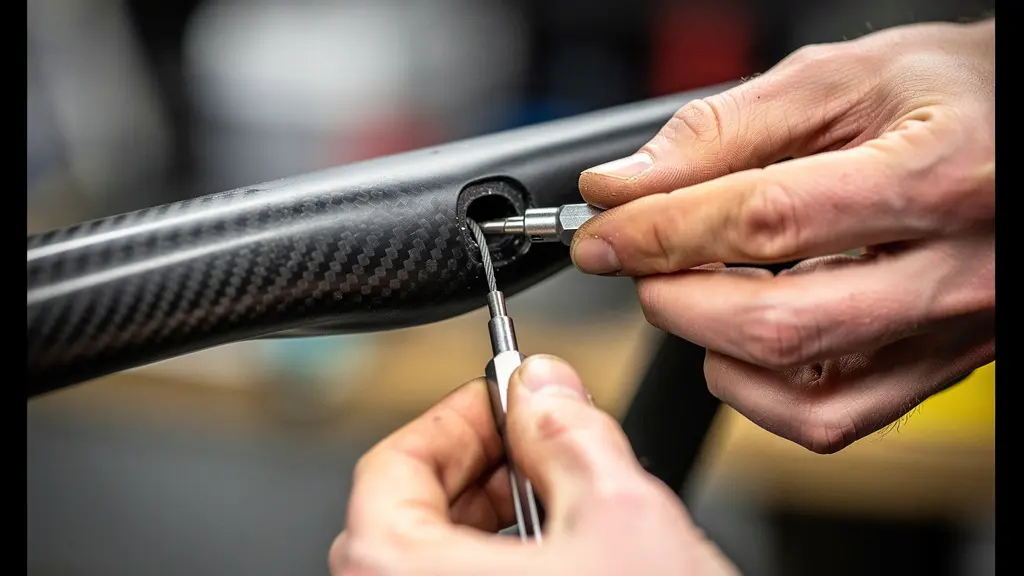
This complexity has a direct financial impact. Most bike shops have tiered labor rates, and this type of intricate work falls squarely into the “specialty” category, with labor rates of $75-$150 per hour for such specialty work. A job that might have cost $40 now costs $200. This tax applies to many common tasks: replacing headset bearings, diagnosing a creak, or swapping out a faulty Di2 wire.
This sentiment is shared across the industry, highlighting the chasm between a skilled and an unskilled mechanic’s ability to handle these systems:
Integrated bikes are much more difficult to build/assemble. A skilled mechanic will at the very least complain and take hours longer to build the bike. An unskilled mechanic will curse, yell, watch hours of YouTube how-to videos, curse more, install it all wrong, and then have to disassemble it all to re-assemble it all correctly.
– Mechanic’s Perspective, Rodeo Labs
Unless you are a patient and highly skilled home mechanic with specialized tools, you will be paying this serviceability tax for the life of the bike.
The Unspoken Downsides: Travel, Resale, and Compatibility
Beyond the primary issues of fit and maintenance, integrated cockpits introduce a host of “unspoken” problems that are rarely mentioned in marketing materials. These practical frustrations can significantly diminish the ownership experience, particularly for riders who travel with their bikes or enjoy upgrading components.
First and foremost is the travel nightmare. Packing a bike into a travel case or bag typically requires removing the handlebars and strapping them alongside the frame. With an integrated system, the brake and shift lines are run with almost zero slack. This makes it physically impossible to detach the bars without disconnecting the hydraulic lines and electronic wires—a major task that requires a full brake bleed and system re-sync upon arrival. This issue is so significant that it can be a deal-breaker for any cyclist who flies with their bike.
Case Study: The Travel Deal-Breaker
The challenge of packing a bike with an integrated system is a primary consideration for frequent travelers, as documented in a detailed breakdown by Rodeo Labs. Unless the bike is equipped with both electronic shifting and hydraulic brake line couplers (a rare and expensive combination), there is virtually no slack in the lines. Attempting to fold the bars alongside the frame is impossible, turning a simple packing job into a full mechanical rebuild. This single factor often makes non-integrated builds the only practical choice for cyclists who travel.
Another major issue is the concept of “proprietary handcuffs.” You are locked into the manufacturer’s ecosystem. Need different-sized headset spacers? You must buy the brand’s specific, often overpriced, and sometimes hard-to-find parts. Want to mount a GPS computer? You need a proprietary mount that fits your specific bar/stem combo. This lack of standardization kills compatibility and makes simple upgrades a frustrating treasure hunt. This inflexibility also hurts resale value, as a potential buyer must have the exact same fit requirements as you.
One piece combos are functionally inferior unless fabricated as full custom options for a single rider on a single bike, assuming they will never make any setup changes due to injury, aging, performance tuning, etc. They are born of the same logic that sees sense in lighting cigars with $100 bills.
– Mountain Bike Forum Contributor, Vital MTB Forums
For many, these frustrations transform a dream bike into a practical burden.
Aero Gains in the Real World: Separating Hype from Reality
The number one selling point for integrated cockpits is aerodynamics. Marketing materials are filled with impressive-sounding numbers and charts promising to save you precious watts and make you faster. But as a mechanic, my job is to ground these claims in reality. Are these gains real, and more importantly, do they matter for you?
The data is not fabricated; in a controlled wind tunnel environment, a clean, integrated front end is demonstrably faster than a cluttered one. For example, some wind tunnel testing revealed a 17.6-watt saving at 35kph by swapping to an aero handlebar. This is a significant advantage for a professional racer or elite-level time trialist where a race can be won or lost by seconds. For these riders, the ergonomic and serviceability compromises are a worthwhile price to pay for a competitive edge.
However, for the vast majority of cyclists—the weekend warriors, the club riders, the gran fondo enthusiasts—this context is completely different. The biggest source of aerodynamic drag is not your handlebar; it’s your body. An uncomfortable riding position that forces you to sit up or shift around frequently will negate any equipment-based aero gains. A 10-watt saving from a handlebar is meaningless if your poor fit is costing you 30 watts from a non-aerodynamic body position. The most aerodynamic upgrade is almost always a proper bike fit that allows you to hold a powerful, comfortable position for hours.
Furthermore, these “showroom aero” gains are often measured at speeds that many amateur riders don’t consistently maintain. The watt savings are much smaller at the more typical speeds of 25-30kph. While not zero, the benefit becomes marginal and is easily overshadowed by other factors like tire choice, rolling resistance, and rider comfort.
The question isn’t “is it faster?” but “is it faster *for me*, in my riding conditions, and at what cost to my comfort and wallet?” For most, the answer makes the standard stem look much more attractive.
The Customization Trap: Upgrades and Accessory Mounting
The clean, minimalist aesthetic of an integrated cockpit comes at the direct expense of customization. A standard handlebar is a blank canvas; it adheres to universal clamp diameters (like 31.8mm) that allow you to mount a vast array of third-party accessories. GPS computer mounts, lights, aero bars, and phone holders from hundreds of brands can be easily attached. This interchangeability is a core feature of modern cycling.
Integrated systems throw this out the window. By creating a unique, proprietary shape, manufacturers force you into their closed ecosystem. This is the “customization trap.” If you want to mount your Garmin or Wahoo computer, you can’t just buy a standard $20 out-front mount. You have to find the specific, brand-approved mount that is compatible with your exact model of integrated bar. These mounts are often more expensive, harder to find, and offer fewer placement options.
The problem extends beyond simple mounts. Want to add a set of clip-on aero bars for a triathlon or a long, flat ride? With most integrated systems, it’s simply not possible. There is no round clamping surface to attach them to. This severely limits the versatility of your bike. A bike with a standard setup can be a road racer one day and a pseudo-triathlon bike the next with a 15-minute component swap. An integrated bike is locked into its single purpose.
This also applies to fundamental components. If you decide you need a shorter stem after a few months of riding, you’re not just buying a $50 stem. You are looking at a $400-$600 replacement of the entire cockpit unit, plus the several hundred dollars in labor to have it installed. This makes any desire to tweak or upgrade your setup a financially daunting proposition. The inability to change the stem on an integrated handlebar is one of its biggest functional drawbacks.
You’re not just buying a handlebar; you’re buying a set of rigid constraints that will define your bike’s capabilities for its entire life.
Weight Weenie Wars: Do Integrated Systems Really Save Grams?
In the world of high-performance cycling, every gram counts—or so the marketing tells us. The pursuit of a lighter bike is a powerful motivator, and integrated systems are often promoted as a way to shave precious weight off the front end of the bike. By combining the bar and stem and eliminating the four bolts of a traditional stem clamp, a weight saving is indeed achieved. But once again, we have to ask: how much is it, and is it worth the trade-offs?
Typically, a high-end integrated carbon cockpit will be lighter than a comparable high-end separate carbon bar and alloy stem. However, when you compare it to a top-tier separate carbon bar and carbon stem combination, the difference shrinks dramatically. A claimed weight reduction of over 50g is often touted, but this is usually when compared to a mid-range alloy setup. The actual saving against a comparable two-piece carbon system can be as little as 20-30 grams.
Let’s put 30 grams into perspective. It’s the weight of about six US quarters. It is an amount so small that it is statistically insignificant for 99% of riders. You could save more weight by taking one less gulp of water from your bottle before a climb or by choosing a lighter set of tires, an upgrade that would also improve ride quality and reduce rolling resistance. Sacrificing all adjustability, complicating maintenance, and locking yourself into a proprietary system for a weight saving that is barely perceptible is a deeply questionable trade-off.
The “weight weenie” argument for integrated systems is one of the weakest. It’s a marketing talking point that preys on the obsession with numbers but falls apart under practical scrutiny. The very small weight advantage is a poor compensation for the massive loss in functionality, adjustability, and serviceability. It is a classic case of prioritizing a marginal gain on a spreadsheet over a major benefit in real-world usability.
Don’t let a 30-gram saving force you into a system that compromises your comfort and costs you hundreds in extra maintenance.
Key Takeaways
- Adjustability is King: For long-term comfort and performance, the ability to fine-tune your fit with a standard stem and bar is more valuable than the marginal gains of an integrated system.
- Factor in the “Serviceability Tax”: The clean look of integrated systems hides immense complexity. Be prepared for significantly higher labor costs for routine maintenance and repairs.
- Aero Gains Are Conditional: The watt savings are real but matter most for elite racers at high speeds. For most riders, a comfortable body position is a much bigger source of aerodynamic efficiency.
Decision Framework: Is an Integrated Cockpit Right for You?
After breaking down the arguments, the choice between an integrated cockpit and a standard setup becomes clearer. It’s not a simple question of “which is better,” but “which is right for my specific needs, priorities, and tolerance for compromise?” The marketing will always point you toward the sleek, integrated option, but a pragmatic decision requires an honest self-assessment.
You are a strong candidate for an integrated system if you meet most of these criteria: You are a competitive racer for whom every watt counts. You have already had a professional bike fit and know your exact, unchanging fit coordinates (bar width, stem length, and angle). You are not sensitive to small changes in bar roll or hood position. You either are a highly skilled home mechanic who enjoys a challenge or have a budget that can absorb higher maintenance costs. Finally, you rarely or never travel with your bike in a case.
Conversely, a standard, two-piece system is the more logical choice for the vast majority of cyclists. If you value the ability to fine-tune your fit, if you are still experimenting with your ideal position, or if your flexibility changes over time, the adjustability of a standard setup is non-negotiable. If you do your own maintenance and value simplicity, or if you want to keep service costs down, a standard bar and stem is vastly superior. It offers more versatility for mounting accessories and causes far fewer headaches when traveling.
Ultimately, the decision rests on whether you prioritize the peak performance and aesthetics of a specialized tool over the versatility and practicality of a multi-purpose one. Don’t let the showroom appeal override a logical assessment of your long-term needs.
The single most important step you can take is to invest in a professional bike fit *before* you buy the bike. Knowing your numbers transforms the decision from a gamble into an informed choice.
Frequently Asked Questions About Integrated vs. Standard Handlebars
Who should prefer integrated handlebars over semi-integrated ones?
If one values design, a concealed and neat surface, and the internal cable routing option above all else, the integrated option should be preferred. It is for the rider who prioritizes aesthetics and peak aerodynamic form.
When is a semi-integrated or standard system the better choice?
In case one has just one bike and needs it to be rather versatile, the semi-integrated or standard version is definitely the most suitable option. If you intend to change stem and bar sizes frequently to adapt your fit, the non-integrated option is the only practical choice.
What’s the market trend for integrated systems?
The trend among major bike manufacturers is moving towards fully integrated versions, and customer requests often follow. We can expect this trend to persist in the coming years, driven largely by aesthetics and the perception of performance, despite the practical drawbacks.