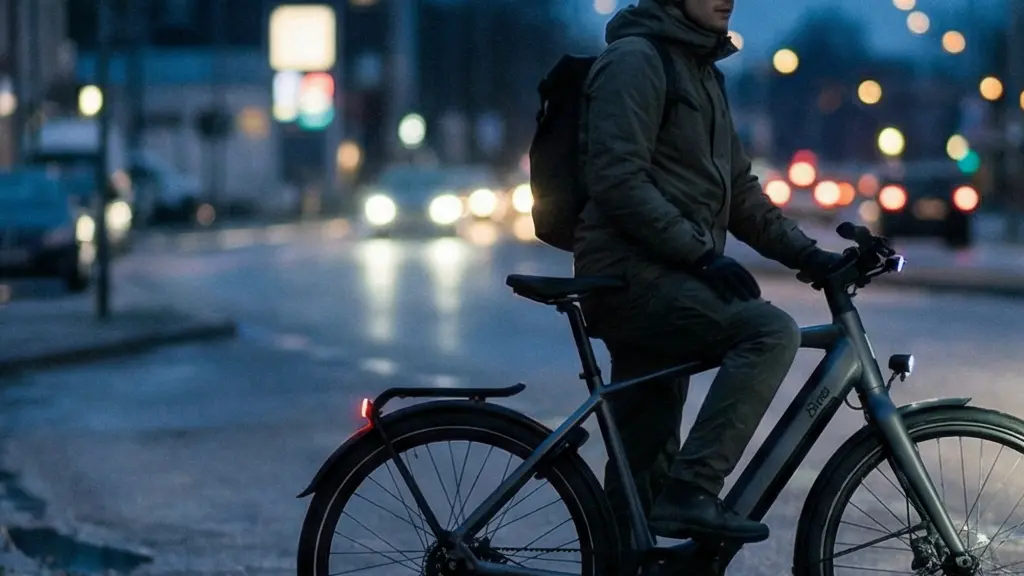
Operating a fast e-bike in a strict jurisdiction means treating it not as a bicycle, but as a regulated vehicle subject to inspection.
- Non-compliance often stems from overlooked equipment, such as non-certified tires or malfunctioning integrated lights, which can invalidate your entire setup.
- Your vehicle’s legal classification dictates all requirements, from the type of audible warning device needed to the necessity of a mandatory insurance plate.
Recommendation: Proactively audit your e-bike against the specific statutory requirements of its legal category to prevent fines, voided insurance, and personal liability.
The sudden appearance of flashing lights in your mirror triggers a familiar anxiety. You believe you’re compliant—you wear a helmet, you have lights, and you weren’t speeding excessively. However, a roadside stop for an e-bike, especially a faster model, often transcends the simple rules of the road. The officer is not just evaluating your riding; they are conducting a vehicle inspection, verifying that your machine conforms to a complex set of statutory equipment and documentation standards, much like they would for a moped or motorcycle.
Most riders are unaware of this critical distinction. They focus on behavior while neglecting the hardware’s legal status. The core of street legality lies not in your intentions, but in verifiable, type-approved components and correct classification. A missing pedal reflector, an uncertified tire, or a disabled integrated light can be grounds for a citation, regardless of how safely you operate the vehicle. This is because from a regulatory standpoint, your e-bike may be considered a motor vehicle, subject to a stringent, non-negotiable compliance framework.
This guide abandons generic advice and adopts the perspective of a compliance officer. It is structured as a series of pre-inspection audit points, designed to help you identify and rectify potential non-compliance issues before they become a costly problem. By understanding what an officer is trained to look for, you can shift from hoping you are legal to knowing you are compliant.
For a visual overview of the complex legal landscape governing electric bikes, particularly within the diverse regulatory frameworks of the United States, the following video provides a helpful summary. It serves as an excellent primer on the classification systems that form the basis of all compliance checks.
To navigate the specific checkpoints of a vehicle inspection, this article breaks down the essential compliance areas you must verify. The following sections detail the exact requirements an officer will assess, from passive safety systems to administrative documentation, ensuring you are prepared for any roadside scrutiny.
Summary: E-Bike Street Legal Guide: A Police Stop Checklist
- Why You Need Reflectors Even If You Have Lights
- Audible Warnings: Meeting Decibel Requirements for S-Pedelecs
- E50 vs Standard Tires: Why Speed Pedelecs Need Special Rubber
- The Risk of Riding with Non-Functioning Integrated Lights
- When to Renew Your Insurance Plate (If Applicable)
- Class 1 or Class 3:Is Your E-Bike Really Green? Calculating the Carbon Offset vs Cars
- Annual Roadworthiness Tests: Are They Mandatory for Your Class?
- Speed Pedelec (45km/h): License, Insurance, and Helmet Requirements
Why You Need Reflectors Even If You Have Lights
A common point of failure during a compliance check is the assumption that active lighting systems negate the need for passive reflectors. This is a critical error. Regulators view reflectors as a mandatory, fail-safe system that ensures visibility when lights are off, malfunctioning, or viewed from an off-angle, particularly at intersections. From a legal standpoint, reflectors are not optional backups; they are a distinct and required safety system. An officer will specifically look for their presence and correct placement on the front, rear, sides, and pedals of the vehicle, as specified by regulations like the U.S. CPSC rules.
The effectiveness of this passive system is most pronounced for side-on visibility and when marking movement. Research confirms the importance of this, with one study finding that drivers spotted cyclists with reflective bands on moving limbs from approximately double the distance compared to those with only a reflective vest. A university review of a visibility study found that cyclists with reflective bands on arms and legs were spotted at about 60 meters versus about 30 meters for a vest alone. This principle is why pedal reflectors are a frequent checkpoint; their up-and-down motion is a powerful visual cue for drivers that a static reflector on the frame cannot replicate. Even if your lights are a thousand lumens, a missing pedal reflector can be a clear-cut violation.
Compliance requires a full suite of reflectors, each with a specific color and location: a colorless or white front reflector, a red rear reflector, and amber or colorless reflectors on the pedals. Side visibility must be achieved either through spoke-mounted reflectors or retroreflective tire sidewalls. It is incumbent upon the operator to ensure these devices are not obstructed by panniers, racks, or fenders. An officer will assess visibility from typical headlight angles, and any blockage constitutes non-compliance.
Audible Warnings: Meeting Decibel Requirements for S-Pedelecs
The distinction between a bicycle and a moped-class vehicle becomes sharply apparent when examining audible warning device requirements. While a simple bell may suffice for a low-speed bicycle, a 45 km/h speed pedelec is often legally classified as a moped and must be equipped with a type-approved electric horn. A compliance officer will not just check for the presence of a warning device, but for the *correct type* of device for the vehicle’s legal category. Using a bicycle bell on a vehicle legally defined as a moped is a clear point of non-compliance.
Furthermore, these horns are subject to objective performance standards. For example, regulations aligned with UNECE R28 often specify a minimum and maximum sound pressure level, such as 105–118 dB(A) measured at a distance of two meters. This is to ensure the warning is loud enough to be heard by drivers inside other vehicles but not so loud as to be excessively startling. The device must also emit a continuous, uniform sound and should bear an international approval mark (e.g., an “E” inside a circle) on its housing, signifying it has passed formal testing. An officer may ask to hear the horn to verify its function and sound character.
The case of AXA Switzerland’s guidance for e-bike owners provides a clear real-world example. Their materials explicitly differentiate between slow e-bikes (up to 25 km/h) and fast e-bikes (up to 45 km/h), listing distinct equipment for the latter. For a fast e-bike, the list includes a helmet, rear-view mirror, a yellow number plate, and a bell. This highlights how a specific jurisdiction can treat an S-pedelec identically to a moped for roadside checks, while also showing that requirements can vary—in this case, a bell is specified, whereas other jurisdictions may mandate a full electric horn. The key takeaway is that the vehicle’s class dictates the rule.
E50 vs Standard Tires: Why Speed Pedelecs Need Special Rubber
Tire compliance is one of the most frequently overlooked aspects of speed pedelec legality, yet it is a primary concern for roadworthiness and liability. Standard bicycle tires are not designed for the sustained speeds, increased weight, and higher braking forces of a 45 km/h e-bike. Operating a speed pedelec with uncertified tires is a significant compliance failure that an officer, particularly in a jurisdiction with mandatory inspections, is trained to spot. The crucial identifier is a formal type-approval marking, most commonly the ECE-R75 certification for tires rated for speeds up to 50 km/h.
This certification is not a marketing gimmick; it is a legal standard indicating the tire has passed rigorous testing for durability and performance under moped-like conditions. An inspector will look for this marking directly on the tire’s sidewall. As the United Nations Economic Commission for Europe states in its regulation, the official approval mark consists of “A circle surrounding the letter ‘E’ followed by the distinguishing number of the country which has granted approval”. The absence of this mark on a fast e-bike is immediate grounds for non-compliance.
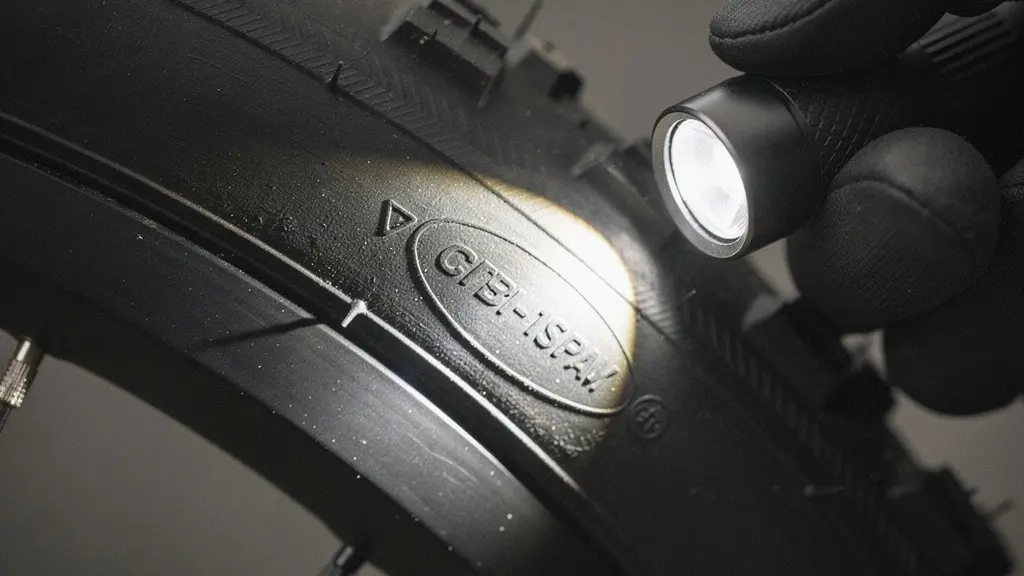
Beyond the E-mark, the tire must also have the appropriate load and speed index, which are engraved codes indicating the maximum weight and speed the tire can safely handle. Using a tire with an insufficient load index, especially when carrying cargo, or mixing a certified rear tire with a non-certified front tire, compromises the vehicle’s structural integrity and violates its type-approval. This is a fundamental safety and liability issue that will be scrutinized in any post-incident investigation.
Your Pre-Ride Tire Compliance Audit
- For fast e-bikes, select tires that are explicitly ECE-R75 certified (often marketed as E-Bike Ready 50 for 50 km/h class).
- Confirm the tire’s maximum load and maximum speed match your bike’s use case (especially if carrying cargo or riding near top assist speed).
- Read the load/speed index code engraved on the tire (a number for load capacity and a letter for speed category).
- Replace with the same compliance level front and rear; avoid mixing a certified rear with a non-certified front on a speed-focused bike.
- Re-check pressure and fit after mounting; an underinflated tire at higher sustained speeds increases heat and casing stress.
The Risk of Riding with Non-Functioning Integrated Lights
For many modern e-bikes, especially those in higher-speed categories, lighting is not an accessory but an integral, non-removable part of the vehicle’s approved design. A compliance officer’s check goes beyond simply having lights; it verifies that the *required, integrated system* is fully functional. Riding with a burned-out or disconnected integrated headlight or taillight is not equivalent to forgetting a clip-on light; it is operating a vehicle with a failed primary safety system, a clear violation of roadworthiness standards.
The legal framework for these vehicles often mandates that their lighting systems be operational at all times. For example, EU Regulation 168/2013, which governs L-category vehicles like speed pedelecs, requires that “lighting and light-signalling devices…be turned on automatically” when the vehicle is in use. This “daytime running light” requirement means that if your headlight can be manually switched off or is non-functional, your vehicle is non-compliant by default. An officer can identify this violation with a simple visual check, even in broad daylight.
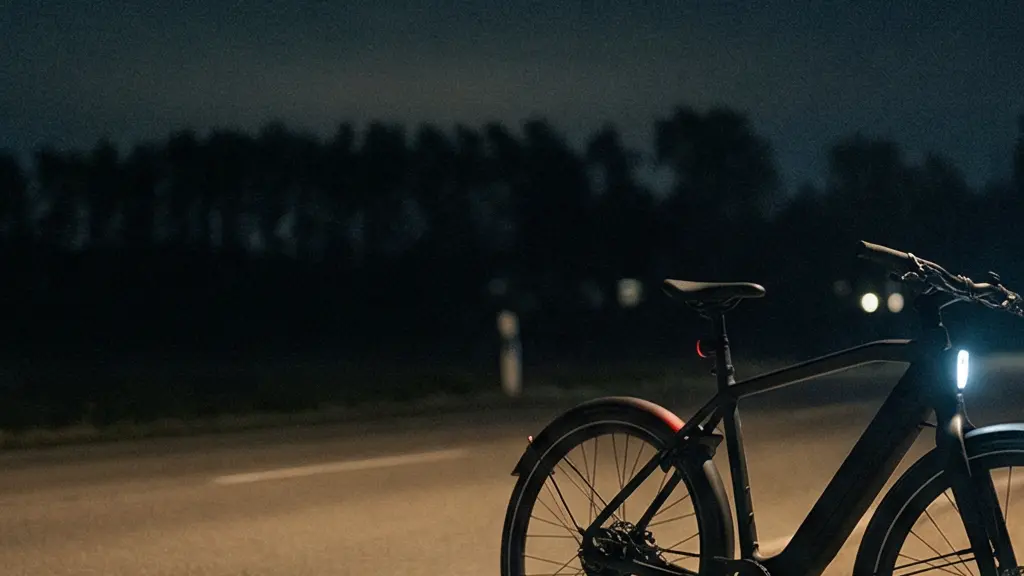
A full lighting system audit for a moped-class vehicle involves several key checkpoints. The officer will verify the function of the passing-beam headlamp (properly aimed to avoid blinding others), the rear position lamp (taillight), and the stop lamp (brake light), which must activate upon braking and be visibly brighter than the taillight. They will also confirm the presence of all required retro-reflectors (side, rear, and pedal) and, if applicable, the device that illuminates the mandatory registration or insurance plate. Any single point of failure in this interconnected system renders the vehicle unlawful for road use.
When to Renew Your Insurance Plate (If Applicable)
For speed pedelecs and other e-bikes classified as mopeds in certain jurisdictions, compliance extends beyond the vehicle’s hardware to include mandatory administrative documentation, most visibly an insurance plate or vignette. This plate is not merely for identification; it is physical proof that the vehicle carries compulsory third-party liability insurance. Riding without a current plate is equivalent to driving a car without insurance—a serious offense with significant legal and financial consequences. An officer can determine your compliance status from a distance simply by checking the plate’s color and expiration.
Jurisdictions that use this system, such as Germany, operate on a strict annual renewal cycle. The German model provides an excellent case study: the insurance year runs from March 1st to the end of February, and the plate’s color changes every year (e.g., from green to black for 2026). Riding on March 2nd with the previous year’s green plate is an immediate and obvious violation. The operator is responsible for ordering the new plate from their insurer ahead of the deadline and affixing it to the vehicle. The annual premium for this mandatory coverage is a required operational cost; for instance, a major German insurer’s page for the 2026/27 plate shows liability coverage prices and details the annual color change.
A roadside stop will involve verifying that the plate is current, securely mounted, and legible. The officer will also expect you to have the corresponding proof-of-coverage document available for inspection. Failure at any of these points can result in fines, the vehicle being impounded, and, in the event of an accident, complete personal liability for any damages, as the insurance policy is considered void. This administrative checkpoint is as critical as any hardware inspection.
Class 1 or Class 3:Is Your E-Bike Really Green? Calculating the Carbon Offset vs Cars
While a compliance officer is unlikely to audit your carbon footprint during a traffic stop, the principle of verifiable claims is a core tenet of a comprehensive compliance mindset. Many riders justify their e-bike use based on its environmental benefits, and in some contexts—such as corporate commuter programs or applications for green tax incentives—these claims must be substantiated. Asserting your vehicle is “green” without a factual basis is a form of misrepresentation, and an audit in these contexts requires objective data, not just good intentions.
Calculating your actual carbon offset is a methodical process. It begins by establishing a baseline: the emissions your car would have produced for the same journey. Using a framework like the EPA’s Greenhouse Gas Equivalencies Calculator, you can determine your car’s CO2 output per mile based on its real-world fuel efficiency (MPG). This calculation requires you to convert gallons of fuel burned into kilograms of CO2 emitted. Only by quantifying this baseline can you make a credible comparison.
The next step is to calculate the e-bike’s emissions, which are primarily from charging the battery. This figure is dependent on your local electricity grid’s carbon intensity (the “emissions factor” of your power source) and your e-bike’s energy consumption (Wh/mile). A rider charging their battery from a coal-heavy grid will have a significantly larger carbon footprint than one using solar power or a grid dominated by renewables. Therefore, a generic claim of being “zero-emission” is factually incorrect and fails a compliance audit. A defensible “green” claim must account for charging emissions and even the lifecycle emissions of battery production and replacement.
Annual Roadworthiness Tests: Are They Mandatory for Your Class?
The regulatory landscape for two-wheeled vehicles is evolving, with a clear trend toward mandatory periodic roadworthiness tests, similar to the annual inspections required for automobiles. A compliance mindset requires anticipating this future. For example, a European directive has pushed member states to implement such tests, and jurisdictions like France have begun a phased rollout. This means that a one-time point-of-sale compliance is no longer sufficient; your vehicle must remain in a roadworthy condition throughout its life, subject to periodic official verification.
During such a test, inspectors will systematically check all the critical safety and compliance points discussed in this guide: brakes, steering, frame integrity, lighting systems, tires, and audible warnings. However, they will also be on high alert for illegal modifications. The most significant compliance risk in this area is software tampering or “tuning” to bypass the manufacturer’s speed limiter. As a leading drive-system manufacturer, Bosch explicitly warns that any form of derestriction changes the vehicle’s legal status. A Class 1 bike tuned to exceed its speed limit may be reclassified as an illegal, unregistered moped, instantly failing inspection and voiding any warranty or insurance.
Keeping meticulous service records from authorized dealers becomes crucial evidence of compliance. In the event of an inspection or a post-accident investigation where a modification is suspected, these documents can prove the vehicle’s firmware and hardware are in their original, approved state. The manufacturer’s advice is unequivocal: if you require higher legal speeds, the only compliant path is to purchase a vehicle that is properly type-approved for that category, such as a formal speed pedelec. An officer or inspector can and will check for evidence of tampering, and the consequences, as Bosch outlines, can include serious personal liability exposure.
Key Takeaways
- Your e-bike’s legal vehicle classification is the absolute foundation of all compliance; all equipment, insurance, and licensing rules flow from this.
- For higher-speed classes, type-approved components with official markings (e.g., ECE-R75 for tires) are non-negotiable and a primary focus of inspections.
- Any software or hardware modification to bypass speed limits immediately voids the vehicle’s type-approval, creating significant legal and liability risks.
Speed Pedelec (45km/h): License, Insurance, and Helmet Requirements
Operating a speed pedelec (S-Pedelec) requires a complete mental shift from “cyclist” to “motor vehicle operator.” These 45 km/h machines are almost universally regulated as mopeds, subjecting them to a far more stringent compliance regime than standard e-bikes. A roadside stop on an S-Pedelec will be a comprehensive check of your documentation, your personal safety equipment, and the vehicle’s road-legal status. The first step is always to carry the correct license or permit required by your jurisdiction for moped operation.
Alongside your operator’s license, you must have proof of mandatory liability insurance, typically demonstrated by the affixed insurance plate or vignette. For personal protective equipment, while a standard bicycle helmet might meet the bare minimum legal text in some places (like EN 1078 in Switzerland), the reality of 45 km/h speeds makes a higher-rated helmet a matter of practical and legal prudence. Many officers and insurance policies expect or recommend helmets certified to a moped standard, such as NTA 8776 or ECE 22.06, which offer substantially more protection.
Finally, a critical point of compliance is knowing where you are legally allowed to ride. This is a frequent point of failure for new S-Pedelec operators. Because they are classified as motorized vehicles, they are generally prohibited from using bicycle paths, trails, and other infrastructure reserved for non-motorized traffic. As the California DMV’s Motorcycle Handbook explicitly states, “it is illegal to ride a moped, motorized bicycle, or a Class 3 electric bicycle on a bicycle path or trail” unless specifically permitted by local ordinance. Using a bike lane on an S-Pedelec may be a violation in itself, and an officer will enforce these access restrictions strictly.
Ultimately, ensuring your e-bike is street legal is an exercise in proactive diligence. Adopting the mindset of a compliance officer—methodically auditing your vehicle against the specific, objective standards of its legal category—is the only effective strategy to mitigate the risk of fines, insurance disputes, and liability. Conduct your own inspection now, before one is conducted for you on the side of the road.