
In summary:
- The feeling of heavy, swollen legs after a day at the desk is caused by poor blood circulation due to inactivity.
- E-biking directly counteracts this by activating the “calf muscle pump,” a natural mechanism that pushes blood from your legs back to your heart.
- Even short, 15-minute rides can significantly improve venous return, making it a highly effective and accessible tool for office workers.
- Proper bike fit, especially saddle height, is crucial to maximize the efficiency of this pumping action and avoid circulation issues.
For many desk workers, the end of the day is marked by a familiar and uncomfortable sensation: heavy, swollen, and aching legs. This common form of lower leg edema isn’t just a matter of discomfort; it’s a direct symptom of circulatory stagnation. When you sit or stand for prolonged periods, gravity causes blood and fluids to pool in your lower extremities. While common advice often involves generic suggestions to “move more” or elevate your legs, these solutions can feel passive and insufficient. They address the symptom, but not the underlying mechanical failure.
The core of the problem lies in the deactivation of a critical physiological system: the calf muscle pump. This group of muscles in your lower leg is designed to contract and squeeze the deep veins, propelling blood upward against gravity. When you’re sedentary, this pump is dormant. The real question, then, is not just how to move, but how to move in a way that specifically and efficiently reactivates this vital mechanism. What if the key wasn’t simply walking more, but engaging in a targeted activity that maximizes the efficiency of this venous pump?
This is where e-biking emerges not merely as exercise, but as a precise physiological intervention. The rhythmic and supported motion of pedaling is uniquely suited to stimulating the calf muscle pump. This article, from a phlebologist’s perspective, will deconstruct the science behind why e-biking is a superior strategy for managing leg swelling. We will explore how to optimize this effect through proper setup, compare it to other common remedies, and provide practical guidance for integrating it into a sedentary lifestyle.
text
This guide will explore the specific ways e-biking can become your most powerful ally against leg swelling, breaking down the science and providing actionable advice for optimal results.
Summary: A Specialist’s Guide to E-Biking for Venous Health
- Why Pedaling is Better Than Standing for Varicose Vein Prevention
- How Proper Saddle Height Maximizes Venous Return Efficiency
- Compression Socks vs E-Biking: Do You Need Both?
- The Risk of Saddle Pressure Cutting Off Circulation
- Cycling for 15 Minutes: Breaking Sedentary Blocks Effectively
- Why Height Charts Are Often Wrong for Short Riders
- How to Mount a Bike Safely with Limited Hip Mobility
- Knee Rehabilitation: Why E-Biking Is Safer Than Walking for Arthritis
Why Pedaling Is Better Than Standing for Varicose Vein Prevention
To understand why pedaling is so effective, we must first look at the mechanics of blood flow in the legs. Veins contain one-way valves that prevent blood from flowing backward due to gravity. However, these valves need assistance. This is the role of the calf muscle pump. When you stand still, your calf muscles are in a state of static contraction, providing minimal pumping action. This allows hydrostatic pressure to build, causing blood to pool and veins to distend, which can lead to varicose veins and swelling.
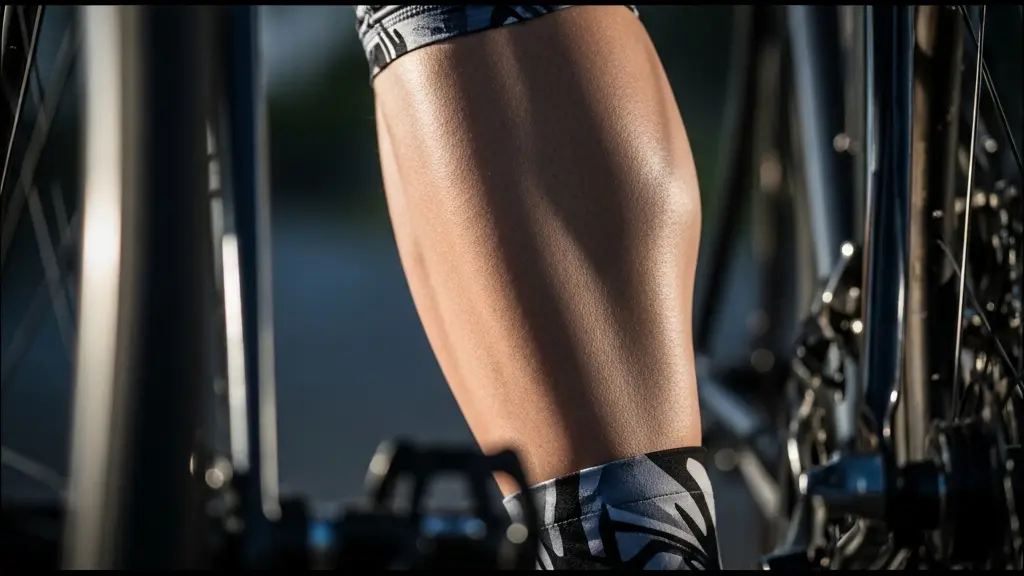
The act of pedaling transforms this static situation into a dynamic and highly efficient process. With each pedal stroke, your calf muscles contract and relax sharply, forcefully squeezing the surrounding veins. This rhythmic action serves as a powerful, secondary heart for your legs, pushing blood upward. In fact, research from vein specialists indicates that blood flow can increase up to 10 times during vigorous cycling activity. This dynamic movement effectively counters gravity’s pull, minimizes blood pooling, and significantly reduces the pressure on your vein walls and valves, making it a superior activity for preventing venous issues compared to static postures.
How Proper Saddle Height Maximizes Venous Return Efficiency
Activating the calf muscle pump is one thing; maximizing its efficiency is another. The single most critical adjustment for achieving optimal venous return on a bike is the saddle height. An incorrect saddle height can not only reduce the effectiveness of your pedaling but can even create new circulatory problems. If the saddle is too low, your knee remains excessively bent throughout the pedal stroke. This constant flexion can compress the popliteal vein behind the knee, hindering blood flow out of the lower leg.
Conversely, a correctly adjusted saddle allows for near-full leg extension at the bottom of the pedal stroke. This full range of motion is essential for two reasons. First, it allows the calf muscle to fully contract and engage, delivering a powerful “squeeze” to the veins. Second, it ensures the leg straightens sufficiently to decompress the popliteal area, allowing unimpeded blood flow. Achieving this optimal position turns every pedal stroke into a highly effective pump cycle, moving the maximum volume of blood with each rotation. It’s not just about comfort; it’s about turning your bike into a fine-tuned medical device for your circulation.
Action plan: Fine-Tuning Your Saddle for Optimal Blood Flow
- Full Leg Extension: Adjust your saddle so that at the bottom of the pedal stroke, your leg is almost fully extended, with a slight bend (about 25-30 degrees) in the knee. This maximizes calf muscle engagement.
- Avoid Popliteal Compression: Ensure your knee does not remain excessively bent at any point. A saddle that is too low is a primary cause of popliteal vein compression.
- Ankle Mobility: Your saddle height should allow your ankle to move through its full range of motion, allowing you to “point” your toe slightly at the bottom of the stroke for maximum calf contraction.
- Hip Angle Consideration: While riding, be mindful of your hip flexion. An extremely aggressive forward lean can sometimes impair venous return at the hip; a slightly more upright posture is often better for circulation.
- Maintain Cadence: A steady, consistent pedaling rhythm (cadence) optimizes the frequency of the muscle pump. Aim for a smooth spin rather than mashing the pedals at a low speed.
Compression Socks vs E-Biking: Do You Need Both?
For those suffering from leg swelling, compression socks are often a first line of defense. They work through a passive mechanism, applying external, graduated pressure to the leg. This pressure physically narrows the veins, increasing the velocity of blood flow and helping the valves close more effectively. It’s an effective strategy, especially during long periods of sitting or standing when your muscle pump is inactive, like during a flight or a long day at the office.
E-biking, on the other hand, is an active mechanism. It doesn’t just support the system; it powers it. By stimulating the calf muscle pump, it generates internal pressure that drives blood flow. So, which is better? The answer is that they serve different, complementary purposes. Think of compression socks as your support system for when you’re static, and e-biking as your active therapy for when you can move. For individuals with chronic swelling or venous insufficiency, the two can be used synergistically. Wearing compression socks while riding an e-bike can be particularly beneficial, as the muscle pump works against the external resistance of the sock, potentially enhancing the overall pumping effect.
| Method | Type | Mechanism | Best Use Case |
|---|---|---|---|
| E-Biking | Active | Muscle contraction pumps blood | During activity periods |
| Compression Socks | Passive | External pressure gradient | During rest/sedentary periods |
| Combined Use | Synergistic | Enhanced pumping against resistance | For chronic swelling conditions |
The Risk of Saddle Pressure Cutting Off Circulation
While the benefits of pedaling are clear, the interface between your body and the bike—the saddle—can introduce its own set of circulatory risks if not properly managed. The pressure from a poorly designed or ill-fitting saddle is concentrated on the perineal area, a region dense with nerves and blood vessels, including the pudendal artery. Excessive pressure here can lead to numbness, pain, and reduced blood flow to the entire region. This is a well-documented issue among serious cyclists and a crucial consideration for anyone using a bike for health purposes.
Furthermore, your posture on the bike matters. As one study notes, an aggressive, forward-leaning posture on an upright bike creates a significant hip flexion angle. This sharp bend can potentially impair venous return at the groin, partially negating the benefits gained in the lower legs. For individuals primarily concerned with circulation, a more upright or even recumbent position can be more beneficial as it keeps the hip angle more open. Choosing the right saddle and posture is a critical balancing act to ensure you are promoting circulation, not inadvertently restricting it.
Proper saddle design with cutouts and anatomical shaping can prevent pudendal artery compression while maintaining optimal blood flow during cycling
– Vascular Health Specialists, Clinical observations on cycling posture and circulation
Cycling for 15 Minutes: Breaking Sedentary Blocks Effectively
The thought of incorporating exercise into a busy workday can be daunting. Many believe that for an activity to be “worth it,” it must last at least 30 or 60 minutes. While longer durations are certainly beneficial, this “all or nothing” mindset is a significant barrier for many. From a circulatory standpoint, the most damaging part of a desk job is the long, uninterrupted blocks of sedentary time. The primary goal, therefore, is to break these blocks. And for that, even a short 15-minute e-bike ride can be profoundly effective.
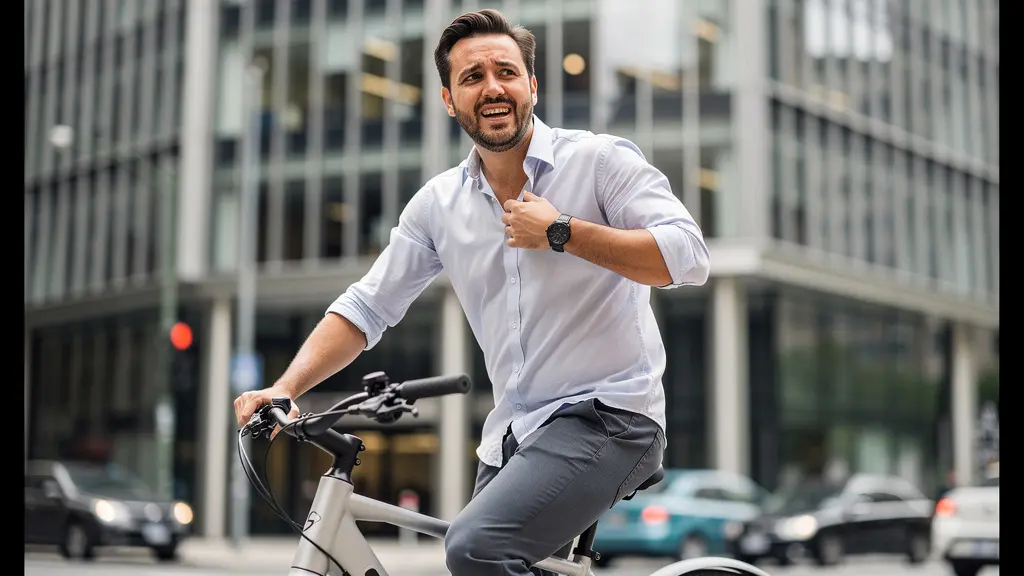
A 15-minute session is long enough to fully reactivate the calf muscle pump, flush out pooled blood, and reset your circulatory system. It’s a “circulatory reset” button. While some vein specialists recommend 30 minutes of daily exercise for noticeable improvements in venous health, the key is consistency and breaking the cycle of stasis. A short ride during a lunch break can do more to prevent end-of-day swelling than an hour-long gym session after 8 hours of uninterrupted sitting. The e-bike makes this even more accessible, as the motor assist ensures you can get your circulation going without breaking a sweat, making it easy to hop back to your desk feeling refreshed, not exhausted.
Why Height Charts Are Often Wrong for Short Riders
Bike manufacturers often provide generic height charts to guide sizing, but these can be notoriously inaccurate, especially for riders at the shorter end of the spectrum. These charts operate on an assumption of average body proportions, but human anatomy is far more variable. The most important factor in bike fit isn’t your total height; it’s your specific body geometry, primarily the ratio of your leg length (inseam) to your torso length. Two people of the same height can have vastly different leg and torso lengths, requiring completely different bike frames.
For shorter riders, this issue is often magnified. They may have proportionally shorter legs and a longer torso, or vice-versa. A bike chosen based on a simple height chart might have a top tube that is too long, forcing an uncomfortable and inefficient stretch, or a standover height that is dangerously high. From a circulatory perspective, a poor fit leads to a compromised posture. This can prevent the rider from achieving the full leg extension necessary for an efficient muscle pump, or it might force them into a cramped position that constricts blood flow at the hips and knees. Therefore, for shorter riders, ignoring generic charts and focusing on key geometry numbers like ‘standover height’ and ‘reach’ is paramount to finding a bike that is not just comfortable, but also hemodynamically effective.
How to Mount a Bike Safely with Limited Hip Mobility
A significant barrier to cycling for many people, especially as they age or if they have hip issues, is the simple act of getting on and off the bike. The traditional method of swinging a leg high over the saddle can be challenging or impossible for those with limited hip mobility. This is where the design of the bike frame becomes a critical accessibility feature. Step-through or “low-step” frames, which are common on many e-bikes, eliminate this barrier almost entirely. They replace the high top tube with a low, open frame that you can simply step across.
Even with a step-through frame, a safe and stable mounting technique can build confidence and prevent accidents. Using the bike’s own features, like the brakes and a “walk assist” mode if available, can make the process smooth and effortless. The goal is to get positioned over the bike with both feet securely on the ground before ever attempting to sit on the saddle. This stable base removes any sense of precariousness and makes the transition to the saddle simple and controlled. The following steps provide a reliable method for mounting safely:
- Position the Bike: Use the walk-assist feature or roll the bike to a clear, flat area. Squeeze both brake levers to hold the bike steady.
- Lower the Saddle: If you have a quick-release or dropper post, lower the saddle to its minimum height. This provides maximum clearance.
- Step Through: Stand on one side of the bike and simply step through the open frame, so you are standing over the bike with a foot on each side.
- Find Support: If you feel unsteady, position the bike next to a wall or a sturdy railing and use it for support with one hand.
- Mount and Adjust: Once standing stably over the frame, you can sit on the lowered saddle. Only then should you adjust the saddle back up to the proper riding height.
Key Takeaways
- The rhythmic contraction of pedaling activates the calf muscle pump, a critical mechanism for returning blood to the heart and reducing leg swelling.
- Proper bike fit, especially a saddle height that allows for near-full leg extension, is more important than ride duration for maximizing circulatory benefits.
- E-biking is an active therapy that complements passive solutions like compression socks, and even short, 15-minute rides are highly effective at breaking sedentary periods.
Knee Rehabilitation: Why E-Biking Is Safer Than Walking for Arthritis
For individuals with knee arthritis, the common advice to “stay active” can feel like a paradox. Activities like walking, while seemingly low-impact, can still cause significant pain. Every step involves an impact phase where your full body weight is transmitted through the compromised joint, leading to inflammation and discomfort. This can create a vicious cycle where pain leads to inactivity, which in turn leads to muscle weakness and poorer circulation, worsening the overall condition.
E-biking offers a superior solution by fundamentally changing the mechanical load on the knee. The seated position means the saddle, not your joints, supports the majority of your body weight. The pedaling motion is circular and fluid, eliminating the jarring impact of walking. As noted in studies, pedaling can increase endurance and muscle oxygenation without putting too much pressure on your joints. The electric assist is the final, crucial element. It allows the user to precisely control the amount of resistance, ensuring they can keep their joints moving and their muscle pump active without ever pushing past their pain threshold. This makes it possible to improve cardiovascular health and venous return simultaneously, while actually protecting the knee joint—a combination that is difficult to achieve with almost any other form of weight-bearing exercise.
By integrating an e-bike not as a piece of sports equipment but as a daily tool for health, you can actively manage your venous health, break the cycle of sedentary discomfort, and reclaim a sense of lightness in your legs. The next logical step is to consider how this tool can fit into your specific lifestyle and needs.