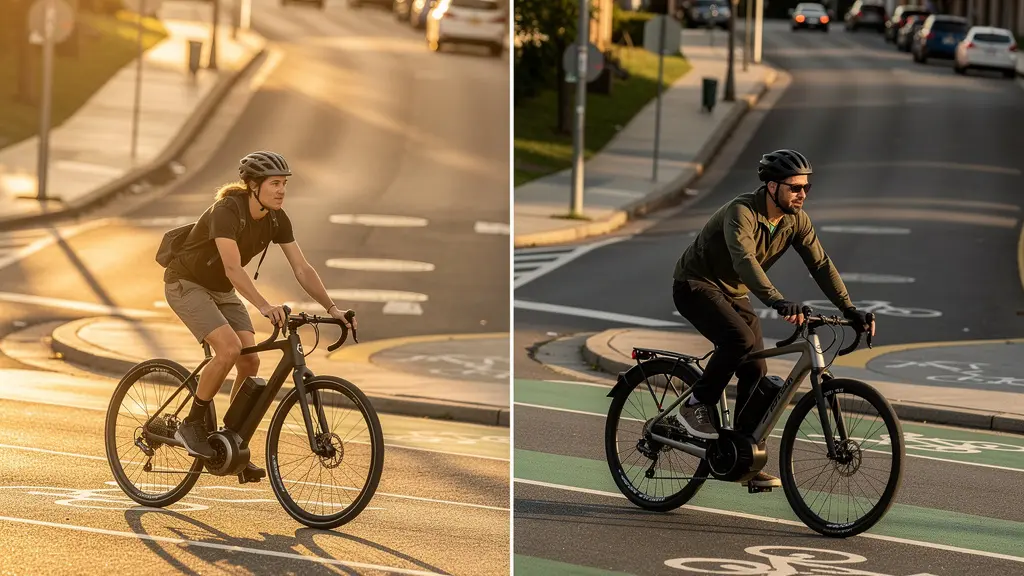
For sustained, steep hill climbing, a mid-drive motor is the superior engineering choice due to its ability to leverage the bike’s gearing for optimal motor efficiency and thermal management.
- Hub motors risk catastrophic overheating on long climbs because they are forced to operate at low RPMs, far outside their efficiency range.
- Mid-drive systems offer significantly better handling and stability on gradients by centralizing mass and lowering the bike’s center of gravity.
Recommendation: Prioritize a mid-drive system with a torque sensor for any commute involving regular, challenging inclines. The higher initial cost is an investment in reliability and long-term drivetrain health.
For a first-time e-bike buyer in a city of hills, the choice between a mid-drive and a hub motor is the most critical decision you’ll make. It’s a choice that dictates not just performance, but the fundamental reliability and longevity of your investment. The common advice often boils down to simple platitudes: “mid-drives use the gears” or “hub motors are cheaper.” While true, these statements dangerously oversimplify the complex engineering trade-offs at play when confronting steep gradients day after day.
The core of the issue isn’t about which motor is generically “better,” but about which system is architecturally designed to handle the immense and sustained stress of hill climbing. This stress manifests as heat, drivetrain strain, and demands on handling that can push a poorly matched system to its failure point. A wrong choice doesn’t just mean a slow climb; it can mean a burnt-out motor, a snapped chain, or a dangerous loss of control. This guide moves beyond marketing claims to provide an impartial, engineering-based analysis of the underlying physics.
We will dissect the critical factors from an engineer’s perspective: weight distribution’s effect on handling, the physics of motor overheating, the crucial role of the transmission, and the subtle but vital technologies like shift sensing. By understanding these principles, you can move from a hopeful consumer to an informed buyer, equipped to select a machine that is not just capable, but truly engineered for the demands of your hilly commute.
This article will guide you through the essential engineering considerations, from the fundamental physics of motor placement to the practicalities of where to purchase your e-bike for long-term service. The following sections break down each critical aspect to empower your decision.
Contents: Mid-Drive vs Hub Motor for Hilly Terrain
- Why Mid-Drives Offer Better Handling on Technical Terrain
- How to Identify Motor Whine Before Buying
- Belt Drive vs Chain: Which Transmission Suits Your Motor?
- The Risk of Burning Out Hub Motors on Long Climbs
- Shift Sensing: How It Saves Your Chain from Snapping
- Why High-End Pedal Assist Feels More Natural Than Hub Motors
- Bosch CX vs Shimano EP8: Using E-Bike Metrics to Manage Recovery Rides for Cyclists
- Direct-to-Consumer vs Local Shop: Where Should You Buy Your E-Bike?
Why Mid-Drives Offer Better Handling on Technical Terrain
The first principle of vehicle dynamics, whether for a race car or a bicycle, is the management of mass. The location of the heaviest components dictates the center of gravity and rotational inertia, which directly impacts handling stability, especially on inclines and during cornering. A mid-drive motor, positioned low and centrally within the bike’s frame, is the optimal configuration from a physics standpoint. This placement preserves the bike’s natural balance, closely mimicking the feel of a non-electric bicycle.
Conversely, a hub motor places a significant amount of mass (often 3-5 kg) directly in the center of either the front or rear wheel. A rear hub motor creates a rear-heavy bias, which can make the front end feel light and less planted during a steep climb, and can cause a “pendulum effect” during quick directional changes. A front hub motor can make steering feel heavy and is prone to wheel slip on loose or steep surfaces, as the powered wheel has less weight over it. This added unsprung mass in the wheel also means the suspension (if present) has to work harder, leading to a harsher ride over bumps.
This table from a recent comparative analysis of motor types clearly illustrates the engineering trade-offs regarding weight distribution.
| Motor Type | Weight Location | Center of Gravity | Handling Impact |
|---|---|---|---|
| Mid-Drive | Center/Low | Preserved natural balance | Better cornering stability |
| Rear Hub | Rear wheel | Rear-heavy | Can affect quick turns |
| Front Hub | Front wheel | Front-heavy | May cause wheel slip on climbs |
For a hilly commute that involves winding roads or navigating urban obstacles, the superior balance of a mid-drive system provides a significant safety and performance advantage. The bike feels more intuitive and stable, allowing the rider to focus on the path ahead rather than wrestling with the bike’s imbalanced dynamics.
How to Identify Motor Whine Before Buying
Motor noise is a critical, yet often overlooked, aspect of the e-bike experience. It’s not just a matter of preference; the type and volume of noise can be an indicator of the motor’s internal design and potential for annoyance on a quiet street. There are three main acoustic profiles: the near-silence of a direct-drive hub motor, the distinct hum or “whine” of a geared hub motor, and the mechanical sound of a mid-drive motor engaging with the chain.
Geared hub motors and some mid-drives use internal planetary gears to reduce the high speed of the motor down to a suitable speed for the wheel. This gearing is the primary source of the characteristic high-pitched whine. The volume and pitch of this whine can change dramatically under load, becoming more pronounced during a steep climb. For a daily commuter, a loud motor can be fatiguing and detract from the enjoyment of the ride.
A test ride is non-negotiable, but a simple ride around a flat parking lot is insufficient. You must specifically test for acoustic performance under conditions that replicate your commute. An enclosed space, like a parking garage, can amplify the motor’s sound, making it easier to evaluate its true character without ambient street noise.
Action Plan: Pre-Purchase Motor Noise Audit
- Establish a Baseline: Test ride the bike with the motor turned OFF first. This allows you to identify any baseline noise from the drivetrain or tires, so you can isolate the motor’s sound later.
- Find a Quiet Environment: Request a test ride in an enclosed or very quiet space, such as an underground parking garage, to accurately assess the motor’s acoustic signature without interference.
- Test Under Load: Listen for how the motor’s noise changes during a steep climb versus riding on flat terrain. A significant increase in volume or a high-pitched whine under load is a red flag for noise-sensitive riders.
- Vary Assist Levels: Pay close attention to how the pitch and volume of the sound change as you switch through the different levels of pedal assist.
- Compare at Different Speeds: Some motors are loudest at specific RPMs. Test the bike at a variety of speeds on the flat and on hills to identify if there’s an annoyingly loud “sweet spot”.
Belt Drive vs Chain: Which Transmission Suits Your Motor?
The motor is only one half of the propulsion equation; the transmission that delivers its power to the rear wheel is the other. The choice between a traditional chain/derailleur system and a modern belt drive with an internally geared hub (IGH) has significant implications for maintenance, cost, and performance, especially when paired with a powerful motor for hill climbing.
A chain and derailleur system offers the widest gear range, often exceeding 500%. This is a massive advantage for a mid-drive motor on varied terrain, as it allows the rider to keep the motor spinning in its most efficient RPM “sweet spot,” maximizing torque on steep climbs and speed on flats. However, this performance comes at the cost of frequent maintenance: cleaning, lubricating, and eventual replacement of the chain and cassette.
A Gates Carbon Belt Drive paired with an IGH is the champion of low maintenance. Belts last thousands of miles with no lubrication and are impervious to weather. However, this convenience comes with two engineering trade-offs. First, the gear range of most IGHs is more limited (typically around 380%), which may feel insufficient on the steepest of hills. Second, and more critically, most belt drives and IGHs have a maximum input torque rating (often around 80 Nm), which a powerful mid-drive motor can exceed, potentially causing slippage or long-term damage.
This data, based on an analysis of drivetrain components, highlights the long-term considerations for a daily commuter.
| Feature | Chain + Derailleur | Belt + IGH |
|---|---|---|
| Gear Range | Wide (500%+) | Limited (380% typical) |
| Maintenance Frequency | Every 500-1000 miles | Every 5000+ miles |
| Cost Over 10,000 Miles | $400-600 (chains, cassettes, lube) | $50-100 (occasional tension adjustment) |
| Torque Capacity | Unlimited with proper shifting | May slip or damage IGH above 80Nm |
| Steep Hill Performance | Excellent with wide range | Good but limited by gear range |
For a hilly commute, a mid-drive motor paired with a robust, wide-range chain and derailleur system is the highest-performance combination. A belt drive is a viable, low-maintenance option for hub motor bikes or for mid-drives in areas with moderate hills, but its limitations must be respected.
The Risk of Burning Out Hub Motors on Long Climbs
The single greatest risk for a hub-motor-equipped e-bike on a hilly commute is catastrophic thermal failure. This is not a rare occurrence; it is a predictable outcome of the system’s fundamental physics when placed under sustained load. The primary reason for adoption is telling; a recent survey found that nearly 59% of riders use e-bikes specifically to make hilly journeys easier. Yet, the most common and affordable motor type is uniquely vulnerable to this exact use case.
Electric motors operate most efficiently within a specific high-RPM (revolutions per minute) range. A mid-drive motor leverages the bike’s gears to stay within this “sweet spot,” even on a steep, slow climb. A hub motor, however, is directly tied to the rotational speed of the wheel. On a long, arduous climb, the wheel is turning very slowly. To provide the high torque demanded by the rider, the motor must draw an enormous amount of electrical current while operating at a very low, inefficient RPM. This combination is a recipe for disaster: the vast majority of that electrical energy is converted not into motion, but into waste heat.
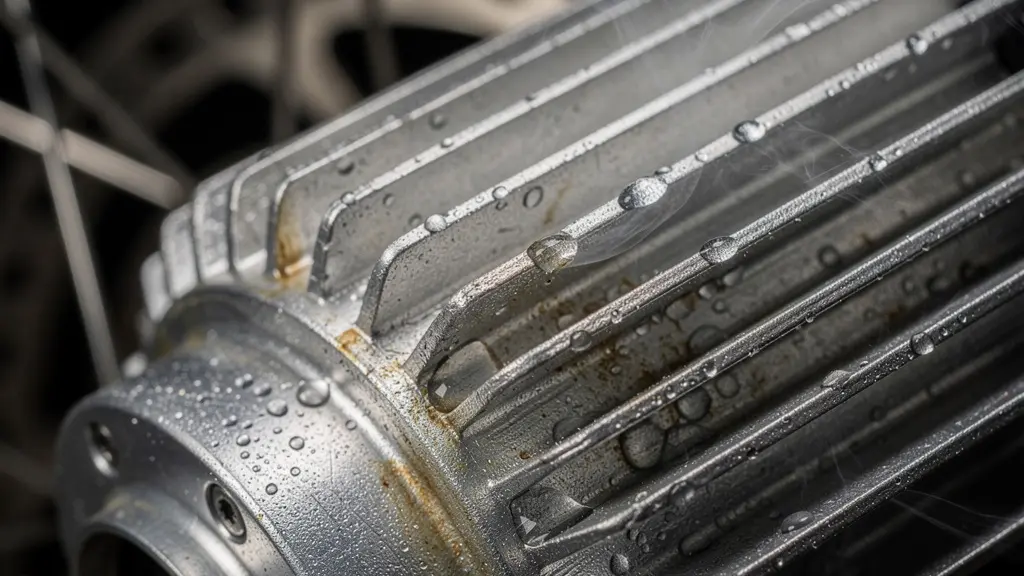
This excessive heat builds up inside the sealed motor hub. In a best-case scenario, a thermal sensor will trigger a temporary shutdown to protect the motor, leaving you powerless midway up a climb. In a worst-case scenario, the heat can permanently demagnetize the motor’s internal magnets, leading to a significant and irreversible loss of power. This is what is meant by “burning out” a motor. It is a direct result of pushing the motor outside its designed operating parameters, a condition that is almost guaranteed on a daily commute involving long, steep gradients.
Shift Sensing: How It Saves Your Chain from Snapping
While a mid-drive motor’s ability to use the bike’s gears is its greatest strength, it also creates a point of significant mechanical stress. Shifting a derailleur while the motor is delivering high torque (upwards of 1000 watts on powerful systems) puts an immense, instantaneous load on the chain and cassette cogs. This can lead to harsh, grinding shifts, accelerated wear, and in the worst case, a snapped chain—a catastrophic failure, especially during a climb.
The engineering solution to this problem is a gear shift sensor. This small, elegant device is installed inline with the shifter cable. When it detects the slight cable movement that precedes a gear change, it instantly sends a signal to the motor controller. The controller then momentarily cuts motor power for a fraction of a second, typically 800 milliseconds. This brief power interruption is just long enough for the derailleur to complete the shift onto the next cog while the chain is unloaded.
The effect is a smooth, seamless gear change, even under full power. According to a technical brief, when the sensor detects cable movement, a signal is sent to the motor to stop for 800ms. This action protects the entire drivetrain—chain, cassette, and derailleur—from the damaging forces of shifting under load. It’s a critical feature that transforms the mid-drive experience from potentially harsh to remarkably fluid and, most importantly, reliable.
It’s important to note that this technology is primarily for cadence-sensing mid-drive motors. High-end torque-sensing systems (like those from Bosch or Shimano) often don’t require a separate shift sensor. Their control logic is sophisticated enough to react instantaneously to the natural decrease in pedal pressure a rider applies when shifting, automatically reducing motor output in response. For any other mid-drive system, however, a shift sensor is not a luxury; it’s essential insurance for your drivetrain.
Why High-End Pedal Assist Feels More Natural Than Hub Motors
Beyond pure power and hill-climbing ability, the “feel” of the pedal assist is what separates a great e-bike from a mediocre one. A hub motor, particularly one using a simple cadence sensor, often delivers power in a binary, on/off fashion. It senses that you are pedaling and delivers a set amount of power, which can feel jerky and disconnected from your own effort. The sensation is often described as the bike “running away” from you or pushing you along, rather than amplifying your input.
A high-end mid-drive system feels entirely different, and the key is the torque sensor. This sophisticated sensor measures how *hard* you are pressing on the pedals, multiple times per second. The motor’s output is then delivered in direct proportion to your effort. If you pedal gently, the motor provides a gentle boost. If you stomp on the pedals to accelerate up a hill, the motor responds instantly with its full power. This creates a seamless, intuitive, and organic riding experience that feels like a “bionic” version of your own legs.
This natural feel is further enhanced by the superior weight distribution discussed earlier. With the motor’s weight low and centered, the bike responds predictably to your body English. The combination of proportional power delivery and balanced handling makes the bike feel like an extension of the rider, inspiring confidence on technical descents and challenging climbs alike. This is why mid-drive systems are almost universally considered the more “premium” option; the quality is not just in the components, but in the sophisticated integration that creates a superior ride experience.
The system feels less like a motor attached to a bike and more like a single, cohesive machine working in perfect harmony with the rider. It’s a difference that must be felt to be fully appreciated, but its roots are in superior sensor technology and a fundamentally better-balanced mechanical design.
Bosch CX vs Shimano EP8: Using E-Bike Metrics to Manage Recovery Rides for Cyclists
When evaluating premium mid-drive systems, brands like Bosch and Shimano represent the pinnacle of e-bike engineering. While a first-time buyer might not be focused on “recovery rides,” analyzing the features of these top-tier systems, such as the Bosch Performance Line CX and Shimano EP8, reveals what makes a system truly robust and intelligent—qualities essential for a demanding commute.
The key differentiator is not just raw power (both offer a formidable 85 Nm of torque), but the sophistication of their control systems and data feedback. Unlike basic hub motors that may only display speed and battery level, these systems feature advanced displays that provide real-time metrics on rider power output versus motor power output, cadence, and range estimates that adapt to the terrain. This “intelligent companion” approach means the system is constantly optimizing itself for efficiency and performance.
These systems feature firmware that is regularly updated by dealers, refining performance, improving efficiency, and sometimes even adding new features long after the initial purchase. They also include highly refined features like “smart” walk assist, which modulates power to make maneuvering the heavy bike up stairs or tight spots effortless. This level of system integration is a world away from the simple, standalone nature of most hub motors.
This table, based on specifications from an in-depth review of advanced e-bike systems, contrasts the capabilities of premium mid-drives with a standard hub motor.
| Feature | Bosch Performance CX | Shimano EP8 | Standard Hub Motor |
|---|---|---|---|
| Torque Output | 85 Nm | 85 Nm | 40-60 Nm typical |
| Power Metrics Display | Yes – Rider/Motor split | Yes – Dynamic display | Basic speed/battery only |
| Cadence Range Optimization | 60-100 RPM | 60-100 RPM | Not optimized |
| Walk Assist Mode | Yes – Variable | Yes – Smart | Limited or none |
| OTA Updates | Via dealer | Via dealer | Rarely available |
For a daily commuter, this translates to a more reliable, efficient, and enjoyable ride. The ability of the system to manage its own power and provide clear feedback means better battery life, less strain on components, and a ride that feels consistently powerful and controlled, no matter the gradient.
Key Takeaways
- Thermal Risk is Critical: Hub motors carry a significant, inherent risk of overheating on long, steep climbs due to operating at low, inefficient RPMs.
- Handling is Non-Negotiable: Mid-drive motors provide superior balance and a lower center of gravity, resulting in safer and more stable handling on gradients.
- It’s a System, Not Just a Motor: The best performance comes from an integrated system where the motor, sensors (torque), and transmission (gears, shift sensor) work in harmony.
Direct-to-Consumer vs Local Shop: Where Should You Buy Your E-Bike?
Once you have decided on the type of motor that best suits your hilly commute, the final decision is where to purchase it. The choice between a direct-to-consumer (DTC) online brand and a traditional local bike shop (LBS) has significant implications for cost, service, and long-term support, especially when dealing with complex, proprietary motor systems.
DTC brands often offer a lower upfront cost by cutting out the retail middleman. For a bike with a simpler hub motor, this can be an attractive option if you are comfortable performing basic maintenance and repairs yourself. Service issues often require communicating with a remote support team and may involve shipping the bike or parts back to the manufacturer for repair, which can be time-consuming.
A local bike shop, on the other hand, provides invaluable hands-on service. This is absolutely critical for premium mid-drive systems from brands like Bosch, Shimano, or Brose. These systems require specialized diagnostic tools and a certified service network for firmware updates and complex repairs. An LBS allows you to test ride the exact bike on your local terrain—a non-negotiable step for a hilly commute. Furthermore, any warranty service is handled locally, saving you the immense hassle of packing and shipping a 25kg e-bike.
While the upfront cost at an LBS may be higher, that price includes professional assembly, a final safety check, and access to a long-term service relationship. For a machine you will rely on daily in demanding conditions, the value of local, expert support cannot be overstated. A DTC purchase may save you money initially, but a single major motor issue could quickly erase those savings in shipping costs and downtime.
Ultimately, the right choice depends on your mechanical comfort level and the complexity of your chosen system. For the high-performance, integrated mid-drive systems recommended for challenging hills, the expertise and support of a local bike shop provide an essential layer of security for your investment. Evaluate your needs and make the choice that ensures your e-bike stays on the road, not in a shipping box.
Frequently Asked Questions about E-Bike Motors and Shifting
Do I need a shift sensor with a torque-sensing motor?
No, torque-sensing motors like the TSDZ2 don’t require shift sensors because you can ease off pedal pressure during shifts, automatically reducing motor power.
How long does the motor cut out during shifting?
Most shift sensors cut motor power for 800ms (0.8 seconds), while brake sensor connections may cut power for up to 2 seconds.
Can shift sensors fail or cause problems?
Yes, improperly installed sensors can cut power on bumps, and the cable contact point may need occasional cleaning to maintain function.