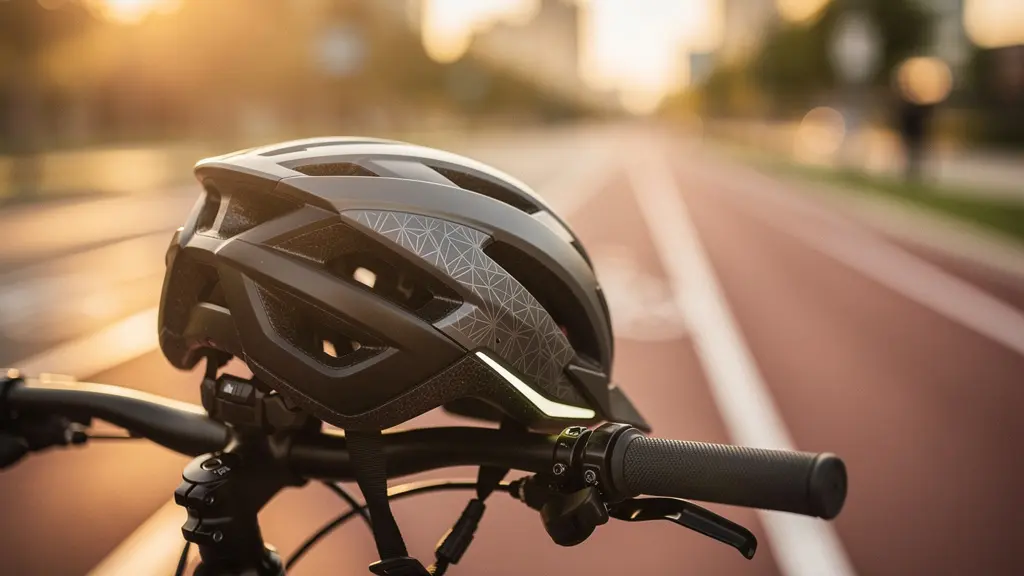
Contrary to popular belief, a fast e-bike isn’t just a bicycle with a motor; it’s a lightweight vehicle that generates forces your old gear was never designed to handle.
- Standard bicycle helmets are only tested for 14 mph impacts, whereas Class 3 e-bikes (S-Pedelecs) can reach 28 mph, doubling the speed and quadrupling the impact energy.
- The legal classification, insurance requirements, and real-world stopping distances of S-Pedelecs align them more with mopeds than with traditional bicycles.
Recommendation: Adopt a ‘vehicle-operator’ mindset and upgrade to gear certified for high-energy impacts, starting with a helmet meeting the NTA 8776 standard.
The exhilaration of a new, fast e-bike is undeniable. The effortless acceleration, the ability to keep pace with city traffic, the feeling of shrinking distances—it’s a transformation in personal mobility. But as you glide along at 25 or 28 miles per hour, a critical question should surface, born from the wind rushing past your ears: “Is the gear I used on my old bike actually enough for this?” The common advice of “wear a helmet” and “be visible” feels inadequate when the physics of your ride have fundamentally changed.
The answer, from a safety engineering perspective, is an unequivocal no. Upgrading to a speed pedelec without upgrading your safety philosophy is a dangerous oversight. At these higher speeds, you are no longer a recreational cyclist; you are the operator of a lightweight motor vehicle. The kinetic energy your body carries is exponentially greater, and the forces involved in a potential crash demand a completely different class of protection. Your standard bike helmet simply wasn’t built for this reality.
But if the old rules don’t apply, what are the new ones? The key is not to simply be “more careful,” but to understand the science behind high-speed safety. This guide abandons generic cycling tips to provide an engineering-based breakdown of the gear you need. We will dissect the specific principles—from impact foam density and material abrasion resistance to the physics of wind chill and the legal realities of your new vehicle—that must govern your choices. It’s time to align your equipment with the true performance of your machine.
This article provides a comprehensive, science-first look at the safety equipment demanded by high-speed e-bikes. Explore the sections below to understand the engineering principles that will keep you safe on the road.
Summary: NTA 8776 Helmets: Why Standard Bike Helmets Aren’t Enough for E-Bikes
- Why 28mph Crashes Require Different Foam Density
- How to Dress for 20mph Winds Without Overheating
- Leather vs Synthetic: Abrasion Resistance for Pavement Falls
- The Risk of Dark Clothing on Fast Commutes at Night
- When to Replace a Helmet: Visible vs Invisible Damage
- Why Your Homeowner Policy Won’t Cover a Speed Pedelec
- Audible Warnings: Meeting Decibel Requirements for S-Pedelecs
- Survival Guide: Navigating Complex Intersections on an E-Bike
Why 28mph Crashes Require Different Foam Density
The single most critical piece of safety gear is your helmet, but not all helmets are created equal. The core of the issue lies in physics: kinetic energy increases with the square of velocity. This means a crash at 28 mph contains four times the energy of a 14 mph crash. A standard bicycle helmet’s expanded polystyrene (EPS) foam is engineered to compress and manage the lower energy of a cycling-speed impact. At e-bike speeds, this foam can “bottom out,” compressing fully and transferring the remaining, catastrophic impact energy directly to your skull.
This is why the Dutch NTA 8776 standard was created specifically for speed pedelecs. It addresses this energy management problem head-on. While traditional helmets are tested for impacts at around 14 mph, the NTA 8776 protocol certifies helmets for speeds up to 28 mph. A critical requirement is that the foam must prevent head acceleration from exceeding 250 g, a threshold for severe brain injury. This is achieved through a combination of increased foam density and greater coverage, particularly around the temples and the back of the head, which are more vulnerable in higher-speed accidents.
The difference in foam performance under high-speed stress is not theoretical. It’s a measurable engineering reality, as demonstrated by the cross-section below showing the structural collapse of standard foam versus the integrity of higher-density material.

A 2025 study conducted by Trek staff confirmed this principle, testing NTA 8776-certified helmets under severe conditions. The key finding was that none of the helmets experienced full foam compression, proving their foam density is an adequate energy management system for high-speed e-bike crashes where standard EPS would fail. Choosing a helmet without the NTA 8776 certification is choosing a safety device not rated for the task. It’s a gamble against physics that is simply not worth taking.
How to Dress for 20mph Winds Without Overheating
Riding at 20-28 mph introduces a significant environmental factor that ground-speed cyclists rarely encounter to the same degree: wind chill. The constant, high-velocity airflow over your body dramatically accelerates heat loss. Even on a pleasant 60°F day, traveling at 25 mph creates a “feels-like” temperature of 47°F. This effect becomes a serious comfort and safety issue in cooler weather, as your body can quickly become dangerously cold, impairing motor skills and focus.
The intuitive reaction might be to bundle up in a heavy winter coat, but this creates another problem: overheating. Your body is still generating significant heat from the effort of pedaling and controlling the bike. A non-breathable layer will trap this heat and sweat, leaving you drenched and leading to a rapid, dangerous chill the moment you stop. The engineering solution is not insulation alone, but a three-part thermal regulation system designed for high-output, high-wind activities.
The table below, based on data from cycling safety resources, quantifies the significant effect of wind chill at typical e-bike speeds.
| Actual Temperature | At 15 mph | At 20 mph | At 25 mph | At 28 mph |
|---|---|---|---|---|
| 60°F (15.5°C) | 55°F (12.8°C) | 51°F (10.6°C) | 47°F (8.3°C) | 45°F (7.2°C) |
| 50°F (10°C) | 43°F (6.1°C) | 39°F (3.9°C) | 35°F (1.7°C) | 33°F (0.6°C) |
| 40°F (4.4°C) | 32°F (0°C) | 27°F (−2.8°C) | 23°F (−5°C) | 21°F (−6.1°C) |
| 30°F (−1.1°C) | 20°F (−6.7°C) | 15°F (−9.4°C) | 11°F (−11.7°C) | 9°F (−12.8°C) |
The ideal system involves a moisture-wicking base layer to pull sweat away from the skin, a thin thermal mid-layer (if needed), and a strategic outer shell. This shell should be windproof on the front panels to block the oncoming air, but feature highly breathable or vented panels on the back and underarms to allow metabolic heat and water vapor to escape. This body-mapped approach keeps you warm and dry without the risk of overheating and subsequent chilling.
Leather vs Synthetic: Abrasion Resistance for Pavement Falls
When you fall at 25 mph, your body doesn’t just hit the ground; it slides. The immense kinetic energy is converted into heat and friction between you and the pavement. Standard athletic wear or denim offers virtually no protection against this, shredding in a fraction of a second and exposing your skin to severe abrasion, commonly known as road rash. This isn’t just a painful injury; it can lead to serious infections and permanent scarring. Protecting yourself requires materials specifically engineered to withstand high-energy slides.
The world of protective apparel, borrowed heavily from motorcycling, offers a range of solutions rated for their abrasion resistance. This isn’t a marketing term; it’s a measurable property often quantified in “slide time”—the number of seconds a material can endure being dragged across a rough surface before failing. Research on protective clothing consistently shows its effectiveness; for instance, studies indicate an 89% reduction in road rash severity for riders wearing CE-rated abrasion-resistant jackets. These jackets and pants often incorporate advanced synthetic textiles or traditional leather, each with distinct properties.
The following table, drawing from specifications found in sources like technical gear guides, breaks down the performance of common protective materials, allowing you to make an informed choice based on your riding needs.
| Material | Abrasion Resistance | Weight | Breathability | Best Use Case |
|---|---|---|---|---|
| Full-Grain Leather | Excellent (6+ sec slide time) | Heavy | Low | Dedicated riding jackets |
| Cordura® 500D | Very Good (4–5 sec) | Medium | Moderate | All-weather commuter pants and jackets |
| Kevlar®-Lined Denim | Good (3–4 sec) | Medium | Moderate | Casual-look riding jeans |
| Dyneema® (UHMWPE) | Excellent (6+ sec) | Very Light | Good | Lightweight high-performance gear |
| D3O® / SAS-TEC® Armor | N/A (impact absorption) | Light | Varies | Removable inserts for elbows, hips, knees |
In addition to the outer material, look for garments that include pockets for CE-rated impact armor at critical points like the elbows, shoulders, hips, and knees. This armor, made from viscoelastic materials like D3O® or SAS-TEC®, is soft and flexible during normal movement but instantly hardens upon impact to absorb and distribute the force. A proper riding jacket or pair of pants combines both abrasion resistance and impact absorption into a single, life-saving system.
The Risk of Dark Clothing on Fast Commutes at Night
At 28 mph, you are moving at over 41 feet per second. This speed dramatically reduces the time a motorist has to see you, recognize you as a cyclist, and react. At night, this challenge is amplified. Wearing dark, non-reflective clothing is the equivalent of driving a car with its lights off—you become nearly invisible until it’s too late. The solution requires a scientific understanding of visibility, which is divided into two categories: passive visibility (conspicuity) and active visibility.
During the day, conspicuity is best achieved with fluorescent colors like hi-vis yellow or orange. These colors react to the UV rays in sunlight, appearing to “glow” and standing out against most backgrounds. However, at night, without a UV source, fluorescence is useless. Nighttime safety depends on active visibility, which means using lights to announce your presence and retro-reflective materials to bounce a driver’s headlight beam directly back to its source. A comprehensive system using lights has been shown to result in 38% fewer close calls for riders in urban settings.
However, the most effective strategy isn’t just about being a bright object; it’s about being a recognizable human object. This is the principle of biomotion. The human brain is hardwired to recognize the unique up-and-down and circular motion of walking or pedaling. Placing retro-reflective material on your moving joints—ankles, knees, and wrists—creates a powerful signal that allows a driver’s brain to identify you as a person in a fraction of the time it takes to process a static reflective shape on a vest.
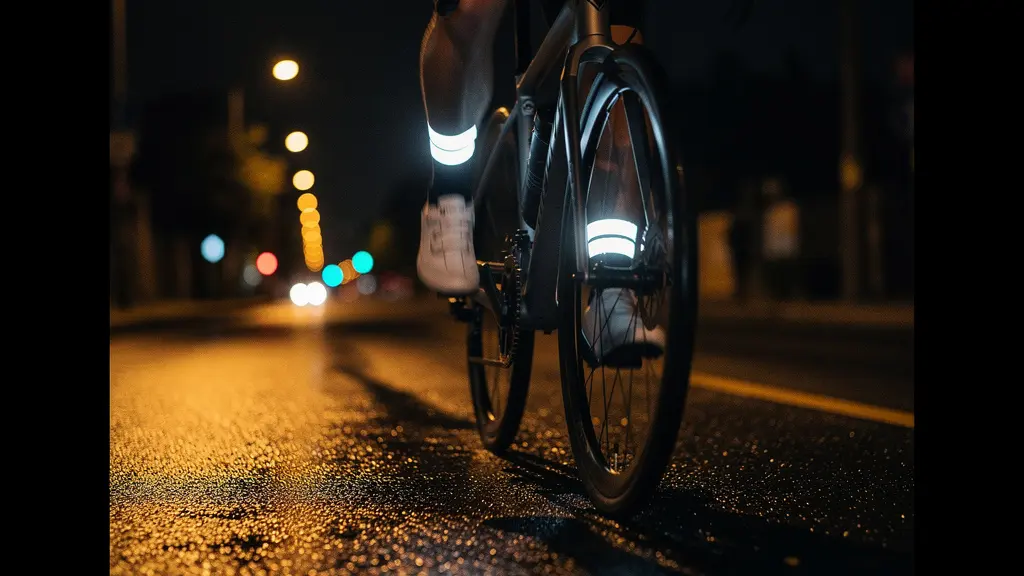
A complete nighttime visibility system therefore combines a powerful front headlight (400-800 lumens), a bright rear taillight, and strategically placed biomotion reflectors. This turns you from a mysterious, slow-moving light into an unmissable, fast-moving human, giving drivers the critical seconds they need to make safe decisions around you.
When to Replace a Helmet: Visible vs Invisible Damage
An NTA 8776 helmet is an investment in your safety, but it’s a single-use device. The EPS foam liner is designed to save your life exactly once by crushing and deforming to absorb impact energy. After any significant impact—even dropping it from a counter onto a hard floor—the foam’s structural integrity is compromised. It may look fine on the outside, but the micro-cellular structure has been crushed, and it will not provide the same level of protection in a subsequent crash. This is the most important rule: if it takes a hit, replace it.
However, impacts are not the only thing that degrades a helmet. Over time, environmental factors can silently weaken its protective capabilities. The outer polycarbonate shell can become brittle from UV radiation exposure. The glues and resins holding the layers together can break down. The straps can fray and lose their ability to hold an adjustment. For this reason, most manufacturers recommend replacing a helmet every 3-5 years, even with no impacts. You are not just replacing a piece of plastic; you are renewing a precisely engineered safety system.
Treating your helmet like the critical piece of equipment it is means performing regular inspections. Damage is not always obvious. You must be proactive in looking for the subtle signs that your helmet’s service life is over. A crack in the shell is an obvious red flag, but so is a dent in the foam liner, a strap that won’t stay tight, or a buckle that feels loose. Trusting a compromised helmet is a risk with consequences that are too high to contemplate.
Your Pre-Ride Helmet Inspection Checklist
- Shell Inspection: Check the outer shell for cracks, deep scratches, discoloration, or brittleness. UV degradation can weaken polycarbonate over time even without visible damage.
- Foam Liner Check: Remove the comfort padding and examine the EPS foam for any dents, compression marks, or cracks. Even a small dent indicates the foam has already done its job and cannot absorb a second impact.
- Strap Condition: Inspect all straps for fraying, cuts, or stretching. The Y-junction below each ear must sit snugly and the straps should not have lost their adjustment tension.
- Buckle Function: Click the buckle open and closed several times. It must engage firmly with an audible click and release only when intentionally pressed. A sticky or loose buckle is a replacement trigger.
- Post-Impact Rule: If the helmet has sustained any impact—even a drop onto a hard floor from counter height—assume the internal EPS structure is compromised and replace it. The foam is designed for one-time energy absorption only.
Why Your Homeowner Policy Won’t Cover a Speed Pedelec
One of the most overlooked aspects of upgrading to a speed pedelec is the shift in legal and financial liability. Most riders assume their new e-bike is covered for theft or liability under their existing homeowner’s or renter’s insurance policy, just as a traditional bicycle would be. This is a critical and potentially devastating mistake. The reason lies in a common clause in these policies: the “motorized vehicle exclusion.”
Insurance policies are written to cover specific, defined risks. They explicitly exclude things that fall under other categories of insurance, like automobiles. As a speed pedelec can achieve speeds of 28 mph with motor assistance, many legal and insurance frameworks no longer classify it as a simple bicycle. For example, a landmark case study in legal classification is the EU Directive 168/2013, which is detailed in guides on e-bike safety standards. This directive officially classifies a speed-pedelec (S-EPAC) as a moped.
This legal reclassification as a moped is precisely what triggers the motorized vehicle exclusion in your home insurance. In the event of theft, your policy will not pay out. More frighteningly, if you are involved in an accident and found liable for damages or injuries to another person, your homeowner’s policy will offer no protection, exposing you to immense personal financial risk. To be properly covered, you must seek out a specific e-bike or motorcycle/moped insurance policy.
This policy should include several key components: liability coverage for damage you might cause, collision coverage for your own bike, and comprehensive coverage for theft and non-collision damage. Perhaps most importantly, you should strongly consider Uninsured/Underinsured Motorist (UM/UIM) coverage. This protects you if you are hit by a driver who has little or no insurance, covering your medical bills and lost wages when the at-fault party cannot. It is an essential safeguard for anyone operating a lightweight vehicle in mixed traffic.
Audible Warnings: Meeting Decibel Requirements for S-Pedelecs
A friendly “ting-a-ling” from a traditional bike bell is perfectly adequate for a quiet bike path. It’s a polite signal to pedestrians that you’re approaching. However, in a 25 mph urban traffic environment, that sound is completely lost in the noise of car engines, wind, and tire roar. At the speeds a speed pedelec travels, a courtesy warning is no longer sufficient; you need an emergency alert system capable of cutting through the ambient noise to be heard by a distracted driver inside a sound-insulated vehicle.
The effectiveness of an audible warning is measured in decibels (dB). A standard bike bell produces around 70-80 dB, which is quickly dissipated. To be effective in traffic, you need a device that can compete with a car horn, which operates in the 100-110 dB range. High-powered electronic horns for e-bikes are designed for this exact purpose, producing 120 dB or more—a sound level that is impossible to ignore and can be heard from hundreds of feet away, even by a driver with the radio on.
This doesn’t mean the humble bell is obsolete. The best approach for an S-Pedelec operator is a two-tiered audible warning strategy. This involves having both a traditional bell for polite, low-speed interactions on shared paths, and a high-decibel electronic horn reserved for emergencies in traffic. Using the 120 dB horn on a pedestrian would be unnecessarily alarming and aggressive, but using a bell to alert a car drifting into your lane would be dangerously ineffective. You need the right tool for each specific situation, accessible at a moment’s notice.
It’s also crucial to understand the relationship between speed and reaction time. At 28 mph, you cover 41 feet every second. A bell that a pedestrian hears when you are 50 feet away gives them just over one second to react. An electronic horn that a driver hears from 200 feet away gives them nearly five seconds to correct their course. This time difference is the margin between a close call and a collision.
Key Takeaways
- Your speed dictates your gear. The quadrupled kinetic energy at 28 mph vs. 14 mph makes standard cycling helmets and clothing insufficient.
- Think like a vehicle operator, not a cyclist. This means adopting gear with certified performance ratings (NTA 8776, CE) and using defensive driving techniques.
- Safety is a system. It combines impact absorption (helmet), abrasion resistance (jacket/pants), conspicuity (lights/reflectives), and legal/financial protection (proper insurance).
Survival Guide: Navigating Complex Intersections on an E-Bike
The single most dangerous environment for any vehicle operator is the intersection. For a speed pedelec rider, this danger is magnified. Your slim profile makes you harder to see, and your high speed can surprise motorists who misjudge your approach time. Surviving intersections requires abandoning the passive mindset of a cyclist hugging the curb and adopting the assertive, defensive tactics of a motorcyclist. Your primary tool is lane positioning.
When approaching an intersection at or near the speed of traffic, the safest place to be is in the center of the lane. This tactic, known as “taking the lane,” accomplishes several critical safety objectives. It makes you significantly more visible to drivers ahead and behind. It prevents cars from attempting to squeeze past you in the same lane. Most importantly, it protects you from the deadly “right hook,” where a car turns right directly across your path, and it moves you out of the “door zone” of parked cars. You are claiming your space as a legitimate road vehicle.
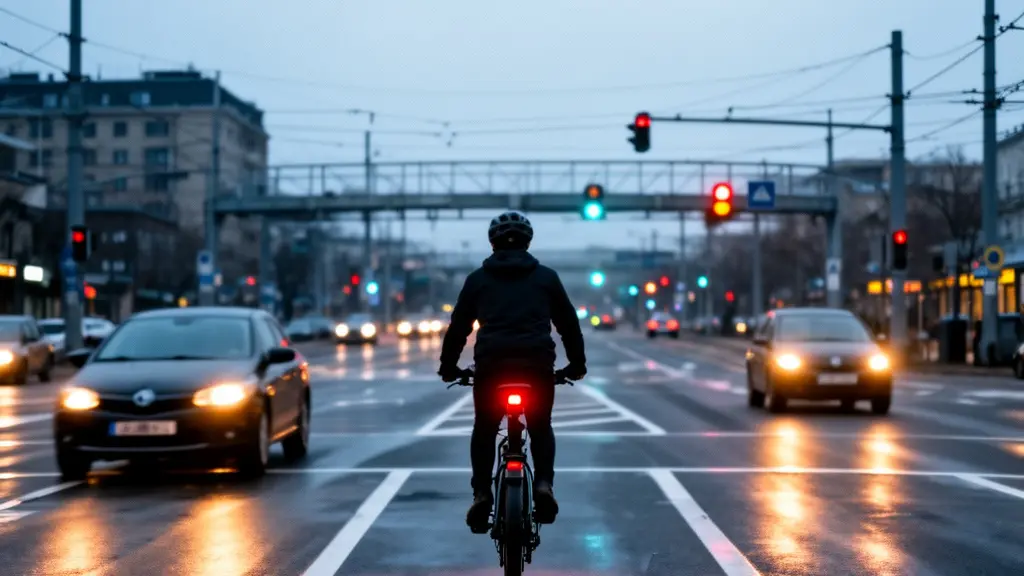
Defensive positioning must be paired with proactive awareness. Always “cover your brakes” by resting your fingers on the levers as you approach a potential conflict. Watch the front wheels of cars, not just the car itself; a turning wheel telegraphs a driver’s intention before the vehicle’s body moves. Seek eye contact, but don’t rely on it—if you cannot confirm a driver sees you, assume they don’t. Be hyper-aware of A-pillar blind spots on cars, which can easily hide a cyclist from a driver’s view.
Finally, always respect the physics of stopping. At 28 mph, your total stopping distance—including reaction time and braking—is over 114 feet (34.7 meters) on dry pavement. This is nearly the length of three school buses. This enormous stopping distance means you cannot rely on reactive braking. You must anticipate hazards and proactively manage your speed well before you enter the intersection’s zone of conflict. Slowing down is not a sign of weakness; it’s an expert-level defensive maneuver.
Frequently Asked Questions about NTA 8776 Helmets: Why Standard Bike Helmets Aren’t Enough for E-Bikes
Why does my homeowner’s insurance not cover my speed pedelec?
Most homeowner and renter’s insurance policies contain a ‘motorized vehicle exclusion’ clause. Because speed pedelecs have motor assist exceeding 20 mph and are often legally classified as mopeds (e.g., under EU Directive 168/2013), they trigger this exclusion — voiding liability, collision, and theft coverage under your standard home policy.
What types of insurance coverage should a speed pedelec owner consider?
Three essential coverage types: (1) Liability insurance — covers injury or damage you cause to others; (2) Collision coverage — pays for damage to your own e-bike in a crash; (3) Comprehensive coverage — protects against theft, vandalism, and non-collision damage. Additionally, consider Uninsured/Underinsured Motorist (UM/UIM) coverage.
What is UM/UIM coverage and why is it critical for e-bike riders?
Uninsured/Underinsured Motorist (UM/UIM) coverage protects you if a driver with minimal or no insurance hits you. It covers your own medical bills and financial losses when the at-fault driver cannot pay. Given e-bike riders’ vulnerability in traffic, this is considered one of the most important add-on protections available.
Now that you understand the fundamental gap between recreational cycling gear and the demands of a high-speed e-bike, the path forward is clear. The next logical step is to conduct a thorough audit of your current equipment and identify the critical upgrades needed to align your safety with the physics of your ride.