
Choosing an e-bike isn’t about pedal-assist versus throttle; it’s about matching the bike’s legal and mechanical “DNA” to the reality of your daily commute.
- Pedal-assist systems (Classes 1 & 3) offer a more natural, exercise-oriented ride but come with higher speed limits and different regulations.
- Throttle-on-demand bikes (Class 2) provide moped-like convenience but face the strictest limitations on trails and multi-use paths.
Recommendation: Before buying, audit your 10-mile route for hills, bike lane access, and local ordinances to determine which e-bike class is not just desirable, but legally permissible.
The world of electric bikes presents a confusing choice for the aspiring commuter. You’re ready to tackle that 10-mile journey to work, but you’re immediately faced with a wall of jargon: pedal-assist, throttle, Class 1, Class 2, Class 3. The common advice simply defines these terms—pedal-assist helps when you pedal, a throttle works without pedaling. This explanation, however, fails to address the fundamental question: how do these differences impact your daily ride, your fitness goals, and, most importantly, your ability to legally ride on your chosen route?
Many potential riders get bogged down comparing motor wattage or battery size, overlooking the most critical factor: the bike’s regulatory DNA. Each class is a distinct legal category with profound implications for where you can ride, what rules you must follow, and even the type of helmet you might need. The difference isn’t just about how you get power; it’s about the very identity of your vehicle in the eyes of the law.
But what if the key wasn’t choosing between “exercise” and “ease,” but understanding how the technology and regulations combine to create the perfect tool for your specific commute? This guide moves beyond basic definitions to provide a decision-making framework. We will analyze the nuances of ride feel, quantify the real-world impact on range and your carbon footprint, and clarify the legal risks. By the end, you’ll understand not just what the classes mean, but which one is truly right for your 10-mile journey.
This article provides a comprehensive breakdown of the key factors you must consider, from the technical nuances of motor types to the practical realities of purchasing and maintenance. The following sections will guide you through each critical decision point.
Summary: Pedal-Assist vs. Throttle: Making the Right Choice for Your Commute
- Why High-End Pedal Assist Feels More Natural Than Hub Motors
- How to Extend Your Range by 20% Using Low-Assist Modes
- Class 1 or Class 3: Is Your E-Bike Really Green? Calculating the Carbon Offset vs Cars
- The Fine You Risk by Riding Class 2 Bikes on Non-Motorized Trails
- When to Switch to Electric: 3 Signs Your Commute Is Too Long
- US Class 3 vs EU S-Pedelec: Major Regulatory Differences
- Why Mid-Drives Offer Better Handling on Technical Terrain
- Direct-to-Consumer vs Local Shop: Where Should You Buy Your E-Bike?
Why High-End Pedal Assist Feels More Natural Than Hub Motors
The first distinction you’ll notice between e-bike types is the “feel” of the power delivery. This sensation is not arbitrary; it’s the direct result of two different technologies: torque sensors and cadence sensors. High-end pedal-assist systems almost exclusively use torque sensors, which measure how hard you are pushing on the pedals. The motor then provides a proportional amount of assistance, amplifying your effort seamlessly. If you pedal harder to climb a hill, the motor gives more power. If you ease up on a flat, the motor backs off. This creates an intuitive and organic experience that feels like you simply have superhuman legs.
In contrast, most throttle-based bikes and lower-end pedal-assist models use a cadence sensor. This sensor only detects if the pedals are turning, not how hard. Once it detects rotation, it delivers a fixed amount of power, creating an “on/off” sensation that many riders find jarring and less predictable. This is particularly noticeable in stop-and-go urban commuting. As a comprehensive analysis from Electric Bike Report shows, the real-time feedback from a torque sensor is critical for smooth modulation and safety when navigating traffic. Their testing revealed that the on/off nature of cadence sensors was consistently described by riders as less predictable, especially when starting from a stop or making tight maneuvers.
This difference in feel is not just about comfort; it’s about control. A torque sensor-based system allows for fine-tuned power application, making the bike an extension of the rider’s body. A cadence-based system, including a throttle, often feels more like a vehicle you are piloting, with a distinct separation between your input and the motor’s output.
How to Extend Your Range by 20% Using Low-Assist Modes
Range anxiety is a major concern for any e-bike commuter. The advertised range is often a best-case scenario, but your real-world mileage depends heavily on one factor: how you manage your assist levels. Thinking of your battery like a “budget” and actively shifting between modes is the single most effective way to guarantee you’ll make it through your 10-mile commute and back. Simply leaving the bike in “Turbo” will drain your battery rapidly, while strategic use of lower-assist modes can easily extend your range by 20% or more.
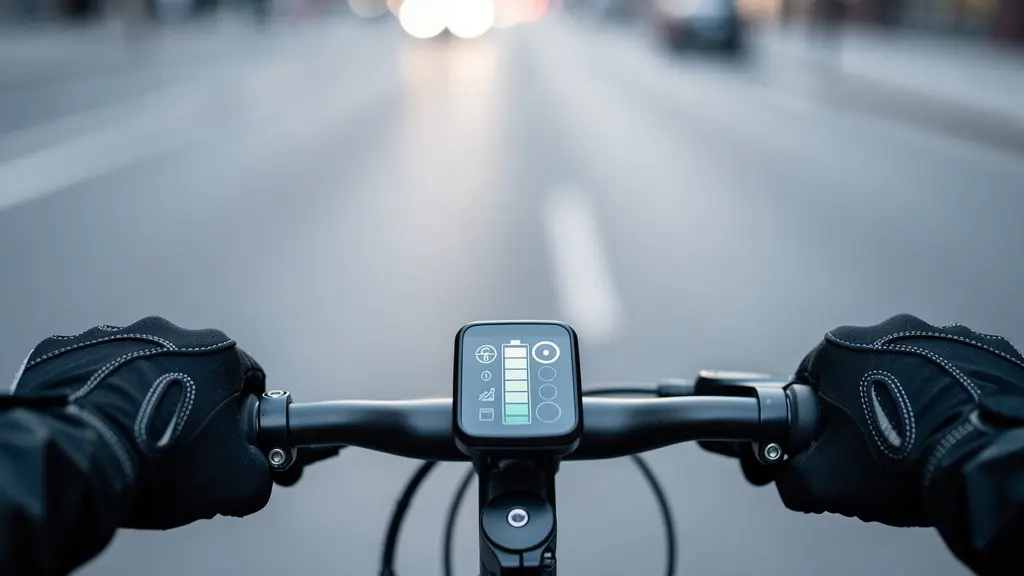
The goal is to use the least amount of assistance necessary for the terrain. Use no assist on downhills, letting gravity and momentum do the work. On flat ground, a low “Eco” mode provides a gentle push without significant battery drain. As you encounter headwinds or slight inclines, shift up to a “Tour” or “Normal” mode. The high-power “Turbo” or “Boost” modes should be reserved exclusively for steep hills or for accelerating quickly and safely across busy intersections. This method of “assist shifting” mirrors how a cyclist uses gears on a traditional bike, conserving energy for when it’s needed most. As a baseline, modern e-bikes now average around 11 watt-hours per mile, but strategic mode management can significantly lower this consumption.
To maximize this effect, combine assist shifting with basic bike maintenance. Properly inflated tires can improve efficiency by 5-10%, and a clean, well-lubricated drivetrain ensures that none of your precious energy—from your legs or the battery—is wasted.
Class 1 or Class 3: Is Your E-Bike Really Green? Calculating the Carbon Offset vs Cars
One of the primary motivations for switching to an e-bike commute is the environmental benefit. But is a faster, more powerful Class 3 e-bike significantly less “green” than a Class 1? The answer, when compared to a car, is a resounding no. The carbon footprint of any e-bike is minuscule compared to traditional vehicles. The electricity used to charge the battery is the main source of emissions, and even the most powerful consumer e-bikes are incredibly efficient.
A 10-mile commute on a Class 1 pedal-assist bike generates approximately 49 grams of CO2. A faster Class 3 bike, which requires a bit more energy to reach 28 mph, generates about 58 grams for the same distance. Now, compare that to driving. A typical gasoline-powered car emits a staggering 2,740 grams of CO2 over the same 10-mile trip. Even a modern electric car, while much better, still accounts for around 1,400 grams. This means a daily e-bike commute saves over 95% of the carbon emissions compared to driving a gas car. According to a detailed report on e-bike statistics, these numbers highlight the profound impact of mode-shifting. In fact, a Portland-based study calculated that 900 metric tons of CO₂ daily could be eliminated if just 15% of car trips shifted to e-bikes.
This data makes it clear that from a carbon offset perspective, the choice between a Class 1 and Class 3 e-bike is almost negligible. Both are exceptionally green alternatives to driving. The decision between them should be based on your commute needs, local speed limits, and desired fitness level, not on a perceived difference in their environmental impact.
The following table, based on recent transportation analyses, breaks down the emissions for a typical 10-mile commute, putting the e-bike’s efficiency into stark relief.
| Transport Mode | CO2 per Mile (grams) | 10-Mile Total (grams) | Annual (250 days) |
|---|---|---|---|
| Class 1 E-Bike | 4.9 | 49 | 12.25 kg |
| Class 3 E-Bike | 5.8 | 58 | 14.5 kg |
| Electric Car | 140 | 1,400 | 350 kg |
| Gasoline Car | 274 | 2,740 | 685 kg |
| Public Bus | 140 | 1,400 | 350 kg |
The Fine You Risk by Riding Class 2 Bikes on Non-Motorized Trails
Here is where the distinction between e-bike classes moves from a feature comparison to a critical legal issue. The single biggest mistake a new e-bike commuter can make is assuming their bike is allowed everywhere a traditional bicycle can go. This is especially true for Class 2 e-bikes, which have a throttle that can propel the bike without any pedal input. While these bikes are often legal on streets and in bike lanes, they are frequently banned from multi-use paths, park trails, and any path designated as “non-motorized.”
Why the restriction? Land managers and regulators view the throttle as fundamentally changing the vehicle from a bicycle to a motor-powered vehicle, akin to a moped or scooter. The concern is that throttle use can lead to higher closing speeds with pedestrians and other cyclists, increased trail erosion, and a departure from the “human-powered” ethos of these trails. Riding a Class 2 e-bike on a restricted path isn’t just a breach of etiquette; it can be an expensive ticket. Across major US cities, typical fines for Class 2/3 violations range from $50 to $200, and ignorance of the law is not a valid defense.
Laws can change quickly, and what might have been acceptable last year could now lead to fines.
– RiderGuide Editorial Team, Guide to US Ebike Laws 2024
This patchwork of local rules means you must become an expert on your specific 10-mile route. A path that is legal for your Class 2 bike in one city might be illegal in the neighboring town you commute through. Before purchasing, especially a Class 2 model, verifying access along your entire route is non-negotiable.
Your 5-Point Checklist for Verifying E-Bike Trail Access
- Check Trailhead Signage: Before entering any path, look for posted signs. Pay close attention to bicycle symbols, e-bike specific icons, and any symbols that are crossed out, as this explicitly means no access.
- Contact the Managing Authority: For parks and nature reserves, identify the managing body (e.g., State Parks, Bureau of Land Management, National Park Service) and check their official website or call their local office directly to confirm e-bike policies.
- Consult Local Ordinances: For paths within city limits, visit the city’s recreation or transportation department website. Search for local ordinances pertaining to “electric bicycles” or “motorized vehicles” on public trails.
- Leverage Community Knowledge: Join local biking clubs or online social media groups. These communities are an invaluable source for real-time trail status, access updates, and knowledge of unwritten local customs.
- Default to the Safest Bet: When in doubt, assume the most restrictive rules apply. Class 1 e-bikes (pedal-assist up to 20 mph) currently have the broadest access permissions across the US, making them the safest choice for commuters with varied routes.
When to Switch to Electric: 3 Signs Your Commute Is Too Long
The decision to go electric is often triggered when a traditional bike commute becomes just a little too impractical. While every rider’s threshold is different, there are three common signs that your commute has crossed the line from a pleasant challenge to a daily chore, signaling it’s time to consider an e-bike.
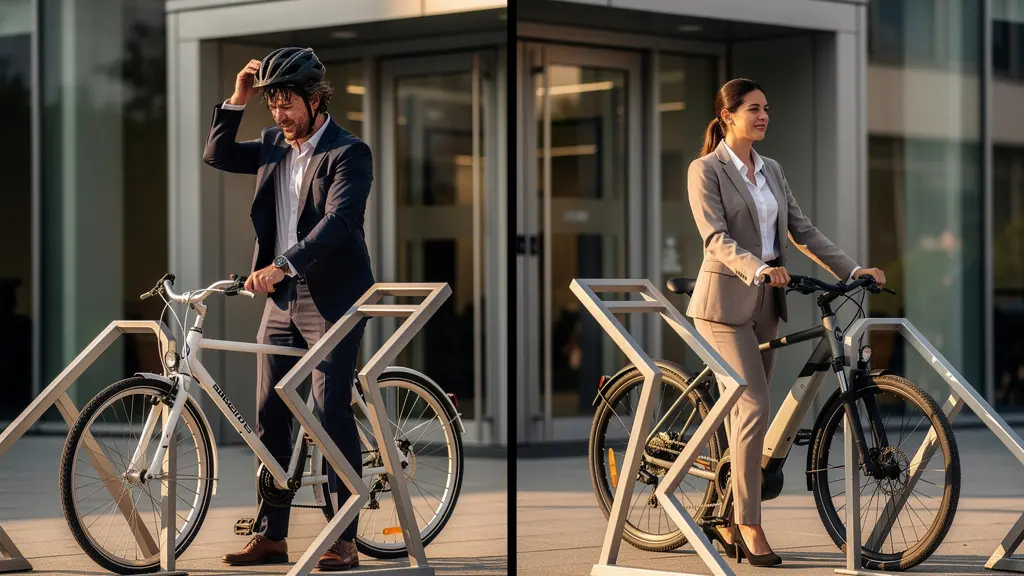
First, you consistently arrive at work sweaty and needing a change of clothes. A 10-mile commute involves significant effort, and if your workplace lacks shower facilities, the logistical hassle can outweigh the benefits of cycling. An e-bike, even on a low-assist setting, flattens hills and neutralizes headwinds, allowing you to maintain a professional appearance upon arrival. Second, you find yourself using “the hills” or “the wind” as an excuse not to ride. If the physical exertion required for parts of your route is a frequent deterrent, an e-bike’s motor eliminates that barrier, boosting consistency. Third, the time commitment becomes a stressor. If a traditional bike ride takes over 45 minutes and eats into family or personal time, an e-bike can often shave 15-20 minutes off the journey, making the commute more sustainable in the long run.
Case Study: The Google Employee E-Bike Experiment
To understand how e-bikes change commuting behavior, look no further than a 2022 study of 2,600 Google employees who were given free e-bikes. The results were dramatic: participants increased their weekly bike commute distance by an average of 8.4 to 10.5 miles. Over four years, they collectively replaced approximately 400,000 single-occupancy vehicle miles. Crucially, even employees with commutes longer than 10 miles still chose to bike more than 40% of the time, demonstrating that e-bikes make longer distances practical and appealing.
US Class 3 vs EU S-Pedelec: Major Regulatory Differences
Understanding your local e-bike laws is critical, but it’s also helpful to see them in a global context. The US and the European Union have taken fundamentally different philosophical approaches to regulating high-speed electric bikes. While a US Class 3 e-bike and an EU S-Pedelec (Speed Pedelec) both have a maximum assisted speed of 28 mph (or 45 km/h), their legal classifications are worlds apart. This comparison perfectly illustrates the concept of a bike’s “Regulatory DNA.”
The US system regulates the e-bike as a ‘bicycle-with-assist,’ while the EU S-Pedelec regulations treat it as a ‘light moped’.
– International E-Bike Standards Committee, Global E-Bike Regulatory Framework Analysis
This core difference creates a cascade of divergent requirements. In most US states, a Class 3 e-bike requires no special license, no vehicle registration, and no mandatory insurance. It is, for all intents and purposes, a fast bicycle. In stark contrast, to ride an S-Pedelec in the EU, you need a specific moped license, the vehicle must be registered with a license plate, and you must carry liability insurance. Furthermore, S-Pedelecs are generally forbidden from using bike lanes and must ride on the road with cars, a major difference from the US where Class 3 bikes are often permitted in protected bike infrastructure.
These differences are not trivial; they shape the entire user experience and the role of the vehicle in the transportation ecosystem. The US approach prioritizes integration with bicycle infrastructure, while the EU model treats the S-Pedelec as a low-powered motorcycle. For a commuter, this distinction is paramount.
The following table highlights the key regulatory distinctions between these two seemingly similar high-speed e-bike categories.
| Requirement | US Class 3 | EU S-Pedelec |
|---|---|---|
| Maximum Speed | 28 mph | 28 mph (45 km/h) |
| License Required | No | Yes (moped license) |
| Registration | No | Yes (license plate) |
| Insurance | No | Mandatory |
| Helmet Type | Standard bike helmet | Type-approved moped helmet |
| Where to Ride | Bike lanes allowed | Must use roads with cars |
| Minimum Age | 16 (varies by state) | 16 |
Why Mid-Drives Offer Better Handling on Technical Terrain
Beyond sensors, the physical location of the motor is the next major factor influencing ride quality and handling. The two dominant designs are hub-drive motors, located in the center of the front or rear wheel, and mid-drive motors, integrated into the bike’s frame at the bottom bracket where the pedals attach. While hub drives are often cheaper and simpler, mid-drive systems offer superior handling, especially in conditions that require agility—like a 10-mile urban commute.
The reason comes down to physics: center of gravity. A mid-drive motor places the heaviest component of the electric system—the motor itself—at the lowest and most central point on the bike. This low center of gravity makes the bike feel balanced, stable, and responsive. It handles much like a traditional, non-electric bicycle, making it intuitive to maneuver around obstacles, corner sharply, and navigate through traffic. Hub motors, by placing significant weight at the front or rear wheel, can create a “pendulum effect,” making the bike feel top-heavy and sometimes sluggish or awkward to steer at low speeds.
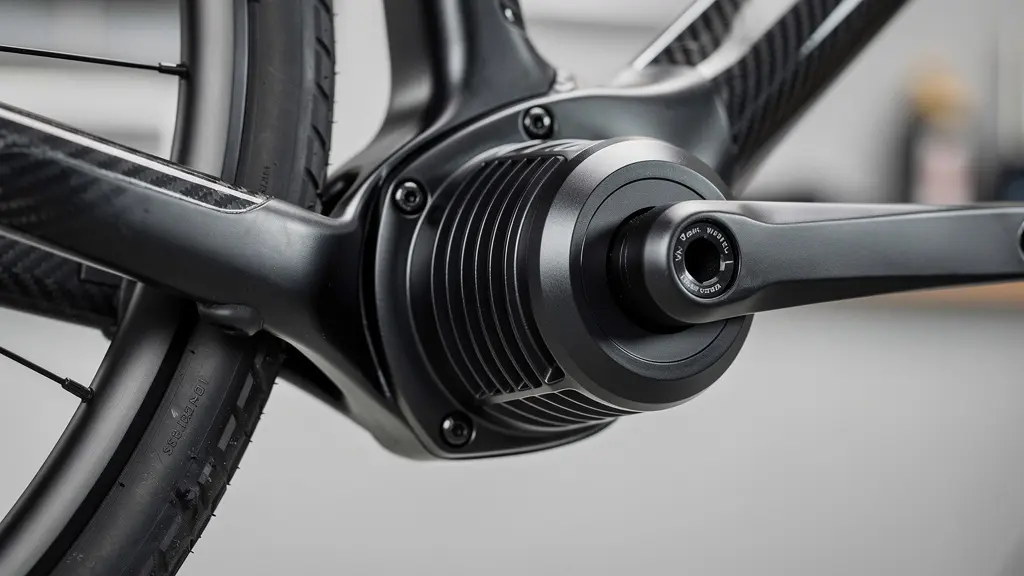
This isn’t just a subjective feeling; it has been validated by research. A scientific study on Barcelona’s bike-sharing system specifically analyzed how motor placement impacts rider safety and handling in urban environments. The research revealed that the centralized weight distribution of mid-drive systems significantly improves stability and reduces the pendulum effect, making sharp turns and navigating tight spaces notably safer for commuters. This balance and predictability is a key safety feature for anyone tackling a daily commute.
Key Takeaways
- Your choice between pedal-assist and throttle is a legal and practical decision, not just a feature preference.
- Class 2 (throttle) bikes face the most significant access restrictions on non-motorized trails and paths.
- Mid-drive motors offer superior balance and handling over hub-drives, a key safety factor for urban commuting.
Direct-to-Consumer vs Local Shop: Where Should You Buy Your E-Bike?
Once you’ve decided on the class and motor type for your 10-mile commute, the final hurdle is deciding where to buy. The market is split between two main channels: Direct-to-Consumer (DTC) brands that sell online and ship a bike to your door, and the traditional Local Bike Shop (LBS). While DTC brands often boast lower initial prices, a smart commuter must consider the Total Cost of Ownership.
A DTC e-bike typically requires self-assembly or hiring a mechanic, an immediate cost of $150-$200 that isn’t factored into the sticker price. More importantly, e-bikes are complex machines that require regular maintenance and occasional service. When a DTC bike has a problem, warranty service often means diagnosing the issue yourself, communicating with a remote customer service team, and potentially shipping the bike or a major component back to the manufacturer—a process that can leave you without your commuter vehicle for weeks. An LBS, by contrast, provides professional assembly, often includes a year of free tune-ups, and serves as your local point of contact for all service and warranty issues.
Perhaps the most underrated benefit of an LBS is the ability to test ride multiple bikes. Understanding the difference in feel between a Class 1 mid-drive and a Class 2 hub-drive is something you can only truly grasp by riding them back-to-back. While the initial price at a local shop may be higher, the included service, expert advice, and peace of mind can provide significantly more value over the life of the bike.
The following table, using data from a recent analysis of the e-bike market, illustrates the different cost factors to consider beyond the initial purchase price.
| Cost Factor | DTC E-Bike | Local Shop E-Bike |
|---|---|---|
| Average Initial Price | $1,825 | $2,500 |
| Professional Assembly | $150-200 | Included |
| First Year Tune-ups | $100-150 | Often Included |
| Warranty Service | Ship to manufacturer | Local service |
| Parts Availability | 2-4 weeks shipping | 1-3 days |
| Test Ride Option | No | Yes |
Making an informed choice based on your route’s unique DNA—its hills, its surfaces, and its local laws—is the key to a successful e-bike commute. Armed with this knowledge, you can now select a bike that doesn’t just get you to work, but enhances the journey itself.