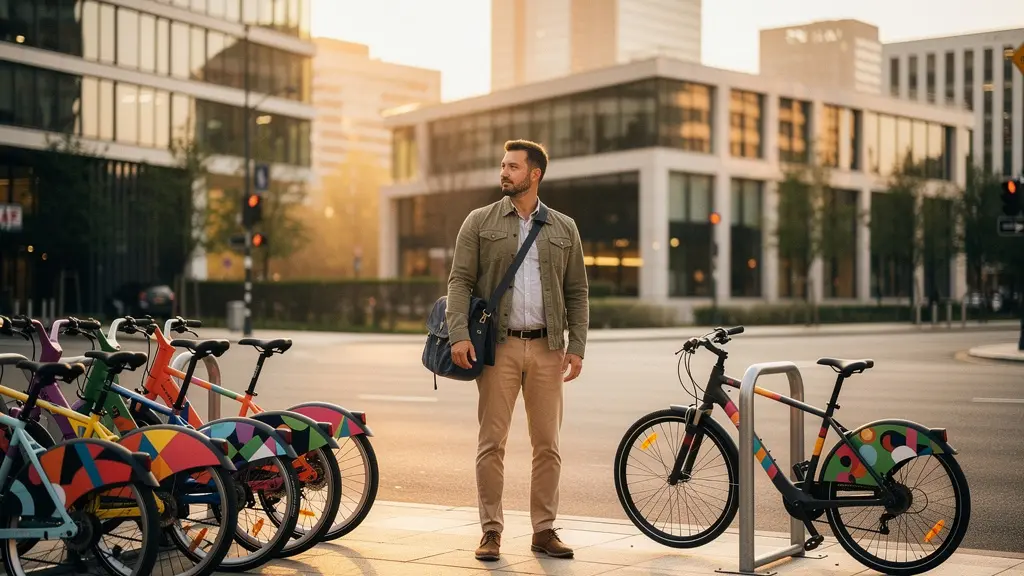
The decision to rent or buy a bike isn’t a simple financial calculation; it’s a trade-off between predictable fees and the hidden “taxes” on your time, stress, and convenience.
- Renting via subscription offers flexibility but comes with risks of poorly maintained vehicles, limited availability during peak hours, and potential fines.
- Ownership provides freedom and long-term value but introduces the burdens of upfront cost, secure storage (a major issue in small apartments), and personal responsibility for maintenance.
Recommendation: Choose a subscription if you prioritize flexibility and avoiding maintenance, but buy if you need guaranteed availability and have a secure place to store your asset.
For a millennial living in a small apartment with no secure storage, the urban mobility equation is complex. The allure of a bike subscription, perhaps costing up to $150 a month for an e-bike, seems like a perfect solution: no large upfront cost, no maintenance headaches, and no bike cluttering your limited living space. The conventional wisdom is to calculate a simple break-even point: if the cost of renting for ‘X’ months exceeds the purchase price of a new bike, you should buy. This financial analysis, however, misses the most critical factors that impact your daily life.
The true comparison isn’t just about dollars. It’s an analysis of competing frictions. On one hand, you have the predictable financial friction of a monthly subscription fee. On the other, you have the unpredictable “hidden taxes” of ownership—the time spent on maintenance, the mental energy wasted worrying about theft, and the daily hassle of navigating storage. Similarly, renting has its own hidden taxes: the time lost searching for a charged and functional bike, the risk of accidents on unfamiliar equipment, and the stress of finding proper parking to avoid fines.
This analysis moves beyond a simple spreadsheet calculation. We will dissect the total cost of convenience for both renting and buying. By framing the decision as a trade-off between different types of costs—financial, temporal, and psychological—you can make a choice that truly aligns with your lifestyle, budget, and tolerance for friction, ensuring your commute is as seamless as possible.
This article provides a structured comparison to guide your decision. We will explore the nuanced realities of both shared mobility and personal ownership, empowering you to choose the most efficient path for your daily travels.
Summary: A Financial Analyst’s Guide to Renting vs. Owning a Bike
- Why Walking Is Costing You 3 Hours of Productivity Per Week
- Why Dockless Bikes Are Often Poorly Maintained
- How to Handle an Accident on a Rented E-Scooter
- Finding a Charged Bike: Best Times to Commute with Shared Fleets
- The Risk of Fines for Improper Parking of Shared Vehicles
- Lime vs Bird vs CitiBike: Which Subscription Offers Best Value?
- How Resale Value Varies Between Name Brand and Generic Bikes
- Best E-Mobility Solutions for the Last 2 Miles of Your Commute
Why Walking Is Costing You 3 Hours of Productivity Per Week
Before comparing rental to ownership, it’s essential to establish the baseline: the cost of *not* using micromobility. For short urban trips, walking is often the default. A 2-mile journey, which might take 8-10 minutes on an e-bike, can easily take 30-40 minutes on foot. If your daily commute involves two such “last mile” segments, you could be spending over an hour each day just walking. Over a standard work week, that accumulates to more than five hours—time that could be reinvested into work, leisure, or rest. This time represents a significant opportunity cost.
The rise of shared mobility directly addresses this inefficiency. The scale is massive; the global bike sharing market is a testament to the demand for faster, more flexible urban transport. The core value proposition of any e-bike or e-scooter, whether rented or owned, is the reclamation of this lost time. By shrinking a 30-minute walk into a 10-minute ride, you effectively “buy back” productive hours each week. The question then becomes which method of access—rental or ownership—is the most efficient way to achieve this time saving.
From a purely financial analyst’s perspective, any time saved has a monetary value. If you value your time at even a modest rate, saving 3-5 hours per week represents a significant financial gain that can easily justify the expense of a mobility solution. The debate, therefore, shifts from “if” you should use micromobility to “how” you should access it. This is where the analysis of renting versus buying begins, starting with the hidden costs associated with the seemingly convenient option of renting.
Why Dockless Bikes Are Often Poorly Maintained
One of the primary appeals of a bike-sharing subscription is the promise of zero maintenance. You ride the bike, you leave it, and someone else handles the repairs. However, this convenience comes with a significant hidden tax: inconsistent vehicle quality. The reality for many dockless systems is that bikes and scooters are often in a state of disrepair. You might find a bike with low tire pressure, faulty brakes, a broken pedal, or a seat that won’t adjust—all issues that create lifestyle friction and safety concerns.
The root of this problem is economic. The operational side of bike-sharing is incredibly demanding and expensive. Fleets require constant attention, from battery swapping and rebalancing (moving vehicles from low-demand to high-demand areas) to addressing vandalism and performing routine repairs. In fact, according to industry analysis, these high operational costs, including constant monitoring and repairs, are a major challenge to the profitability of bike-sharing systems. To manage expenses, maintenance can sometimes be reactive rather than proactive, meaning a bike is often only fixed after a user reports a problem.
For you, the rider, this translates into uncertainty. You can’t be sure the nearest available bike will be safe or even usable. This forces you to spend extra time inspecting the vehicle before you start your trip or, worse, abandoning it to find another. This erodes the very time-saving benefit that makes micromobility attractive in the first place. While you’re not paying for repairs with your money, you are paying with your time and a diminished sense of reliability.
How to Handle an Accident on a Rented E-Scooter
Beyond maintenance issues, renting a shared vehicle introduces another layer of risk: liability in the event of an accident. When you own a bike, you are familiar with its handling, braking distance, and quirks. With a rental, every ride is on a potentially unfamiliar piece of equipment, which can increase the risk of mishaps. If an accident does occur, whether it’s a minor fall or a collision, the steps you take immediately after are crucial for protecting yourself from liability and ensuring you have the necessary information for any insurance claims.
You are responsible for the vehicle from the moment you unlock it until you properly end your trip. This means any damage that occurs during your ride could be attributed to you, leading to repair fees or disputes with the rental company. Knowing the correct protocol is not just good practice; it’s a necessary defensive measure in the shared mobility ecosystem. This includes securing the vehicle if possible, contacting customer service immediately, and, most importantly, documenting everything.
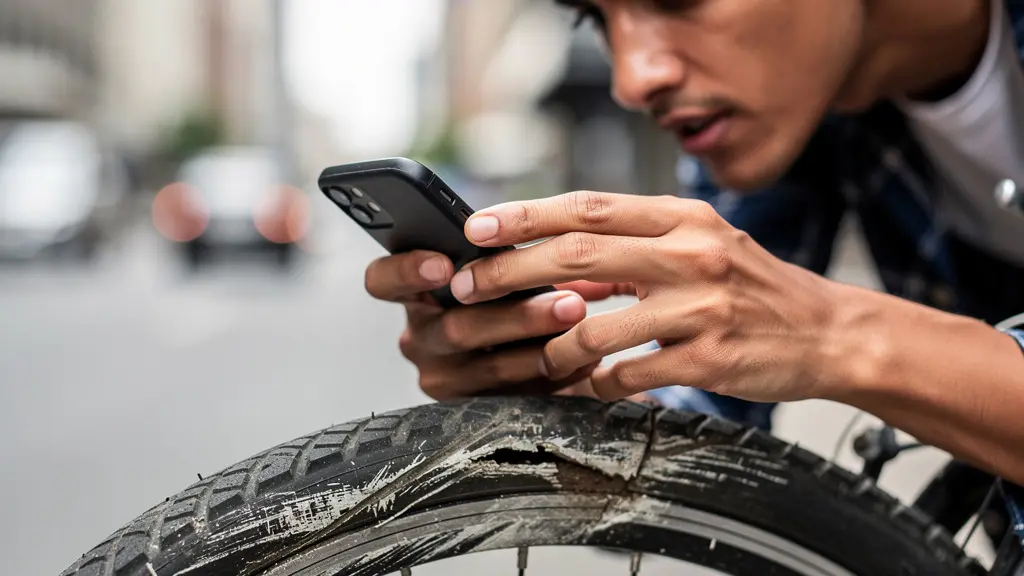
As the image above illustrates, using your smartphone to take clear photos of any damage and the surrounding area is a non-negotiable step. This evidence is your primary tool for creating an accurate record of the incident. Without it, you are left relying solely on the company’s assessment, which may not be in your favor. This process, while necessary, adds another potential stressor to the rental experience—a “hidden tax” of time and anxiety that doesn’t exist when you simply park your own bike.
Your Action Plan: Steps to Take After a Bike-Share Accident
- Secure the Vehicle: If you cannot return the bike to a station, secure the damaged vehicle to a bike rack or pole using its lock.
- Contact Customer Service: Immediately call the provider’s customer service with the 4-digit bike number to report the incident.
- Document Everything: Take clear photos of the damage, the bike itself, and the exact location of the incident. Note the time and circumstances.
- Prioritize Safety: Do not attempt to ride a bike with any damage that affects its safety features, such as brakes, handlebars, or tires.
- Request Your Data: Ask the company for your specific trip data from the app, which can be essential for insurance claims or disputes.
Finding a Charged Bike: Best Times to Commute with Shared Fleets
Perhaps the most common form of lifestyle friction for users of shared e-bikes and e-scooters is the availability risk. The system only works if there is a charged, usable vehicle nearby when you need one. Unfortunately, this is often not the case, especially during peak travel times. The same commuter rush that makes micromobility so valuable also creates massive supply and demand imbalances. This is a well-known operational challenge; according to bike-share operators, docking stations often become completely full or entirely empty during peak morning and evening hours.
This means you might open your app to find the nearest bike is a 10-minute walk away, defeating the purpose of a quick trip. Or you arrive at your destination to find all nearby docks are full, forcing you to ride further to find a parking spot. For e-bikes and e-scooters, the problem is compounded by battery life. An available bike is useless if its battery is dead or too low to complete your journey. This forces users to develop complex strategies, like learning the rebalancing schedules of the service provider or only commuting during off-peak hours, just to ensure a reliable ride.
Case Study: Seattle’s Hilly Terrain and E-Bike Availability
The experience in Seattle highlights how geography exacerbates availability issues. The city’s steep hills mean that a 100% e-bike fleet is necessary for a functional system. To streamline operations, Lime introduced its Gen4 bikes, which share a swappable battery with their scooters. While this makes fleet servicing easier for the company, it doesn’t solve the core user problem. A ride up a steep hill drains the battery significantly faster than a ride on flat ground, meaning bikes located at the top of hills are more likely to have low charge. This creates “battery deserts” in certain neighborhoods, adding another layer of unpredictability for commuters.
This uncertainty is a direct cost paid in time and stress. In contrast, an owned bike is always available, always charged (if you remember to plug it in), and always exactly where you left it. For a daily commuter who values punctuality and predictability, the reliability of ownership can far outweigh the financial cost.
The Risk of Fines for Improper Parking of Shared Vehicles
The flexibility of dockless systems—the ability to start and end your ride almost anywhere—is a major selling point. However, this freedom is governed by an increasingly strict set of rules designed to prevent public sidewalks from becoming cluttered with abandoned bikes and scooters. Cities and rental companies enforce designated parking zones, and failure to comply can result in fines directly charged to your account. This represents another direct, albeit unpredictable, financial risk associated with renting.
What constitutes “improper parking” can vary. It might mean leaving the vehicle outside of a designated painted box, failing to lock it to a rack in certain areas, or blocking pedestrian right-of-way. The app will typically require you to take a photo to confirm you’ve parked correctly, but if the system or a manual reviewer deems your parking job inadequate, a fine of $5, $10, or more can be applied. While small, these fines can add up and turn a cheap ride into an unexpectedly expensive one. It’s another piece of mental overhead that owners don’t have to worry about once their bike is secured in their own space.
Furthermore, user responsibility extends to how the vehicle is left. As a renter, you are a temporary steward of the company’s asset. As noted by a major operator, this includes handling damaged vehicles correctly to avoid further issues. According to the official guidelines from Pacers Bikeshare, a user has a clear responsibility:
Return a damaged bike to a bike station and contact Customer Service. If that is not possible, use the lock on the bikeshare bike to securely lock it to a bike rack or pole.
– Pacers Bikeshare, Official Operating Guidelines
This directive underscores the contract between user and provider. Failing to follow these procedures, just like parking improperly, can lead to financial penalties. It highlights that the rental “convenience” is conditional upon strict adherence to a set of rules that can have direct financial consequences.
Lime vs Bird vs CitiBike: Which Subscription Offers Best Value?
After considering the hidden costs and risks of renting, the next logical step is to analyze the direct financial cost. The shared mobility market is booming, and the global bike sharing market, valued at $9 billion in 2024, is projected to see significant growth. This has led to a variety of competitive subscription models, each designed to appeal to a different type of user. Comparing them requires looking beyond the monthly price tag to understand what you’re actually getting.
A low monthly fee like Lime Prime’s might seem attractive, but it only covers unlock fees, leaving you to pay per minute for every ride. This is ideal for an occasional rider who takes several short trips a month but can become expensive for a daily commuter. In contrast, a traditional station-based system like CitiBike offers an annual membership that includes unlimited rides up to a certain duration (e.g., 45 minutes). This provides cost certainty for heavy users, but with less flexibility in where you can start and end trips. Finally, bundled services like Lyft Pink offer an all-in-one solution for multi-modal commuters who also use ridesharing services.
The “best value” is entirely dependent on your personal usage patterns. A financial analyst’s approach is to model your expected weekly rides—how many, for how long, and at what time of day—and calculate the total monthly cost under each plan. This exercise will reveal your personal break-even point and clarify which subscription structure offers the most value for your specific needs.
| Service | Monthly Cost | Features | Best For |
|---|---|---|---|
| Lime Prime | $5.99 | No unlock fees, pay per minute | Occasional riders (6+ rides/month) |
| CitiBike Annual | $15.42 ($185/year) | Unlimited 45-min rides | Daily commuters |
| Lyft Pink All Access | $16.58 ($199/year) | CitiBike + rideshare discounts | Multi-modal users |
How Resale Value Varies Between Name Brand and Generic Bikes
Pivoting to the ownership side of the equation, the most significant barrier is the upfront cost. However, unlike a rental fee which is a sunk cost, a purchased bike is an asset. This is a critical distinction. While that asset depreciates over time, it retains some value, which you can recoup upon resale. This makes the total cost of ownership lower than the initial sticker price. The amount of value it retains, however, depends heavily on the brand and quality of the bike.
A bike from a reputable, well-known brand like Trek, Specialized, or Brompton will hold its value far better than a generic, direct-to-consumer equivalent. The brand name acts as a proxy for quality, reliability, and parts availability, giving a future buyer confidence. A generic bike, while cheaper initially, may depreciate much more rapidly, potentially losing 50-70% of its value in the first couple of years. In contrast, a quality brand-name bike might only lose 20-40% in the same period. This difference in resale value can significantly alter the long-term financial comparison with renting.
While a bike is a much smaller investment than a car, the same financial principles apply. For context, the $9,561 average annual cost to own and operate a new car, according to AAA, shows how expensive personal transport can be. A bike, even a premium e-bike, offers a drastically lower cost of ownership. The logic of calculating a break-even point is also relevant, as seen even in adjacent markets like connected fitness. For example, an analysis of the Peloton bike showed the break-even point for renting versus buying was around 27-30 months. This kind of calculation, factoring in depreciation and resale value, is exactly how a potential owner should approach the decision.
Key Takeaways
- The rent vs. buy decision hinges on your tolerance for different types of “costs”: predictable monthly fees versus unpredictable hassles (availability, maintenance).
- Renting’s primary hidden costs are unreliability (poorly maintained or uncharged bikes) and financial risks (fines, accident liability).
- Ownership’s primary hidden costs are storage (a major issue for apartment dwellers), security (theft anxiety), and the time/money required for maintenance.
Best E-Mobility Solutions for the Last 2 Miles of Your Commute
Ultimately, the choice between renting and owning is not a simple binary. It’s about selecting the right tool for your specific “last mile” problem. Both shared mobility and personal ownership are part of a broader ecosystem of solutions, each with distinct advantages and limitations. A comprehensive analysis requires placing them side-by-side to see which best fits your commute, budget, and lifestyle.
As the table below demonstrates, there is no single “best” solution. A station-based bike share like CitiBike is perfect for a commuter with a predictable route between two stations. A dockless e-scooter is ideal for a spontaneous, short-distance trip where speed is paramount. And a personal folding bike is the ultimate tool for a multi-modal commuter who needs to bridge the gap between a train station and their office, valuing reliability and the ability to bring their vehicle inside. For someone in a small apartment, a personal folding bike might represent the perfect compromise: it’s an owned asset, but its compact size mitigates the storage friction.
Your role as a personal financial analyst is to look at this menu of options and map it to your life. Do you need guaranteed availability every day at 8 AM? Ownership is likely better. Do you value the freedom to make one-way trips without worrying about where to leave a bike? A subscription might be superior. The “right” answer emerges when you stop looking for a universally superior option and start looking for the personally optimal one.
This comparative approach clarifies the trade-offs. You are exchanging money for different levels of convenience, reliability, and flexibility. The $150 monthly subscription is not just paying for bike access; it’s paying to outsource the problems of storage, maintenance, and long-term asset management. The upfront cost of a personal bike is not just for the hardware; it’s an investment in absolute reliability and control.
| Solution Type | Cost Model | Best Use Case | Key Limitation |
|---|---|---|---|
| Station-based bike share | $0.50-$30/day | Predictable routes | Fixed dock locations |
| Dockless e-bikes | $1 unlock + $0.15-0.25/min | Flexible destinations | Battery availability |
| Personal folding bike | $300-800 one-time | Multi-modal commute | Storage/security |
| E-scooter share | $1 unlock + $0.25-0.39/min | Short distances | Weather dependent |
The smartest mobility choice is the one that minimizes the specific frictions in your own life. Apply this analytical framework by honestly assessing your daily commute, storage realities, budget, and personal tolerance for risk and inconvenience to arrive at the solution that truly serves you best.