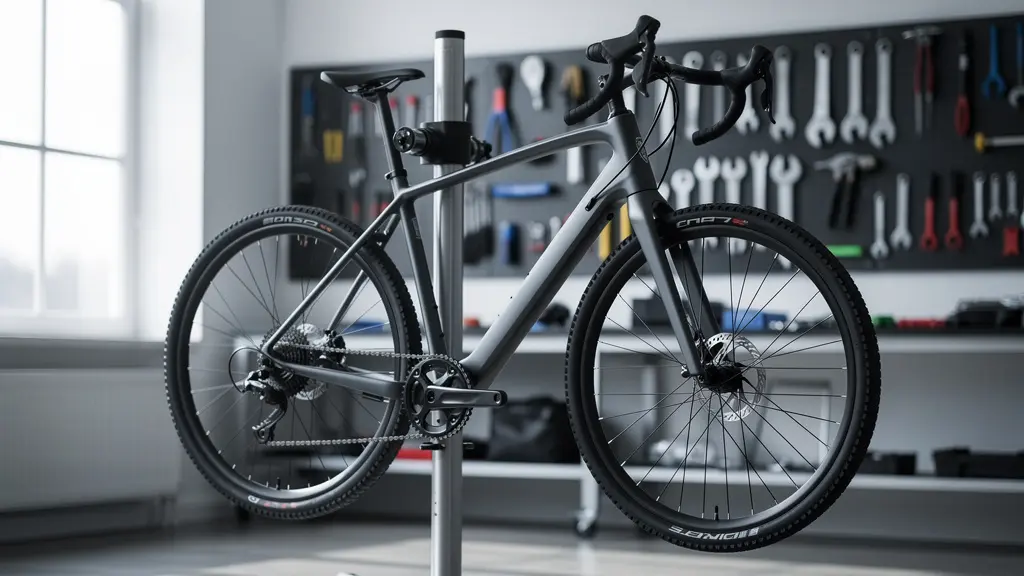
If you treat your e-bike like a car with a simple annual check-up, you’re setting it up for premature failure. An e-bike’s components are constantly exposed to torque, weather, and digital drift, unlike a car’s sealed engine. This guide explains why this “system exposure” demands more frequent, condition-based servicing and provides a logistical framework to manage it effectively, saving you money and downtime in the long run.
As a workshop manager, I see a common point of confusion among new e-bike owners, especially those used to the automotive world. You meticulously follow the 10,000-mile or annual service schedule for your car, so why does your bike shop recommend a visit every six months or after just 1,000 miles? The answer isn’t about lower quality; it’s about a fundamental difference in design philosophy. Your car is a sealed system, with its engine and electronics protected from the elements. Your e-bike, by contrast, operates on a principle of system exposure.
Its high-performance drivetrain, powerful brakes, and sophisticated electronics are in a constant, direct battle with road grime, moisture, and vibration. More importantly, the motor acts as a torque multiplier, placing stress on mechanical parts like the chain and cassette that is magnitudes higher than on a non-electric bike. This combination of mechanical stress and digital complexity means that service isn’t just a preventative calendar event—it’s an essential, ongoing process of recalibration.
This article will provide a clear, organizational framework for understanding and managing your e-bike’s professional care. We’ll move beyond generic advice and detail the logistical realities of scheduling service, the specific needs of your bike’s systems, and the hidden value in professional support that protects your investment.
To help you navigate the specific demands of e-bike ownership, this guide is structured to address the key logistical and technical questions you’ll face. The following sections break down everything from the timing of your shop visits to the long-term value of certified service.
Summary: E-Bike Service Intervals: A Logistical Guide
- Why Digital Service Histories Matter for Resale Value
- How to Beat the Spring Rush at Bike Shops
- Basic Tune-up vs Overhaul: What Does Your E-Bike Need?
- The Risk of Skipping Firmware Updates Voiding Warranty
- Winter Overhaul: Why January is the Best Month for Motor Service
- Why Only Dealers Can Reset Error Codes on Premium Systems
- Why a 2-Year Local Warranty Is Worth $500 More
- The Hidden Value of Buying from a Certified Bosch/Shimano Service Center
Why Digital Service Histories Matter for Resale Value
When you sell a used car, a complete service history from a reputable dealer can significantly boost its value. The same principle applies with even greater weight to e-bikes, but with a digital twist. A paper log is good; a digital diagnostic report from a certified service center is an undeniable asset. This report provides a transparent history of the bike’s most critical and expensive component: the battery and motor system.
Potential buyers want proof of health, not just a promise. A digital history can show the battery’s charge cycles, its current maximum capacity, and a log of any error codes the system has ever produced. This data turns an abstract claim of “well-maintained” into a quantifiable fact. It proves the bike hasn’t been abused, that firmware is up to date, and that the core electrical system is sound. Without this digital proof, a buyer is taking a significant gamble, which will be reflected in a much lower offer price.
The value of the battery itself is a core part of the bike’s overall worth, a fact underscored by leading manufacturers. As the experts at Bosch eBike Systems state in their battery guide:
The battery is the heart of the e-bike. Its condition is decisive for the range and value of the pedelec.
– Bosch eBike Systems, Bosch eBike Battery Guide
Therefore, treating each service visit as an opportunity to update this digital log is a direct investment in your bike’s future resale value. It transforms maintenance from a cost into a documented asset. An e-bike with a verifiable, healthy digital history can easily command a 20-30% higher price than an identical model with no records.
How to Beat the Spring Rush at Bike Shops
From a workshop manager’s perspective, the first warm weekend in spring triggers a predictable flood of service requests. Everyone who neglected their bike over the winter suddenly wants it ready for the weekend. This “spring rush” can lead to service appointment backlogs of three to four weeks at most shops. For an e-bike owner who relies on their bike for commuting or regular exercise, a month of downtime is not a viable option.
The key to avoiding this logistical nightmare is proactive scheduling. Do not wait for the first sunny day. Instead, organize your service around two key off-season windows: late autumn (October/November) for a post-season check-up and, most importantly, mid-winter (January/early February) for major overhauls. During these periods, workshop calendars are wide open. You will not only get an appointment immediately, but you’ll also benefit from a more relaxed and thorough service process.
Think of it like booking holiday travel; you don’t wait until the week before to get the best results. Call your shop in January to book your “spring tune-up.” The work can be done when technicians have ample time, and your bike will be stored safely at the shop, ready for you to pick up the moment the weather turns. This simple logistical shift guarantees you are on the road while others are just joining the waitlist.
Basic Tune-up vs Overhaul: What Does Your E-Bike Need?
Unlike a car, where “service” often means an oil change and a fluid top-up, e-bike service is tiered. The two main levels are the basic tune-up and the complete overhaul, and knowing which one your bike needs is crucial for both performance and budget. The deciding factor is the immense stress the motor places on the mechanical drivetrain—a concept I call the Torque Multiplier Effect.
A basic tune-up, recommended every 6 months or 750-1,000 miles, is your fundamental system check. It focuses on adjustments and high-wear items. This typically includes: brake adjustments and pad inspection, gear indexing, checking all bolts for correct torque, and a basic wheel true. It addresses the immediate effects of use but doesn’t dig deep into component wear.
An overhaul, on the other hand, is a deep-dive service required every 12-18 months or 2,000-3,000 miles. This is where the Torque Multiplier Effect really shows. This service includes everything in a tune-up, plus the replacement of worn drivetrain components like the chain and cassette, which wear out two to three times faster on an e-bike. It also involves servicing bearings in the headset, bottom bracket (where applicable), and wheel hubs, and often includes a comprehensive brake bleed. Visually, the wear is unmistakable.
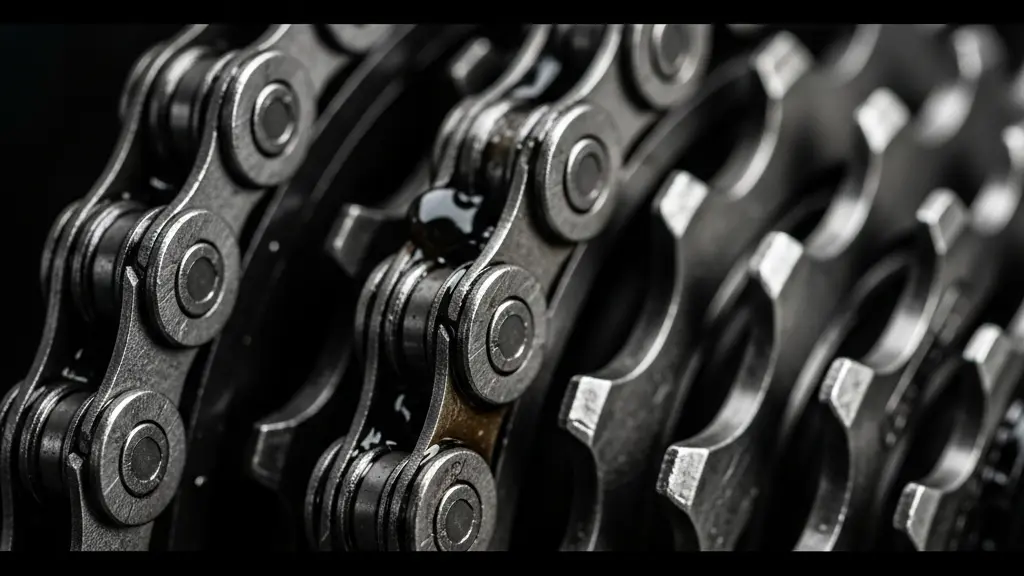
As you can see in the detail above, the metal-on-metal contact under motor-assisted load leads to significant wear patterns that are invisible from a distance. Ignoring these signs by repeatedly opting for a basic tune-up when an overhaul is needed is a false economy. It will lead to poor shifting, costly component failure, and a potentially unsafe ride.
Your Action Plan: Spotting Critical E-Bike Wear
- Chain Elongation: Ask your mechanic to use a chain-checker tool, or carefully try to lift the chain off the front chainring. If you can pull it away more than a few millimeters, it’s stretched and needs replacement.
- Cassette Wear: Inspect the teeth on the rear cogs you use most often. According to guidance from manufacturers like Shimano, if the teeth look sharp and hooked like “shark fins” instead of symmetrical, the cassette is worn.
- Jumping Gears: Under heavy load, such as starting on a hill, pay close attention. If the chain feels like it “skips” or “jumps” a tooth, it’s a classic sign of a worn chain and/or cassette.
- Brake Pad Thickness: Visually inspect your brake pads. If the friction material is less than 1mm thick, or down to the metal spring, they are past their service life and must be replaced immediately.
- System Diagnostics: During any service, insist on a digital diagnostic report to check for hidden error codes and to confirm your firmware is current.
The Risk of Skipping Firmware Updates Voiding Warranty
Many car owners view software updates as optional features—nice to have, but not essential to the vehicle’s function. In the world of premium e-bikes, this is a dangerous misconception. Firmware for your motor, battery, and display is not an “app”; it is the bike’s central nervous system. Skipping these updates, which can only be performed by a certified dealer, carries a significant risk: voiding your warranty.
Manufacturers like Bosch, Shimano, and Brose are constantly refining their software to improve efficiency, fix bugs, and, most importantly, manage the delicate interplay between battery output and motor performance. This ongoing process of refinement is what I call Digital Drift. As the manufacturer’s software evolves, an un-updated bike’s system slowly “drifts” from the current operational standard. When a problem arises, the first thing a manufacturer will ask a dealer to do during a warranty claim is to check the firmware version. If the system is running on outdated software, the manufacturer can argue that the fault occurred because the bike was not maintained to their specified standards.
They see failure to update as a form of neglect, akin to never changing the oil in a car. The firmware contains critical safety parameters and performance protocols. Running an old version can lead to compatibility issues between the battery and motor, inaccurate range calculations, or even system shutdowns. By skipping the updates, you are essentially operating the bike outside of its warrantied parameters, giving the manufacturer a clear reason to deny a claim for a costly motor or battery replacement.
Winter Overhaul: Why January is the Best Month for Motor Service
For most riders in seasonal climates, winter means less time on the bike. This downtime is the single greatest logistical opportunity for essential, deep-level maintenance. While a basic tune-up can be done anytime, January is the golden month for a comprehensive winter overhaul, especially for servicing the motor and battery system. It’s the period of lowest demand at the shop and the ideal time for your bike to “hibernate” under professional care.
A winter overhaul allows technicians to go beyond surface-level adjustments. It’s the perfect time to address any creaks or noises from the motor housing, inspect sealed bearings, and perform the firmware updates discussed previously. More importantly, it ensures your battery is properly managed during the cold months. Li-Ion batteries are sensitive to temperature, and leaving a battery in a cold garage for months can permanently reduce its capacity and lifespan. At the shop, it will be stored in a controlled environment.
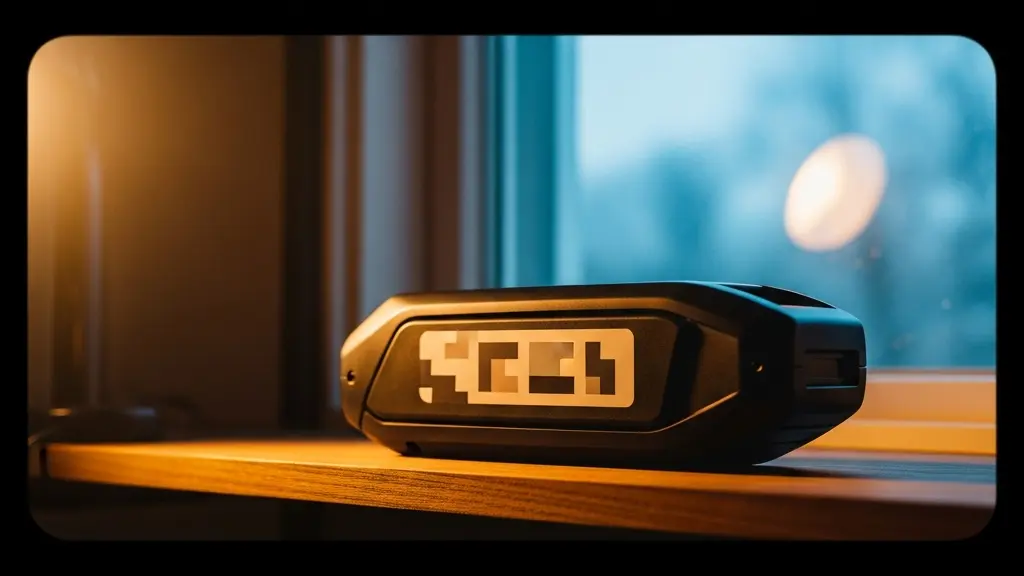
This image of a battery resting in a climate-controlled space is the goal. Your shop ensures this proper hibernation. If you store it at home, you must do the same. For long-term storage, manufacturers recommend maintaining an ambient storage temperature of between 10°C to 20°C (50°F to 68°F) and keeping the battery at a charge level of 30% to 60%. A winter overhaul at the shop takes this responsibility off your hands and ensures the heart of your e-bike is preserved, ready for peak performance in the spring.
Why Only Dealers Can Reset Error Codes on Premium Systems
When your car’s “Check Engine” light comes on, you can often buy a simple, inexpensive OBD2 scanner to read and even reset the code yourself. This open-access approach does not exist for premium e-bike systems. If your Bosch, Shimano, or Brose system throws an error code and enters “limp mode,” your ride is over until you visit a certified dealer. There is no consumer-level tool or app that can override it.
This is not an oversight; it’s a deliberate design choice to ensure safety and system integrity. These error codes are not mere suggestions; they often point to critical issues in the battery management system (BMS), torque sensor, or motor controller. Allowing an untrained user to simply reset the code without addressing the underlying problem could lead to catastrophic failure. To manage this, manufacturers have created a closed Diagnostic Gateway.
Only certified dealers have the proprietary hardware and software required to pass through this gateway, communicate with the bike’s core controller, and properly diagnose the fault. This ensures that a trained technician is the one to make the call on whether the issue is a minor glitch or a major safety concern. The process is a clear example of the system’s complexity.
Case Study: The Shimano Proprietary Diagnostic Interface
To illustrate this, consider Shimano’s STEPS systems. As outlined in their service documentation, certified Shimano Service Centers utilize the proprietary SM-PCE02 interface device to physically link the bike to their E-TUBE PROJECT diagnostic software. This connection allows technicians to perform deep system analysis, retrieve detailed error logs, and synchronize firmware across all components. These are functions that are completely inaccessible through the consumer-facing Bluetooth app, which is designed only for basic ride customization.
This reality means that part of owning a premium e-bike is building a relationship with a local, certified dealer. They are not just mechanics; they are the sole gatekeepers to your bike’s digital brain.
Why a 2-Year Local Warranty Is Worth $500 More
In the age of online shopping, it can be tempting to buy an e-bike from a direct-to-consumer brand to save a few hundred dollars. However, when it comes to a complex machine like an e-bike, that upfront “saving” can quickly become a significant financial and logistical burden. A 2-year warranty offered by a local bike shop where you purchased the bike is easily worth a $500 price difference, and often much more.
Consider the practical reality of a warranty claim. If a motor or battery fails on your locally-purchased bike, the process is simple: you bring it to the shop. They handle the diagnosis, the warranty claim with the manufacturer (e.g., Bosch, Shimano), the installation of the new part, and all associated communication. Your involvement is minimal. Now, imagine the same failure on a bike bought online. You are now the project manager. You must diagnose the problem yourself, contact a customer service hotline, and potentially figure out how to safely package and ship a 50lb bike or a hazardous Li-Ion battery across the country. The shipping costs alone can be hundreds of dollars, and the downtime can stretch into weeks or months.
For example, a common warranty issue is a faulty motor torque sensor. With a local purchase, the shop diagnoses it, orders the part under warranty, and installs it, often in under a week. With an online purchase, you would need to convince a remote customer service agent of the issue, wait for them to ship you a new motor (if they don’t require the whole bike back), and then you would still have to pay a local shop their standard labor rate to install it, as they have no obligation to perform free warranty work for a bike they didn’t sell.
That $500 premium for a local purchase is not just for the bike; it’s an insurance policy for hassle-free service and support. It buys you a local expert, an advocate, and a partner who is invested in keeping you on the road.
Key Takeaways
- System Exposure, Not Time: Base service intervals on the exposed nature of e-bike systems (torque, weather, digital drift), not a simple calendar.
- Logistical Planning: Avoid the 3-4 week spring rush by scheduling major services for the winter off-season (January is ideal).
- Invest in Digital History: Use every service to get a digital diagnostic report. This is a tangible asset that dramatically increases your bike’s resale value.
The Hidden Value of Buying from a Certified Bosch/Shimano Service Center
Ultimately, the reliability and longevity of your e-bike depend on the quality and accessibility of its service network. Choosing to buy your bike from a shop that is a certified service center for its components (like Bosch, Shimano, or Brose) is the final piece of the organizational puzzle. This decision provides a layer of security and expertise that goes far beyond the initial sale.
These certifications are not just marketing badges. They mean the shop’s technicians have received specific training directly from the manufacturer. They have access to the proprietary diagnostic tools, the full library of technical documents, and a direct line to the manufacturer for complex warranty claims. This creates an unbroken chain of expertise. When you bring your bike in for service, you are tapping into a global support system. For instance, Bosch has built a massive infrastructure to support its products, providing access to a global network of thousands of certified dealers who can service your bike, whether you are at home or traveling.
This is the hidden value: you are not just buying a product, you are buying into an ecosystem. This ecosystem ensures that no matter the issue—a confusing error code, a needed firmware update, or a complex mechanical problem—there is a trained professional ready to resolve it efficiently. It removes the guesswork and the risk of an untrained mechanic causing further damage to a sophisticated and expensive machine. It guarantees that the advice you receive and the work that is performed are compliant with the manufacturer’s standards, protecting your warranty and your investment.
To put these principles into practice, your next logical step is to consult your local certified service center. Schedule a diagnostic check-up to establish a baseline for your bike’s digital history and discuss a personalized service plan based on your riding style.