
A 45 km/h speed pedelec is legally classified as a moped, not a bicycle, triggering a cascade of non-negotiable legal requirements.
- Standard insurance policies (e.g., homeowner’s) are void; specific moped liability coverage is mandatory in most jurisdictions that classify them as such.
- Operating without a license plate, proper registration, and a certified NTA 8776 helmet can lead to severe financial and legal penalties.
Recommendation: Before purchasing, consult your insurance provider and local vehicle authority to confirm all compliance steps for the L1e-B vehicle category.
The allure of the speed pedelec, or S-Pedelec, is undeniable. For the modern commuter, the ability to travel at speeds up to 45 km/h (approximately 28 mph) represents a powerful fusion of cycling’s freedom and motorized efficiency. It promises a faster, greener alternative to the automobile. However, this increased velocity fundamentally alters the legal nature of the vehicle, a critical distinction many new riders overlook at their peril. The assumption that an S-Pedelec is merely a “fast e-bike” is a dangerous and costly misconception.
While standard e-bikes are often treated as conventional bicycles by law, the S-Pedelec crosses a legal threshold. In many regions, particularly across the European Union, it is not a bicycle at all; it is a moped. This reclassification is not a minor detail. It triggers a comprehensive set of legal and financial obligations, moving the owner from the world of cycling regulations into the much stricter domain of motor vehicle law. This distinction has profound implications for insurance, liability, and personal safety equipment.
The core issue is one of legal definition. Instead of focusing on the familiar rules of the road for bicycles, prospective S-Pedelec owners must understand the legal construct they are purchasing: a low-power motorcycle. Failure to do so exposes them to significant risks, including invalid insurance, personal liability in the event of an accident, and even criminal charges. This guide will deconstruct the essential legal framework governing S-Pedelecs, focusing on why these vehicles require a different class of insurance, helmet, and legal documentation. We will examine the specific requirements and the severe consequences of non-compliance, providing a clear roadmap for responsible and lawful ownership.
To navigate this complex legal landscape, this article breaks down the most critical components of S-Pedelec ownership. The following sections will guide you through the intricacies of insurance, registration, regulatory differences, and mandatory safety equipment.
Summary: Speed Pedelec (45km/h): License, Insurance, and Helmet Requirements
- Why Your Homeowner Policy Won’t Cover a Speed Pedelec
- How to Get a License Plate for Your S-Pedelec
- US Class 3 vs EU S-Pedelec: Major Regulatory Differences
- The Risk of Removing Speed Limiters on Public Roads
- Annual Roadworthiness Tests: Are They Mandatory for Your Class?
- Class 1 or Class 3:Is Your E-Bike Really Green? Calculating the Carbon Offset vs Cars
- E50 vs Standard Tires: Why Speed Pedelecs Need Special Rubber
- NTA 8776 Helmets: Why Standard Bike Helmets Aren’t Enough for E-Bikes
Why Your Homeowner Policy Won’t Cover a Speed Pedelec
The most immediate and financially significant shock for many new S-Pedelec owners comes from the world of insurance. A common assumption is that a vehicle resembling a bicycle would be covered under a standard homeowner’s or renter’s insurance policy, much like a conventional bike. This is fundamentally incorrect. The legal classification of an S-Pedelec as a motorized vehicle, specifically as a moped (L1e-B category in the EU), places it firmly outside the scope of such policies. Most homeowner policies contain an explicit exclusion for any motorized vehicle that is required to be registered for use on public roads.
Because an S-Pedelec is legally mandated to have a license plate and insurance in many jurisdictions, it automatically triggers this exclusion clause. Relying on a homeowner’s policy creates a dangerous illusion of coverage. In the event of an accident involving third-party injury or property damage, the insurer would be within its rights to deny the claim entirely, leaving the rider personally liable for all associated costs, which can be financially devastating. It is a legal certainty that S-Pedelecs require registration, insurance, and a moped license in all EU countries, making this exclusion universally applicable within that region.
Therefore, securing a specific, standalone third-party liability insurance policy is not an option but a legal prerequisite for operating an S-Pedelec. This type of insurance is designed for mopeds and low-power motorcycles and covers damages you may cause to others. To ensure full compliance and avoid catastrophic financial risk, it is imperative to engage directly with an insurance provider to secure the correct coverage before the vehicle is ever used on a public road.
Action Plan: Key Questions for Your Insurance Agent
- Is my speed pedelec specifically excluded under the ‘motorized vehicle’ clause in my existing policies?
- Does my umbrella policy explicitly cover vehicles classified as L1e-B (moped category), or are they also excluded?
- Can you provide the exact wording of the motor vehicle exclusions in my homeowner’s and liability policies for my review?
- What specific third-party liability insurance options are mandatory for a registered speed pedelec in my jurisdiction?
- Is theft coverage available for my S-Pedelec, and would it require a separate policy or an add-on to the moped insurance?
How to Get a License Plate for Your S-Pedelec
The requirement of a license plate is the most visible indicator of an S-Pedelec’s legal status as a motor vehicle. Unlike a bicycle, an S-Pedelec cannot be legally operated on public roads without being officially registered with the relevant national or regional transportation authority. This process is analogous to registering a car or motorcycle and serves to formally enter the vehicle into the government’s database, linking it to a specific owner and an insurance policy. The license plate itself acts as a public declaration of this registration and compliance.
The procedure for obtaining a license plate typically begins with the Certificate of Conformity (COC). This is a crucial document provided by the manufacturer that certifies the vehicle complies with all relevant technical and safety standards for its category (L1e-B in the EU). Without the COC, registration is impossible. The owner must then present this document, along with proof of identity and proof of valid liability insurance, to the designated vehicle registration office. Upon successful processing, the authority issues the registration documents and the physical license plate.
This process underscores the formal nature of S-Pedelec ownership. It is not a simple purchase but an acquisition of a regulated vehicle. The plate must be permanently and visibly affixed to the rear of the S-Pedelec as stipulated by law. Operating the vehicle without a valid, properly displayed license plate is a serious offense, equivalent to driving an unregistered car, and can result in significant fines and impoundment of the vehicle.
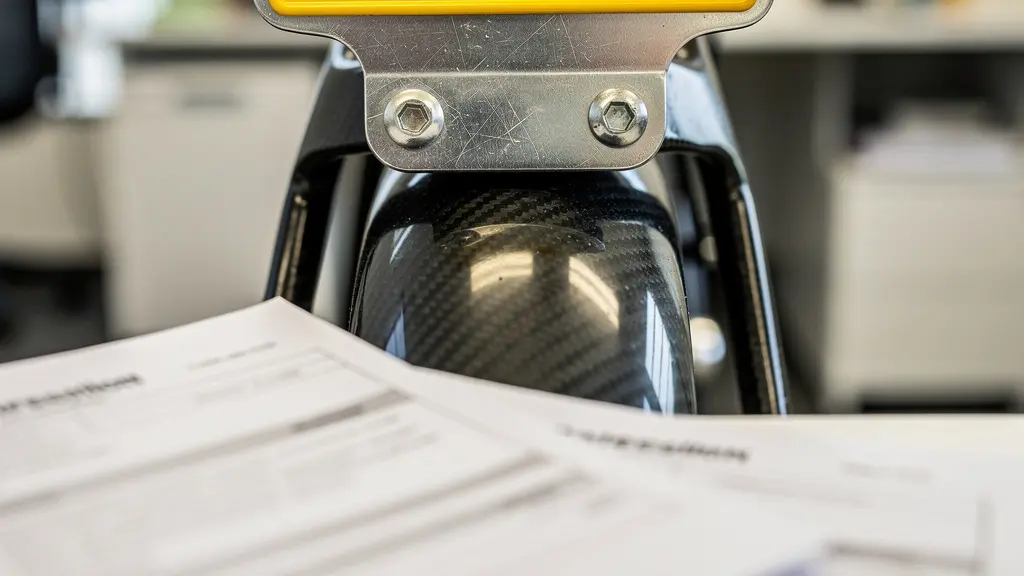
As the image illustrates, the registration documents and license plate are intertwined legal instruments. They are the tangible proof that the owner has fulfilled the necessary legal obligations to operate what is, in the eyes of the law, a moped. This formal process ensures accountability and traceability on public roads, a standard requirement for all motorized transport.
US Class 3 vs EU S-Pedelec: Major Regulatory Differences
The legal framework for high-speed electric bikes is far from uniform globally, and the distinction between the United States’ Class 3 e-bike and the European Union’s S-Pedelec is a prime example. This divergence creates significant confusion for consumers and manufacturers alike. While both vehicle types can achieve similar speeds, their legal classifications are worlds apart, leading to vastly different ownership responsibilities. The key is understanding that the EU treats the S-Pedelec as a moped, while the US largely regulates the Class 3 e-bike as a bicycle.
In the EU, the L1e-B classification is the determining factor. An S-Pedelec is legally a moped, period. This triggers a cascade of requirements across all member states: mandatory third-party liability insurance, vehicle registration, a license plate, and the use of a certified moped-grade helmet (NTA 8776). For instance, Germany forbids S-Pedelecs on most bike paths, while the Netherlands mandates a distinctive yellow moped license plate. In contrast, the US employs a three-class system where a Class 3 e-bike is defined as having a motor that provides assistance only when the rider is pedaling and ceases to provide assistance when the bicycle reaches 28 mph (approx. 45 km/h). Critically, in most US states, a Class 3 e-bike is still considered a bicycle, not a motor vehicle.
This core difference has massive implications. A comprehensive comparison reveals that essentially 0% of US states require insurance for Class 3 e-bikes, whereas 100% of EU countries mandate it for S-Pedelecs. Consequently, US riders are generally not required to register their Class 3 e-bikes or obtain a license plate. While helmet laws vary by state and locality, they typically refer to standard bicycle helmets, not the specialized, higher-impact-rated helmets required in the EU. This regulatory gap means that a vehicle mechanically capable of 45 km/h is subject to completely different legal and safety standards depending on which side of the Atlantic it is operated.
The Risk of Removing Speed Limiters on Public Roads
A common and extremely hazardous temptation among some e-bike owners is the practice of “derestricting” or “tuning” the motor to bypass the factory-set speed limit. For an S-Pedelec, which is already engineered and legally certified for 45 km/h, this act of modification is not a minor tweak; it is a fundamental alteration that instantly voids its legal status and creates a cascade of severe liabilities. The moment an S-Pedelec is modified to exceed its certified speed, it ceases to be the vehicle that was registered and insured.
Legally, a derestricted S-Pedelec becomes an unlicensed, uninsured, and unapproved motorcycle. The consequences of this reclassification are draconian. In the event of an accident, any insurance policy is immediately null and void, as the vehicle no longer matches the one described in the contract. Manufacturers’ warranties are also terminated, as the product has been altered against explicit warnings. Authorities take this issue very seriously; for example, the French law against débridage (derestricting) motors includes penalties of up to a €30,000 fine and potential imprisonment.
The risks of removing the speed limiter extend far beyond simple fines. The entire legal and safety framework of the vehicle is compromised, leading to multiple points of failure:
- Insurance Policy Void: Making undeclared modifications that alter the vehicle’s legal class invalidates all coverage. The rider becomes personally liable for all damages.
- Legal Classification Void: The vehicle is now an unregistered motorcycle. The operator can face charges for operating an unregistered vehicle, driving without a proper license, and driving without insurance.
- Manufacturer Warranty Void: Any modification to the motor or its controller immediately terminates all warranty protections from the manufacturer.
- Forensic Detection: Riders should not assume such modifications are undetectable. In the event of a serious accident, insurance companies and authorities can and do analyze firmware, GPS data, and motor controllers to prove that a vehicle has been illegally modified.
The speed limiter is not an arbitrary restriction; it is a core component of the vehicle’s legal and safety certification. Tampering with it is a reckless act that invalidates every protection the owner thought they had.
Annual Roadworthiness Tests: Are They Mandatory for Your Class?
The legal classification of an S-Pedelec as a moped introduces the concept of ongoing technical compliance, a responsibility foreign to most bicycle owners. Just as cars must undergo periodic inspections in many countries, the question arises whether S-Pedelecs are subject to mandatory annual roadworthiness tests. The answer varies significantly by jurisdiction but follows a clear principle: as a motorized vehicle, its safe operating condition is a matter of public and legal concern.
While not yet universal, a growing number of jurisdictions are introducing or considering periodic technical inspections (PTI) for vehicles in the L1e-B category. These tests are designed to ensure that critical safety components—such as brakes, lights, tires, and the frame—continue to meet the standards under which the vehicle was originally certified. The higher speeds and forces involved with S-Pedelec operation mean that component wear and tear can have much more severe consequences than on a standard bicycle. A brake failure at 45 km/h is a catastrophic event.
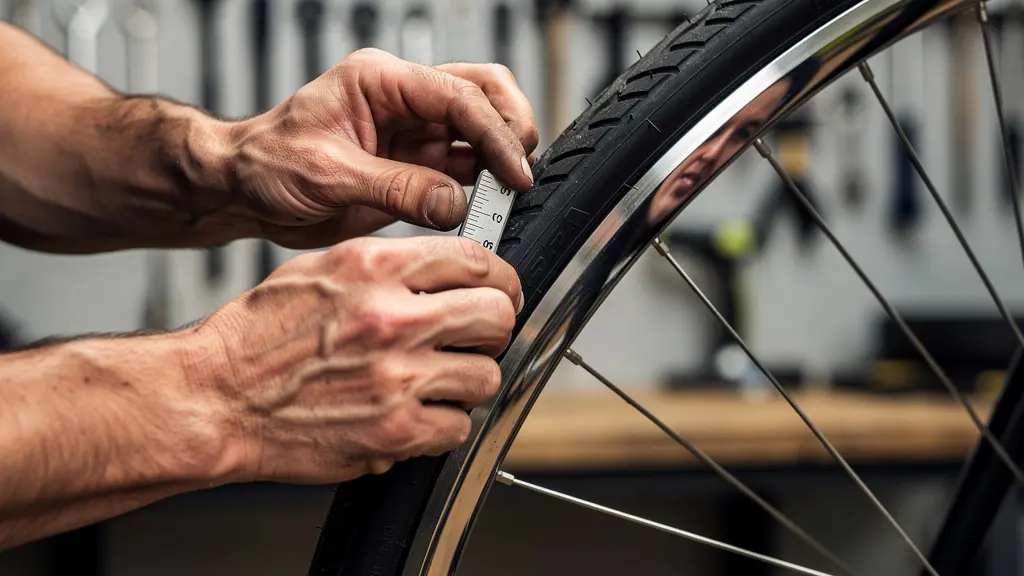
Whether a formal test is legally mandated or not, the principle of roadworthiness remains a core owner responsibility. The owner is legally obligated to maintain the vehicle in a safe condition at all times. Failure to do so could result in fines during a police check or, more seriously, be used to establish negligence in the event of an accident. Therefore, conducting regular self-audits of the vehicle’s key safety systems is not just good practice but a crucial part of legal risk management. This includes checking tire tread, brake function, light conformity, and frame integrity to ensure the vehicle is always fit for public roads.
Class 1 or Class 3:Is Your E-Bike Really Green? Calculating the Carbon Offset vs Cars
A primary motivation for choosing an S-Pedelec is its perceived environmental benefit over a car. While it is true that commuting by S-Pedelec produces significantly lower direct emissions, a sophisticated analysis reveals a more complex picture. The true “green” credential of an S-Pedelec depends on two main factors: the carbon footprint of its manufacturing, particularly the battery, and the source of the electricity used for charging. The classification of the bike itself is less important than how it is produced and powered.
A comprehensive lifecycle assessment provides critical context. The manufacturing of a typical 750Wh S-Pedelec battery, for instance, generates approximately 150kg of CO2 emissions, largely due to the energy-intensive extraction of lithium and cobalt. This creates an initial “carbon debt” that must be “paid back” by the emissions saved from not driving a car. This payback period is typically reached within 1,500 to 2,000 kilometers of true car-replacement journeys. However, it is crucial to note that recreational rides that replace walking or standard cycling do not contribute to this offset and, in fact, have a net negative environmental impact until the initial manufacturing debt is paid.
Furthermore, the carbon footprint of charging the battery is directly tied to the local power grid’s energy mix. A grid heavily reliant on coal will result in far higher emissions per charge than one powered by renewables.
| Power Grid Type | CO2 per kWh | Annual E-bike Emissions (1000km) | vs Car Savings |
|---|---|---|---|
| Coal-heavy grid | 820g CO2/kWh | 16.4 kg CO2 | 90% reduction |
| Mixed grid (EU avg) | 295g CO2/kWh | 5.9 kg CO2 | 96% reduction |
| Renewable grid | 40g CO2/kWh | 0.8 kg CO2 | 99.5% reduction |
As the data shows, while the S-Pedelec always offers a substantial reduction in emissions compared to a car, its ultimate environmental performance is not a given. It is the result of conscious choices: using the S-Pedelec to replace car journeys and, where possible, charging it with electricity from renewable sources.
E50 vs Standard Tires: Why Speed Pedelecs Need Special Rubber
The legal and safety requirements for an S-Pedelec extend to every critical component, and tires are a paramount example. The substantially higher speeds, greater vehicle weight, and increased cornering forces mean that standard bicycle tires are dangerously inadequate. To ensure safety and legal compliance, S-Pedelecs must be fitted with tires specifically designed and certified for high-speed electric bike use. This certification is known as the “E50” or “ECE-R75” standard.
The E50 rating signifies that a tire has been tested and approved for use on vehicles with speeds up to 50 km/h. This is a legal requirement in many jurisdictions that classify S-Pedelecs as mopeds. Using a non-rated tire is not only unsafe but also illegal, and it would likely invalidate insurance coverage in an accident. The design differences between a standard tire and an E50-rated tire are significant, focusing on durability, stability, and puncture resistance at speed. In fact, safety standards mandate that tires on bikes capable of reaching 45 km/h must carry the E50 rating.
The structural differences are clear when comparing their specifications. E50 tires feature reinforced sidewalls, more robust puncture protection belts, and rubber compounds designed to handle higher loads and heat buildup, all of which contribute to a higher weight but also a much longer and safer lifespan under demanding conditions.
| Specification | Standard Bike Tire | E50 Rated Tire |
|---|---|---|
| Max Speed Rating | 25 km/h | 50 km/h |
| Sidewall Reinforcement | Basic | Double layer |
| Puncture Protection | Optional | Mandatory 5mm belt |
| Average Weight | 400-600g | 700-1000g |
| Rolling Resistance | Lower | 15-20% higher |
| Typical Lifespan | 3,000-5,000km | 8,000-12,000km |
Choosing the correct tire is not a matter of preference; it is a fundamental safety and legal obligation. The E50 rating is the owner’s assurance that the tire is engineered to withstand the unique stresses of high-speed e-biking, providing the necessary grip and reliability when it matters most.
Key Takeaways
- An S-Pedelec is legally a moped in many jurisdictions, not a bicycle. This classification dictates all other requirements.
- Standard homeowner’s insurance is void. A specific, mandatory third-party liability policy for mopeds (L1e-B) is required.
- Derestricting the motor is a serious offense that voids insurance, warranty, and legal classification, exposing the rider to severe criminal and financial liability.
NTA 8776 Helmets: Why Standard Bike Helmets Aren’t Enough for E-Bikes
The single most important piece of personal protective equipment for an S-Pedelec rider is the helmet. However, just as with tires, a standard bicycle helmet (typically certified to the EN 1078 standard) is not sufficient for the speeds an S-Pedelec can achieve. The potential for higher-energy impacts requires a helmet built to a more stringent safety standard. For S-Pedelecs, this standard is the Dutch NTA 8776.
The NTA 8776 standard was specifically developed to address the risks associated with S-Pedelecs. The key difference lies in the impact velocity for which they are tested. Standard bicycle helmets are tested for impacts at around 19.5 km/h, while certified speed pedelec helmets must meet NTA 8776 standards, which test for impacts at speeds up to 45 km/h. This standard also requires a larger area of the head to be covered, particularly offering more protection to the temples and the back of the head. The legal requirement to wear an NTA 8776 certified helmet when riding an S-Pedelec is in force in countries like the Netherlands and Belgium and is considered best practice everywhere.
The differences in protection levels across helmet standards are stark. While an NTA 8776 helmet is much lighter and better ventilated than a full motorcycle helmet (ECE 22.05), it offers a significantly higher degree of protection than a standard bicycle helmet.
| Standard | Impact Speed | Coverage Area | Rotational Protection | Weight Range |
|---|---|---|---|---|
| EN 1078 (Standard) | 19.5 km/h | Top/sides | Not required | 200-350g |
| NTA 8776 (S-Pedelec) | 45 km/h | Extended temple/rear | Recommended | 350-450g |
| ECE 22.05 (Motorcycle) | 50+ km/h | Full face option | Mandatory testing | 1200-1500g |
Beyond the legal mandate, the choice of helmet has direct insurance implications. As one expert notes, failing to use appropriate safety equipment can have serious consequences in a legal dispute, even if it is not explicitly required by local law. This is the legal doctrine of contributory negligence. As noted by an expert in the European E-Bike Safety Standards Report 2024:
Even in regions where a certified helmet is not mandatory, failing to wear one in an accident can be used by the other party’s insurance to argue contributory negligence.
– Insurance Legal Expert, European E-Bike Safety Standards Report 2024
This means a court could determine that the rider’s failure to wear an appropriate helmet contributed to the severity of their own injuries, potentially reducing the amount of compensation they could recover from another party. The message is clear: for S-Pedelec speeds, an NTA 8776 helmet is an indispensable legal and safety requirement.
Ultimately, operating a speed pedelec requires a fundamental shift in mindset from that of a cyclist to that of a motor vehicle operator. Diligent adherence to all legal requirements for insurance, registration, and equipment is not merely a matter of compliance but a crucial component of responsible and safe road use. Ensure you have conducted all necessary due diligence with your local authorities and insurance provider before your first ride.