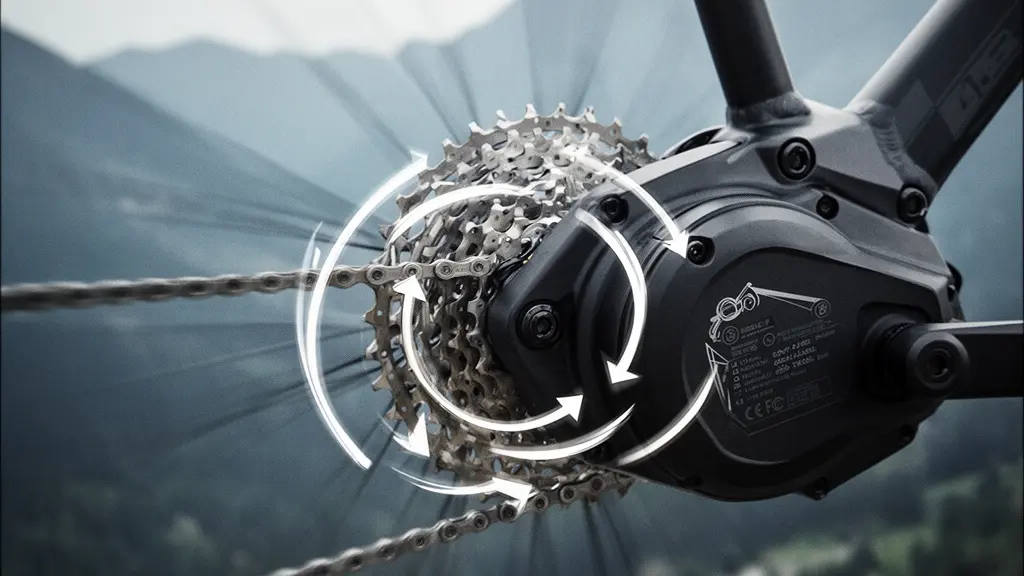
The belief that higher peak torque or watts guarantees hill-climbing ability is a critical oversimplification for demanding use cases.
- For heavy riders on steep gradients, sustained low-cadence torque is the most important metric for starting and climbing without stalling.
- High torque significantly increases stress on drivetrain components, risking premature failure of chains and cassettes if not managed.
Recommendation: Prioritize mid-drive motors with proven thermal management and use proper gearing to maintain an efficient cadence, typically between 75-90 RPM.
For a heavy rider in a city of precipitous inclines like San Francisco, the moment of truth is not at cruising speed. It occurs at a dead stop, at a red light, at the base of a 15% grade with a full load. The fear is not a lack of top-end speed, but the gut-sinking feeling of the motor stalling or shuddering, unable to overcome the combined forces of gravity and static friction. In this scenario, the glossy marketing numbers for peak power in watts (W) or a single, impressive torque figure in newton-meters (Nm) can be misleading.
The common discourse often pits these two metrics against each other: torque for acceleration, power for speed. While not entirely incorrect, this simplification fails to address the fundamental engineering challenge. The critical question is not “which number is bigger,” but rather how the entire electromechanical system delivers force over time, under load, and without self-destructing. The true measure of a climbing-capable e-bike lies in its ability to produce sustained, controllable torque at low pedal speeds (low cadence) while managing heat and mitigating excessive strain on the drivetrain.
This analysis moves beyond the simple torque versus power debate. It provides a vehicular dynamics perspective on what truly matters for conquering hills. We will examine the physics of starting on an incline, provide a protocol for real-world testing, compare leading motor technologies, analyze the inherent risks of high-torque systems, and ultimately define the engineering characteristics of a truly reliable hill-climbing machine. The goal is to equip you with the knowledge to choose a bike that won’t just promise performance, but will deliver it consistently when you need it most.
This guide will deconstruct the key engineering factors that determine an e-bike’s true climbing capability. The following sections provide a structured analysis to help you make an informed decision based on performance data and real-world constraints.
Summary: The Engineer’s Guide to E-Bike Hill Climbing Performance
- Why High Torque is Crucial for Cargo Bikes at Traffic Lights
- How to Test a Motor’s “Real” Power on a 15% Gradient
- Bosch CX vs Shimano EP8:Using E-Bike Metrics to Manage Recovery Rides for Cyclists
- The Risk of High Torque Snapping Chains and Cassettes
- Cadence Efficiency: Letting the Motor Spin for Max Torque
- Why High-End Pedal Assist Feels More Natural Than Hub Motors
- Bosch Cargo Line vs Standard Motors: Is the Torque Upgrade Necessary?
- Mid-Drive vs Hub Motor: Which Is Best for Hilly Commutes?
Why High Torque is Crucial for Cargo Bikes at Traffic Lights
Torque is the rotational force a motor can apply. From a physics standpoint, its primary role is to overcome inertia—the resistance of a stationary object to being set in motion. For a heavy rider or a loaded cargo bike stopped on an incline, this initial challenge is immense. The motor must generate enough force to counteract not only the mass of the bike and rider but also the gravitational pull seeking to drag it backward. This is where high torque at zero or very low RPM becomes the single most critical performance metric.
Power, measured in watts, is the rate at which work is done (Power = Torque x Rotational Speed). A motor can have a high peak power rating, but if that power is only accessible at high RPM, it is useless for starting on a steep hill. The rider cannot physically spin the pedals fast enough from a standstill to access that power. A high-torque motor, by contrast, provides a strong “shove” from the very first degree of pedal rotation, breaking the static friction and initiating forward movement. Without sufficient starting torque, the motor will stall, or the rider will be forced to exert extreme physical effort, defeating the purpose of the electric assist.
Real-world examples confirm this principle. For two e-bikes with the same 750W motor rating, the one with higher torque will be dramatically more powerful on hills, especially when accelerating from a stop with heavy loads. An evaluation of a heavy rider demonstrates the difference: a 275 lbs rider using a 90Nm motor can climb smoothly with minimal effort. This demonstrates how a high torque figure directly translates into the ability to manage significant weight at critical moments, such as pulling into traffic from an inclined stop sign.
How to Test a Motor’s “Real” Power on a 15% Gradient
A motor’s specifications on paper are a starting point, but its real-world performance can be affected by factors like heat, load, and the efficiency curve. A practical test is necessary to validate a bike’s climbing ability, especially on a challenging grade of 15% or more. The objective is to identify the motor’s sustained power output and its potential for thermal throttling—a safety mechanism where the system reduces power to prevent overheating during prolonged, high-load situations.
A proper test protocol is more than just riding up a hill. It involves a systematic approach to isolate the motor’s performance from rider variability. This includes starting with the correct gear, maintaining an efficient pedaling speed (cadence), and managing body weight for optimal traction and control. The goal is to stress the system in a controlled manner to see how it behaves under pressure, which is far more revealing than a simple “car park test” on flat ground.
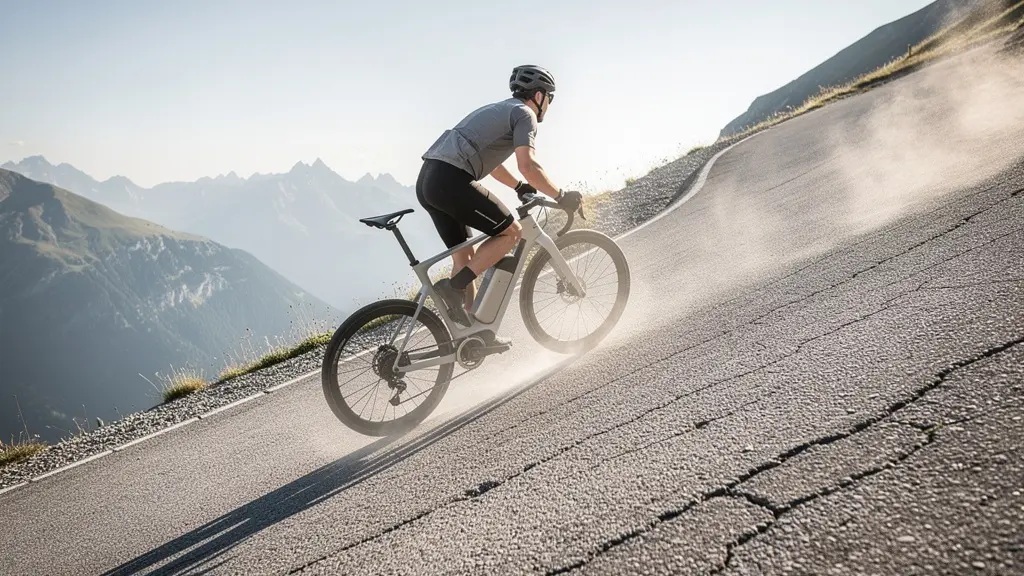
As visualized, climbing a steep gradient places an immense thermal load on the motor. A robust test will reveal whether the motor’s cooling system is adequate or if performance will degrade over the course of a long climb—a crucial factor for anyone navigating a hilly urban environment. The following protocol provides a structured method for this assessment.
Field Test Protocol: Assessing Real-World Climbing Power
- Establish Baseline: Begin the climb using the lowest assistance level. This helps gauge the raw difficulty of the incline and the rider’s baseline effort.
- Shift Proactively: Shift into a low gear *before* the incline begins. Shifting under the high load of a climb puts extreme stress on the drivetrain and disrupts momentum.
- Optimize Cadence & Weight: While climbing, lean your weight forward over the handlebars to keep the front wheel planted. Aim to maintain a steady pedaling cadence above 75 RPM to keep the motor in its most efficient power band.
- Identify Thermal Threshold: Gradually increase the assistance level and perform a sustained climb for at least 10 minutes. Note any perceptible drop in power, which indicates the onset of thermal throttling.
- Analyze Performance: A capable climbing motor will maintain consistent power throughout the test without significant performance degradation or audible signs of strain.
Bosch CX vs Shimano EP8:Using E-Bike Metrics to Manage Recovery Rides for Cyclists
While this section’s title refers to recovery rides, the underlying data provides a critical comparison of two benchmark mid-drive motors: the Bosch Performance Line CX and the Shimano EP8. Both are rated at a peak of 85 Nm of torque, yet their on-trail feel and power delivery characteristics are distinctly different. This analysis is crucial for a rider in a hilly environment, as the *way* torque is delivered can be as important as the peak number itself. The choice between a “punchy” or a “natural” feel affects control on loose surfaces and predictability under load.
The Bosch CX system is often characterized by its immediate and powerful response. It delivers a strong surge of power, even at lower pedal pressures, giving a feeling of immense capability. The Shimano EP8, conversely, is engineered to feel more like an extension of the rider’s own effort. Its power delivery is more linear and proportional to the force applied to the pedals. As one user noted, “The Shimano motor feels more natural, more like an extension of the rider, less impressive in the car park test but easier to manage on the trails.” This highlights a key trade-off: the raw, immediate power of the Bosch versus the controlled, intuitive assistance of the Shimano.
The Shimano motor feels more natural, more like an extension of the rider, less impressive in the car park test but easier to manage on the trails
– Singletrack World Magazine Forum User, Singletrack World Magazine Forum
The following table, based on data from extensive testing and reviews, breaks down these nuanced differences. For a heavy rider, the “Low Cadence Performance” is particularly relevant for starting on hills, while the “Power Delivery Feel” impacts confidence and control during the climb.
| Characteristic | Bosch CX | Shimano EP8 |
|---|---|---|
| Torque Output | 85 Nm | 85 Nm |
| Power Amplification | 340% | 400% |
| Peak Power | ~600W | 600W |
| Low Cadence Performance | Good | Stronger below 80 RPM |
| High Cadence Performance | Stronger above 80 RPM | Good |
| Power Delivery Feel | More instant, punchy | More natural, linear |
The Risk of High Torque Snapping Chains and Cassettes
The allure of high torque comes with a significant and often overlooked engineering trade-off: immense stress on the drivetrain. An 85 Nm motor applies a level of rotational force that standard bicycle chains, cogs, and chainrings were never designed to handle. This is especially true when a rider “grinds” in a high gear at low cadence, forcing the motor to exert maximum torque through the smallest, most vulnerable cogs on the cassette. This practice dramatically accelerates wear and can lead to catastrophic failure.
The evidence of this accelerated wear is well-documented by high-mileage e-bike users. Metal components that would last for thousands of miles on a non-assisted bike can be destroyed in a fraction of the time. The smallest cogs, typically the 11- and 13-tooth, are the most susceptible. Under the massive leverage of a mid-drive motor, the chain can literally grind the teeth into rounded nubs, leading to chain slippage and popping under load—a dangerous event during a steep climb. In worst-case scenarios, the chain plates themselves can stretch and snap. Reports indicate that the lower two cogs can show signs of severe wear and slipping after just 500 miles on bikes with 85 Nm of torque.
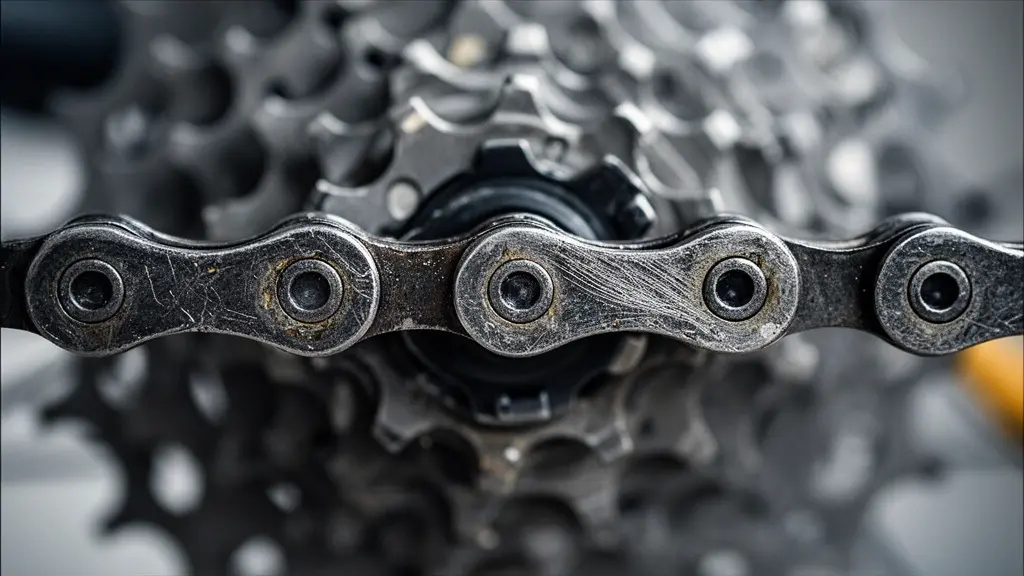
This macro view illustrates the physical reality of high torque on standard components. The stress is not theoretical; it physically deforms the metal over time. The average lifespan of a chain under this kind of load is drastically reduced, and some studies suggest chain failure risks include a lifespan as low as 1,200 miles when consistently subjected to 85Nm of assist. This necessitates a riding style that employs “mechanical sympathy”—using the gears correctly to keep the motor and drivetrain in their optimal range, rather than relying on brute force.
Cadence Efficiency: Letting the Motor Spin for Max Torque
The relationship between torque, power, and rotational speed (cadence) is governed by a fundamental formula: Power = Torque x Cadence. This means a motor’s power output is a product of how hard it can turn (torque) and how fast it is turning (cadence). Electric motors are not designed to produce maximum torque efficiently at very low RPMs. In fact, forcing a motor to “grind” at a low cadence is highly inefficient. It generates excessive heat and draws a large amount of current from the battery, draining it much faster.
Every e-bike motor has an efficiency “sweet spot”—a cadence range where it produces strong power with minimal energy waste. For most modern mid-drive systems, this is typically between 75 and 90 RPM. Riding within this range is the key to both maximizing performance and preserving battery life. Instead of staying in a high gear and letting the motor do all the work, the rider should actively use the bike’s gears to keep their pedal speed within this optimal window. This is what is meant by “letting the motor spin.” It allows the motor to operate where it is most effective, translating battery energy into forward motion with the least amount of thermal waste.
Finding this sweet spot can be done empirically by using the e-bike’s display. By monitoring the power meter (if available) at different cadences on a consistent incline, a rider can identify the RPM range that delivers strong assistance with the lowest battery consumption. Grinding at 50 RPM might feel powerful for a moment, but it can easily drain the battery twice as fast as spinning efficiently at 80 RPM for the same ground speed. Mechanical sympathy for the motor, much like for the drivetrain, involves using the gears to keep the system in its happiest, most efficient state.
Why High-End Pedal Assist Feels More Natural Than Hub Motors
The “natural” feel of a high-end mid-drive system is not a subjective marketing term; it is the direct result of superior sensor technology. The key distinction lies in the use of a torque sensor versus a simpler cadence sensor. A cadence sensor, common in less expensive hub motor systems, is a simple on/off switch. It detects that the pedals are turning and instructs the motor to deliver a pre-set level of power. The assistance is often delayed and can feel jerky, like a switch being flipped.
A torque sensor, in contrast, is far more sophisticated. As explained by technical experts, “A torque sensor measures how hard you’re pedaling and provides proportional motor assistance based on your effort.” This creates a seamless and intuitive experience where the motor acts as a multiplier of the rider’s own power. If you push gently, the motor provides a small amount of help. If you push hard to accelerate up a hill, the motor responds instantly with a proportional increase in power. This creates a symbiotic relationship between rider and machine, making the bike feel like a more powerful version of yourself, rather than a separate force pushing you along.
A torque sensor measures how hard you’re pedaling and provides proportional motor assistance based on your effort. A cadence sensor only detects if you’re pedaling and provides a fixed amount of power
– Leoguar Bikes Technical Team, Torque vs Watts: Electric Motor Power Guide
Even among high-end systems like the Bosch CX and Shimano EP8, which both use advanced torque sensors, the feel can differ based on how the sensor data is processed. The software algorithms that interpret the rider’s input play a huge role. Modern systems allow for customization via apps, letting riders tune the motor’s response curve to match their preference for a more or less aggressive feel. This level of refinement, rooted in sophisticated sensor technology, is the primary reason why premium pedal-assist systems offer a riding experience that is fundamentally more natural and controllable than their hub-driven counterparts.
Key takeaways
- Sustained low-cadence torque is more critical than peak power for starting on steep inclines, especially for heavy riders.
- High-torque motors (85Nm+) place extreme stress on drivetrains, risking premature failure of chains and cassettes if not managed with proper gearing.
- Mid-drive motors are superior for hilly terrain as they leverage the bike’s gears to keep the motor operating in its efficient 75-90 RPM cadence range.
Bosch Cargo Line vs Standard Motors: Is the Torque Upgrade Necessary?
For riders carrying heavy loads, whether children, groceries, or commercial goods, the question of a specialized motor becomes pertinent. The Bosch Cargo Line motor is a prime example of a system engineered for a specific, high-stress use case. While it shares the same 85 Nm peak torque rating as the standard Performance Line CX motor, its internal tuning and software are optimized for low-cadence power delivery. This is precisely the scenario a heavily-laden rider faces when starting from a stop.
The key difference is not the maximum torque but the support characteristics. The Cargo Line motor can achieve up to 400% support, meaning it can multiply the rider’s input by a factor of four, even at very low pedal speeds. This powerful, immediate assistance is designed to get a heavy load moving from a standstill with minimal rider strain. A standard motor, while also powerful, may require a higher cadence to deliver its full assistance, which is difficult to achieve when starting with hundreds of pounds of cargo.
Is the upgrade necessary? For a heavy rider in a very hilly city, the features of a cargo-specific motor align perfectly with the primary challenges. The decision depends on the severity of the loads and inclines. The following checklist outlines the features that differentiate a cargo-optimized motor, providing a framework for evaluating if your needs justify the specialized system.
Action Plan: Key Features to Verify for a Cargo E-bike Motor
- Verify Low-Cadence Tuning: Confirm the motor is specifically tuned to deliver high torque (e.g., 85Nm) at start-up and low pedal speeds.
- Check Assistance Ratio: Look for a high maximum assistance ratio (e.g., 400%) that amplifies low rider input effectively for heavy loads.
- Test Smart Walk Assist: Engage the walk-assist mode with the bike loaded to ensure it has enough power to maneuver the bike up a ramp or steep driveway.
- Confirm Hill Hold Function: On a steep incline, stop and test if the motor provides a ‘hill hold’ function that prevents the bike from rolling backward when you pause.
- Assess Thermal Management: Inquire about or research the motor’s thermal management capabilities, as sustained high-torque operation for cargo generates significant heat.
Mid-Drive vs Hub Motor: Which Is Best for Hilly Commutes?
The final and most decisive factor in a bike’s climbing ability is the motor’s placement and architecture. A mid-drive motor is located at the bike’s bottom bracket and drives the chain directly, allowing it to take advantage of the bike’s existing gears. A hub motor is located in the center of the front or rear wheel and drives the wheel directly, operating at a fixed gear ratio.
For hilly commutes, the mid-drive system is unequivocally superior for a fundamental reason: mechanical advantage. By using the bike’s gears, a mid-drive motor can effectively multiply its torque. Shifting to a lower gear on a steep hill is like a hiker switching to a lower gear in a 4×4 vehicle; it allows the motor to spin at its optimal, efficient RPM range while the wheel turns more slowly but with greater force. A hub motor, locked into a single gear ratio, has no such advantage. On a slow, steep climb, its RPM drops, its efficiency plummets (often below 50%), and it becomes highly susceptible to overheating. As engineering teams have noted, for gradients exceeding 10%, an e-bike needs at least 60 Nm of torque, and for slopes of 20% or steeper, 80+ Nm becomes essential—a torque level that must be applied efficiently, which is the mid-drive’s specialty.
Beyond gearing, mid-drive motors offer better weight distribution. Placing the motor’s mass low and centered in the frame results in a more stable and balanced ride, which is critical for handling on steep and technical climbs. A rear hub motor makes the bike back-heavy, which can affect traction and handling. The following table summarizes the critical differences for hill climbing.
| Factor | Mid-Drive Motor | Hub Motor |
|---|---|---|
| Torque Multiplication | Uses bike’s gears for mechanical advantage | Fixed gear ratio, no multiplication |
| Efficiency on Steep Hills | Maintains optimal RPM range | Drops to <50% efficiency on slow climbs |
| Weight Distribution | Centered, low center of gravity | Rear-heavy, affects handling |
| Thermal Performance | Better heat dissipation | Risk of thermal shutdown on long climbs |
| Minimum Speed for Efficiency | Effective from 0 RPM | Requires minimum wheel speed |
For a rider in a demanding environment like San Francisco, choosing the right motor system is not an upgrade; it is a fundamental requirement. Evaluate your typical routes, loads, and the gradients you will face to determine if a high-torque, mid-drive system is the necessary engineering solution for a reliable and safe commute.