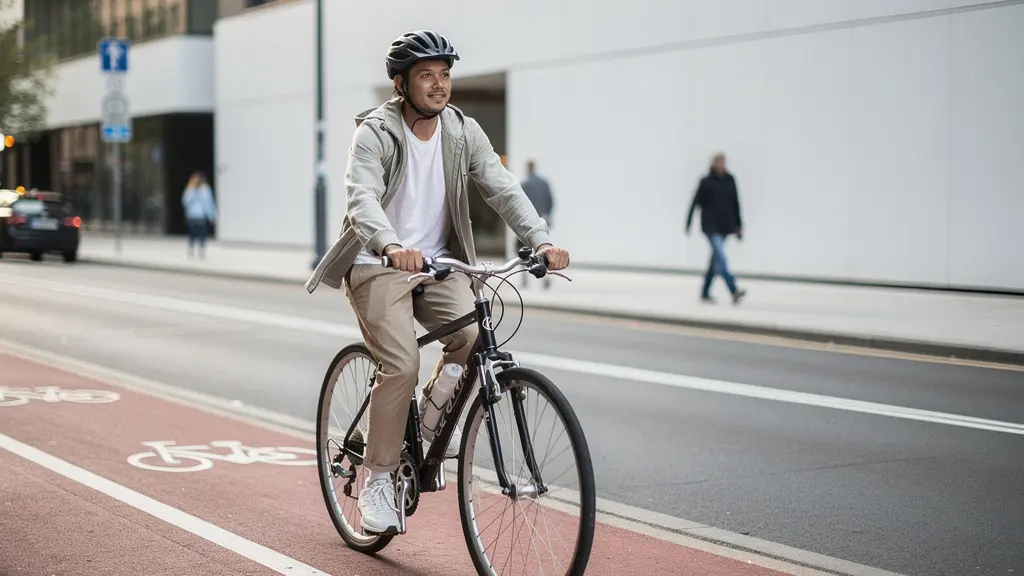
A sustainable bike commute isn’t about riding slower; it’s about mastering your body’s energy systems to arrive fresh every single day.
- High intensity triggers a cortisol spike that ruins your workday focus.
- Metabolic efficiency (FatMax) keeps your core temperature lower than carb-burning sprints.
Recommendation: Use the “Talk Test” tomorrow morning to cap your effort and switch to “Eco Mode” specifically on hills to protect your sweat threshold.
We have all been there. You arrive at the office, lock your bike, and think you got away with it. Then, five minutes later, right as you step into the morning meeting, it starts. The “after-burn.” You are overheating, uncomfortable, and suddenly regretting your choice of transport. For a commuter who hates arriving at work sweaty and tired, this is the ultimate friction point.
The standard advice is usually logistical: “bring a change of clothes,” “leave earlier,” or “shower at the office.” But these are just bandages on a physiological problem. They assume that sweating is inevitable. What if we looked at the root cause? We often treat commuting like a race, unknowingly triggering stress hormones and heat spikes that sabotage our day.
The real secret isn’t just “slowing down.” It is about shifting your biology. By moving from a sugar-burning, high-stress state to a fat-burning, metabolically efficient flow, you can ride daily without burnout. It’s not about being lazy; it’s about being smart with your energy systems to ensure you are consistent for years, not just weeks.
This guide will walk you through the physiological shifts and tactical decisions—from using your e-bike gears to managing your breath—that will transform your commute from a workout into a recharge ritual.
For those who prefer a visual breakdown of these strategies, the following video offers a comprehensive look at optimizing your ride for comfort and efficiency, complementing the deep dive below.
To help you navigate this metabolic approach to commuting, here is your roadmap to mastering the art of the fresh arrival.
Table of Contents: Your Roadmap to Fresh Arrivals
- 31.1:How Moderate Effort Burns More Fat Than High Intensity (Sometimes)
- 31.2:How to Use Eco Mode to Maintain a steady Moderate Effort
- 31.3:HIIT vs Moderate Riding: Which Lowers Daily Stress Better?
- 31.4:The Mistake of Starting Too Hard and Quitting After 2 Weeks
- 31.5:Talk Test: How to Know if You Are in the Moderate Zone
- 1.5:When to Switch to Electric: 3 Signs Your Commute Is Too Long
- 4.5:Arriving Sweat-Free: Managing Speed on Summer Days
- 33:Cortisol Detox: Why the Ride Home is More Important Than the Ride There
How Moderate Effort Burns More Fat Than High Intensity (Sometimes)
Many new commuters operate under the false belief that “harder is better.” They treat every red light as a starting line, pushing their bodies into the anaerobic zone. While this burns calories, it comes at a high thermal cost. High-intensity efforts rely heavily on carbohydrates for fuel, a process that generates significant metabolic heat. This is the internal furnace that leaves you sweating long after you have stopped moving.
In contrast, moderate effort relies on fat oxidation. This fuel source is like a slow-burning log: it provides steady energy with a much lower heat output. By keeping your intensity in check, you aren’t just saving energy; you are literally running your body’s engine at a cooler temperature. This visual metaphor helps explain the difference in fuel efficiency.
The image below illustrates this concept of a “slow burn,” representing how consistent, low-intensity energy use preserves your reserves without the volatile flare-ups of high-intensity efforts.
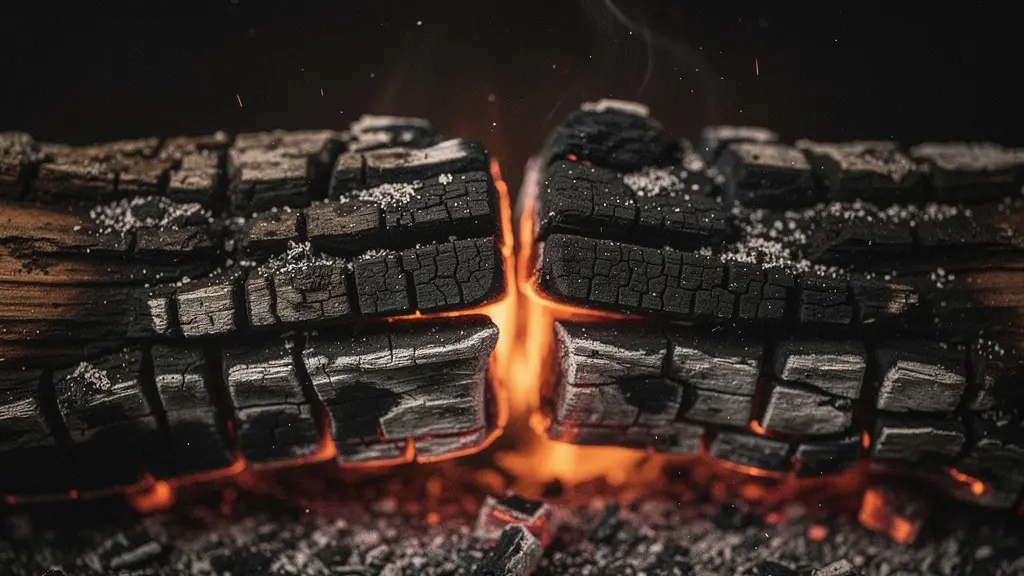
As you can see from the embers, the heat is contained and sustained. This biological efficiency is supported by a FatMax training protocol (16-week RCT) which highlights how targeting maximal fat oxidation intensity can improve metabolic flexibility. By training your body to burn fat efficiently, you reduce the physiological stress of the commute.
By staying in this zone, you minimize the “after-burn” effect, allowing you to walk into the office looking as fresh as when you left your house.
How to Use Eco Mode to Maintain a Steady Moderate Effort
If you ride an e-bike, you have a powerful tool for sweat management right at your fingertips: the assistance modes. However, many riders use “Turbo” mode to go faster, which paradoxically leads them to pedal harder and sweat more. The true pro move is to use “Eco” mode not just to save battery, but to cap your biological output.
Think of your e-bike assistance as a heart rate limiter. When you hit a hill or a headwind, instead of pushing harder on the pedals to maintain speed, you should increase the assist level. This keeps your physical effort—your wattage—perfectly flat. You flatten the hills with technology, keeping your body in that cool, fat-burning state we discussed earlier.
Research into real-world commuting patterns reveals that about 51% of the commute was classified as moderate intensity when riders self-selected their pace. This sweet spot is where consistency lives. If you let your ego take over and chase cars in high traffic, you drift into vigorous territory, triggering the sweat response you are trying to avoid.
Your goal is a flat line of effort, regardless of the terrain. Let the motor handle the spikes while you handle the steering.
HIIT vs Moderate Riding: Which Lowers Daily Stress Better?
High-Intensity Interval Training (HIIT) is trendy for quick fitness gains, but it is terrible for a calm arrival at work. HIIT floods your body with cortisol and adrenaline. These are stress hormones. If you are heading into a high-pressure job, the last thing you need is to arrive with your nervous system already in “fight or flight” mode.
As experts define it:
High intensity interval training (HIIT) involves repeated bouts of relatively hard work, commonly at intensities eliciting ≥ 80% of maximal heart rate (HRmax).
– Jack Bone, Scientific Reports
Moderate riding, on the other hand, acts as a buffer. It promotes blood flow and releases endorphins without the cortisol spike. It effectively burns off the nervous energy of the morning without depleting your reserves. You arrive alert, but calm.
Think of your commute as a “decompression chamber.” If you treat it like a HIIT session, you are pressurizing the chamber. Keep it moderate to equalize the pressure before you step into the office.
The Mistake of Starting Too Hard and Quitting After 2 Weeks
The “Hero’s Commute” is the most common reason people stop riding to work. You commit to riding every day, as fast as you can. For two weeks, you feel great. By week three, you are exhausted, your legs are heavy, and the thought of the bike makes you groan. You have burned out your willpower.
Building a habit requires friction reduction. If the ride is hard, your brain will look for excuses to drive. If the ride is easy and pleasant, it becomes automatic. Scientific analysis supports this, with a 2025 study summary reporting that 66.34% of everyday behaviors measured were habitual rather than intentional decisions. You want your ride to be in that 66%.
Consistency beats intensity every time. It is better to ride slow and comfortable four days a week for a year than to ride fast and hard for a month and then quit. Give yourself permission to go slow. In fact, make “slow” your default setting for the first month.
When you detach your ego from your average speed, you unlock the ability to ride forever.
Talk Test: How to Know if You Are in the Moderate Zone
You don’t need a heart rate monitor or a power meter to execute a “no sweat” commute. You have a built-in sensor: your voice. The “Talk Test” is the gold standard for easy intensity monitoring. It relies on the simple fact that as intensity rises, your need for oxygen increases, making speech difficult.
This table breaks down exactly what your speech patterns tell you about your ride intensity and sweat risk, as detailed in a practical guide for cyclists.
Use this simple check every time you pass a landmark or merge onto a new street. If you can’t recite your grocery list out loud without gasping, slow down immediately.
| Talk-test level | What speech feels like | Practical commuting read |
|---|---|---|
| Level 1 (Very easy) | You could sing or speak effortlessly. | Recovery pace; minimal sweat risk. |
| Level 2 (Moderate / “no-sweat” target) | Full sentences are comfortable; a phone call would sound normal-with-slight-exertion. | Best for daily consistency: steady aerobic work without spikes. |
| Level 3 (Hard-ish) | Short sentences only; you want to pause to breathe. | You’re drifting too hard for sweat-free commuting—downshift or add assist. |
| Level 4 (Very hard) | Few words; talking is uncomfortable. | Training ride intensity; high sweat and fatigue cost. |
If you find yourself gasping to say “Good morning” to the security guard, you went too hard.
When to Switch to Electric: 3 Signs Your Commute Is Too Long
Sometimes, despite your best pacing efforts, the sheer distance or terrain makes a “no sweat” ride impossible on a mechanical bike. There is a tipping point where biology loses to physics. Recognizing this limit is crucial for saving your habit. It’s not a failure of fitness; it’s a calculation of time and energy.
Field Study: E-bikes Maintain Activity Without the Strain
A 2025 field study of regular e-bike commuters measured oxygen consumption and classified intensity during real commuting. It illustrates a key point for switching decisions: pedal assist can reduce strain spikes while still delivering substantial physical activity—supporting the idea that e-bikes can preserve health benefits while making long or variable commutes more sustainable.
If you arrive home so depleted that you can’t cook dinner, or if you find yourself driving because you “can’t face the hill,” it’s time to electrify. The goal is the habit, not the hardship. An e-bike flattens the barriers that usually force you back into your car.
Upgrading to electric isn’t “cheating”; it’s ensuring you can keep showing up tomorrow.
Arriving Sweat-Free: Managing Speed on Summer Days
Summer brings a new challenge: ambient heat. Even at low effort, the sun can trigger sweating. This is where speed management becomes counter-intuitive. Sometimes, moving slightly faster creates a cooling breeze (convection) that evaporates sweat before it drips. However, pushing too hard generates more internal heat than the wind can remove.
You need a systematic approach to audit your ride before you even start pedaling. This checklist ensures you have optimized every variable for a dry arrival.
Your Sweat-Free Audit Checklist : Managing the Heat
- Pace selection: Pick a pace you can hold for the full commute without “pushing” (the goal is steady output, not speed).
- Cadence control: On flats, settle into a smooth cadence and keep breathing calm and controlled.
- Hill discipline: On short hills, allow brief drifts above your easy pace, but cap surges quickly; prioritize finishing fresh.
- Gravity assist: Coast descents and use easy gears early—avoid turning every rise into a hard interval.
- Success metric: Judge success by low fatigue cost and repeatability tomorrow, not by average speed.
Remember, the goal in summer isn’t just to be efficient; it’s to be thermally invisible.
Key takeaways
- Sweat comes from high-intensity carb burning; keep it low to burn cool fat.
- Use the “Talk Test”: if you can’t speak in full sentences, you are riding too hard.
- Use e-bike modes to flatten hills, not to break speed records.
Cortisol Detox: Why the Ride Home is More Important Than the Ride There
We focus heavily on the morning ride to avoid sweat, but the evening ride is where the mental magic happens. This is your transition zone. The modern workday is a series of cortisol spikes—deadlines, emails, meetings. If you drive home, you sit in traffic, stewing in that stress. You arrive home physically static but mentally wired.
The ride home is your cortisol detox. The rhythmic motion of pedaling metabolizes those stress hormones. It signals to your body that the “hunt” is over. By the time you reach your door, you have physically processed the stress of the day. You are ready to be a partner, a parent, or simply present for your evening.
Start your “no sweat” audit tomorrow morning. Don’t worry about your time; worry about your tone. Check your breath, lower your effort, and see how much better you feel when you walk through the office door.